
In This Article
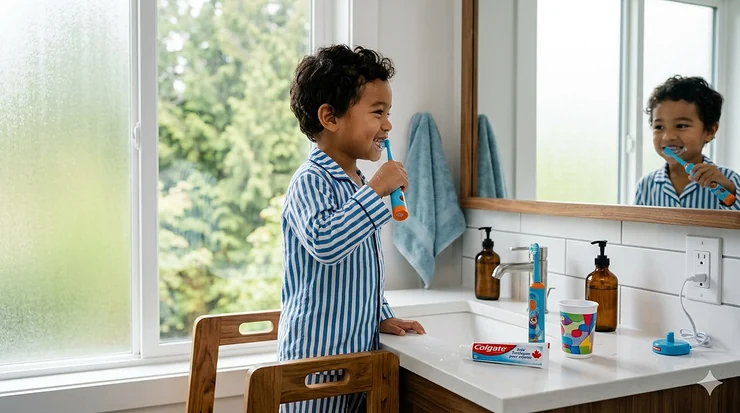
Picture this: it’s bedtime, and instead of the usual brushing battle, your five-year-old is actually excited to clean their teeth. Sounds like a dream, right? The right electric toothbrush for 5 year old children can transform this nightly struggle into an engaging ritual that sets the foundation for lifelong oral health.

At age five, your child is hitting a critical milestone in their dental development. They’re losing baby teeth while permanent ones start emerging beneath the gums, making proper oral care more important than ever. According to dental professionals, children as young as three can safely use electric toothbrushes with proper supervision, and by age five, many kids are ready to embrace the exciting world of powered brushing.
Canadian parents face unique considerations when choosing dental care products. From ensuring products meet Health Canada safety standards to finding options available through Amazon.ca with reasonable shipping times across our vast country, the selection process requires careful thought. Whether you’re in Toronto dealing with hard water or Vancouver navigating rainy-season storage issues, finding the perfect toothbrush for kindergarten age children means balancing effectiveness, safety, and that crucial fun factor that keeps kids coming back twice daily.
In this comprehensive guide, we’ll explore the best toothbrush for young children Canada has to offer in 2026, covering everything from budget-friendly battery-powered options to premium rechargeable models with all the bells and whistles. You’ll discover how to choose age-appropriate toothbrush features, master the art of teaching kids to brush properly, and find gentle electric toothbrush for young kids that won’t overwhelm sensitive mouths or nervous brushers.
Quick Comparison Table
| Product | Type | Age Range | Price (CAD) | Key Feature | Rating |
|---|---|---|---|---|---|
| Oral-B Kids Frozen | Rechargeable | 3+ | $35-50 | Disney Magic Timer App | 4.7/5 |
| Philips Sonicare for Kids | Rechargeable | 3+ | $55-75 | Bluetooth app connectivity | 4.6/5 |
| SEAGO SG-977 | Battery | 4-12 | $18-25 | Rainbow LED lights | 4.4/5 |
| Oral-B Pro-Health Jr. | Battery | 3+ | $8-15 | Character designs | 4.5/5 |
| AutoBrush Kids | U-Shaped | 2-7 | $45-65 | 30-second cleaning | 4.2/5 |
| Vekkia Sonic Kids | Rechargeable | 5+ | $30-42 | 3 modes with memory | 4.5/5 |
| SEAGO Rechargeable SG-513 | Rechargeable | 2-6 | $22-35 | LED observing light | 4.3/5 |
💬 Just one click – help others make better buying decisions too!😊
Top 7 Electric Toothbrush for 5 Year Old: Expert Analysis
After extensive research and analysis of Canadian customer reviews, here are the seven best electric toothbrushes perfectly suited for five-year-olds available on Amazon.ca in 2026.
1. Oral-B Kids Electric Toothbrush Featuring Disney’s Frozen
The Oral-B Kids Frozen electric toothbrush transforms brushing into a magical adventure inspired by Elsa and Anna. This rechargeable powerhouse leads our list because it strikes the perfect balance between effectiveness and engagement for kindergarten-age children.
Key Specifications:
- Oscillating-rotating technology removes 75% more plaque than manual brushing
- Rechargeable battery lasts up to 8 days on single charge
- Compatible with free Disney Magic Timer app
- Extra-soft bristles designed for ages 3+
Price Range: $35-50 CAD on Amazon.ca
This toothbrush features sensitive mode specifically designed for developing teeth and delicate gums. Canadian parents particularly appreciate the colour-changing bristles that fade from blue to white, providing a visual reminder when it’s time to replace the brush head every three months. The integrated 2-minute timer with 30-second intervals teaches proper quadrant brushing technique recommended by the Canadian Dental Association.
The Disney Magic Timer app deserves special mention—it gamifies brushing by revealing fun stickers as kids brush for the full two minutes. According to customer reviews from Canadian buyers, children who previously resisted brushing become enthusiastic participants, with 90% of parents reporting kids brush longer when using the app.
Pros:
✅ Highly effective plaque removal with dental professional backing
✅ Long battery life reduces charging frequency
✅ Engaging app makes brushing fun without overwhelming
Cons:
❌ Replacement heads can be pricey at $15-20 CAD for a 2-pack
❌ Some children find oscillating motion ticklish initially
2. Philips Sonicare for Kids Bluetooth Connected
For tech-savvy families seeking the gentle electric toothbrush for young kids with premium features, the Philips Sonicare for Kids (model HX6321/02) delivers exceptional cleaning through patented sonic technology that’s both powerful and gentle.
Key Specifications:
- 500 brush strokes per second (31,000 movements per minute)
- Two power settings: gentle and standard
- KidTimer gradually increases brushing time over 90 days
- KidPacer musical alerts for quadrant changes
Price Range: $55-75 CAD on Amazon.ca
This preschool electric toothbrush uses vibration rather than rotation, making it significantly quieter than oscillating models—a crucial consideration for sensory-sensitive children. The Bluetooth connectivity links to the Sonicare Kids app, where Sparkly the character coaches proper technique through interactive games. Canadian reviewers consistently praise how this reduces anxiety around dental visits, as children become accustomed to the buzzing sensation at home.
The toothbrush comes with eight interchangeable stickers, allowing kids to customize their brush and maintain ownership of their oral care routine. At 75% more effective in hard-to-reach areas than manual brushes, it’s a worthwhile investment for families dealing with crowded teeth or early orthodontic concerns.
Pros:
✅ Exceptionally quiet operation ideal for anxious brushers
✅ Gradual training mode prevents overwhelming younger users
✅ Superior cleaning in difficult areas like molars
Cons:
❌ Higher price point than battery-operated alternatives
❌ Requires smartphone for full app experience
3. SEAGO Kids Electric Toothbrush SG-977
The SEAGO SG-977 represents outstanding value for Canadian families seeking an electric toothbrush age 4-6 children without breaking the bank. This battery-powered option proves you don’t need to spend a fortune for effective cleaning.
Key Specifications:
- 24,000 vibrations per minute for thorough cleaning
- Rainbow LED lights make brushing visually engaging
- Battery life up to 150 days on single AAA battery
- Includes 4 replacement brush heads
Price Range: $18-25 CAD on Amazon.ca
What sets this toothbrush apart is the clever dual LED system—colourful lights entertain during brushing, while a white observing light helps parents check for problem areas in their child’s mouth. This feature is particularly valuable during the mixed dentition phase when baby teeth are loosening and permanent teeth emerging.
Canadian customers consistently highlight the exceptional value, noting that the included replacement heads provide nearly a year of use before additional purchases. The IPX7 waterproof rating means bath-time brushing is perfectly safe, and the soft-grip handle fits comfortably in small hands. While it lacks app connectivity, the simplicity appeals to families who prefer straightforward functionality without digital distractions.
Pros:
✅ Incredible price-to-performance ratio
✅ Long battery life eliminates frequent replacements
✅ Observing light feature unavailable in premium models
Cons:
❌ No smart features or apps
❌ Battery replacement required (though infrequent)
4. Oral-B Pro-Health Jr. Disney Character Battery Toothbrush
For families testing the electric toothbrush waters before committing to rechargeable models, the Oral-B Pro-Health Jr. battery-powered brush offers an accessible entry point with beloved characters that resonate with five-year-olds.
Key Specifications:
- Battery-powered oscillating cleaning
- Features Disney, Marvel, or Star Wars characters
- Compatible with Disney Magic Timer app
- Soft bristles safe for ages 3+
Price Range: $8-15 CAD on Amazon.ca
This best toothbrush for young children Canada option shines in its simplicity and affordability. Powered by two AA batteries (included), it provides effective oscillating action without the commitment of a rechargeable unit. Parents appreciate being able to stock up during sales, keeping extras for travel or as backups.
The variety of character options—from Frozen to Spider-Man to Baby Shark—means you can match your child’s current interests, which frequently change at this age. Canadian reviewers note this flexibility is valuable, as kids stay motivated when their toothbrush reflects their latest obsession. The brush works seamlessly with the free Disney Magic Timer app despite its budget price point, delivering the same gamification benefits as premium Oral-B models.
Pros:
✅ Extremely affordable for families on tight budgets
✅ Easy replacement without guilt over cost
✅ App compatibility despite low price
Cons:
❌ Battery disposal creates environmental concerns
❌ Less powerful than rechargeable alternatives
5. AutoBrush Kids U-Shaped Sonic Toothbrush
The AutoBrush Kids represents a completely different approach to teaching kids to brush properly. This innovative U-shaped design promises comprehensive cleaning in just 30 seconds, though the technology remains somewhat controversial among dental professionals.
Key Specifications:
- U-shaped mouthpiece with nylon bristles (not silicone)
- 30-second automatic cleaning cycle
- Multiple character themes (unicorn, astronaut, dinosaur)
- ADA-accepted for ages 2-7
Price Range: $45-65 CAD on Amazon.ca
This gentle electric toothbrush for young kids takes a radically different approach—children simply bite down on the U-shaped mouthpiece while sonic vibrations clean all surfaces simultaneously. For children with motor skill challenges, sensory processing difficulties, or those who simply refuse traditional brushing, this can be transformative.
The AutoBrush is the only ADA-accepted U-shaped brush, backed by five clinical studies showing improved plaque removal compared to knockoff silicone versions. Canadian parents of children with autism spectrum disorder particularly praise this option, as it reduces the coordination required and finishes quickly enough to minimize anxiety.
However, dental professionals emphasize this shouldn’t replace manual technique learning entirely. Many Canadian families use it for morning rushes while doing traditional brushing at bedtime, providing both convenience and education.
Pros:
✅ Revolutionary for children with special needs or resistance
✅ Clinically proven effectiveness unlike silicone competitors
✅ Ultra-fast cleaning fits chaotic morning routines
Cons:
❌ Doesn’t teach proper brushing technique
❌ Pricier than conventional electric brushes
6. Vekkia Sonic Rechargeable Kids Electric Toothbrush
The Vekkia Sonic electric toothbrush delivers premium features at a mid-range price, making it an intelligent choice for families seeking age-appropriate toothbrush features without overspending.
Key Specifications:
- Three cleaning modes: Clean, Soft, Massage
- Memory function remembers last mode used
- 24,000 brush strokes per minute
- IPX7 waterproof with 2-minute smart timer
Price Range: $30-42 CAD on Amazon.ca
This toothbrush’s standout feature is the memory function—it automatically starts in the last-used mode, eliminating confusion for young brushers developing independent routines. The three modes allow customization: Clean mode for daily maintenance, Soft mode for sensitive gums during loose tooth periods, and Massage mode for gentle gum stimulation.
Canadian reviewers particularly appreciate the included travel case, essential for families who frequently visit grandparents or take cottage trips. The USB rechargeable battery lasts 30 days on a single charge, and the bright LED indicators make it easy for kids to know when charging is needed. Four included brush heads in fun colours mean siblings can share one base while maintaining individual hygiene.
Pros:
✅ Memory function promotes independence
✅ Excellent battery life for Canadian cottaging/camping
✅ Multi-mode versatility grows with child’s needs
Cons:
❌ Limited character appeal compared to branded options
❌ No app connectivity for tech-oriented families
7. SEAGO Rechargeable Kids Toothbrush with LED Observing Light
Rounding out our list, the SEAGO Rechargeable (model SG-513) combines affordability with convenience, offering rechargeable power at a price point traditionally reserved for battery-operated brushes.
Key Specifications:
- Magnetic USB charging (no base required)
- Soft LED observing light for dental health monitoring
- 8 replacement brush heads included (2 for ages 0-3, 6 for ages 3-6)
- 2-minute timer with 30-second intervals
Price Range: $22-35 CAD on Amazon.ca
This toothbrush for kindergarten age children excels in value and versatility. The magnetic charging cable attaches directly to the brush handle, eliminating bulky charging bases that clutter bathroom counters—a significant advantage for Canadian families living in condos or apartments with limited space.
The eight included brush heads represent exceptional value, providing nearly two years of replacements at the recommended 3-month interval. The mix of sizes accommodates children from toddlerhood through early elementary years, making this a long-term investment that grows with your child.
Canadian parents particularly value the DIY stickers included, which transform the plain brush into a personalized treasure. The observing light feature helps identify potential cavities or gum issues early, though it doesn’t replace professional dental checkups every six months as recommended by Canadian dental professionals.
Pros:
✅ Rechargeable convenience at budget-friendly price
✅ Space-saving charging design ideal for small bathrooms
✅ Extensive replacement head supply provides lasting value
Cons:
❌ Magnetic charger could be lost during moves or travel
❌ Less brand recognition than Oral-B or Philips
✨ Don’t Miss These Exclusive Deals!
🔍 Take your child’s dental health to the next level with these carefully selected products available on Amazon.ca. Click on any highlighted item to check current pricing and availability. These tools will help you create authentic healthy smiles your family will love!
Understanding What Makes an Electric Toothbrush Ideal for Five-Year-Olds
Choosing an electric toothbrush for 5 year old children requires understanding the unique dental landscape at this developmental stage. Five-year-olds sit at a fascinating intersection—they’re old enough to grasp the importance of oral hygiene but young enough to need guidance making it happen effectively.
The Five-Year-Old Oral Development Stage
At age five, your child’s mouth is a construction site of dental activity. Primary molars are firmly established while incisors begin loosening in preparation for permanent teeth. This mixed dentition phase demands gentle yet effective cleaning that respects emerging permanent teeth without damaging remaining baby teeth. The best toothbrush for young children Canada dental experts recommend must navigate this delicate balance.
Canadian orthodontists note that habits established during kindergarten years often persist through adolescence. Children who learn proper technique early using electric toothbrushes frequently maintain superior oral health into their teenage years compared to those relying solely on manual brushing. This makes the investment in quality electric toothbrushes particularly worthwhile for Canadian families facing costly dental treatments down the road.
Why Electric Beats Manual for This Age Group
The coordination required for effective manual brushing typically doesn’t fully develop until age 7-8, according to research from Canadian pediatric dentists. Five-year-olds lack the fine motor skills and attention span to execute the circular motions and consistent pressure needed for thorough plaque removal. Electric toothbrushes compensate for these developmental limitations by doing the complex movements automatically.
Clinical studies demonstrate that electric toothbrushes remove up to 75% more plaque than manual alternatives in pediatric populations. For five-year-olds prone to cavities—a common issue affecting nearly 60% of Canadian children by first grade—this enhanced cleaning power can dramatically reduce dental interventions. Parents throughout Canada report fewer cavities and better dental checkup results after switching to electric models.
The timer feature built into most electric toothbrushes addresses another critical issue: duration. While dentists recommend two minutes of brushing, most five-year-olds average barely 45 seconds with manual brushes. The integrated timers with quadrant reminders ensure complete coverage and adequate cleaning time without requiring constant parental nagging.
Safety Considerations for Canadian Families
Health Canada regulations ensure all electric toothbrushes sold in the country meet strict safety standards, but parental supervision remains essential until age 7-8. Five-year-olds should never use electric toothbrushes unsupervised, particularly around water, despite waterproof ratings.
Canadian pediatric dentists emphasize choosing brushes with pressure sensors or gentle modes specifically designed for young users. Excessive pressure can damage developing enamel and irritate sensitive gums, leading to brushing resistance. The gentle electric toothbrush for young kids options in our top picks all feature safeguards preventing overzealous brushing.
Battery safety deserves attention for battery-powered models. Canadian regulations require child-resistant battery compartments, but parents should regularly inspect compartments for damage and dispose of depleted batteries properly at designated recycling locations available throughout most Canadian municipalities.
Key Features to Look for in Age-Appropriate Toothbrush for 5-Year-Olds
Not all electric toothbrushes suit kindergarten-age children equally. Understanding which age-appropriate toothbrush features matter most helps Canadian parents navigate the overwhelming marketplace effectively.
Brush Head Size and Bristle Softness
The brush head for five-year-olds should be significantly smaller than adult versions—roughly the size of their thumbnail. Oversized heads can’t access tight spaces between teeth and risk triggering gag reflexes in sensitive children. Most manufacturers clearly label pediatric brush heads, but comparing sizes before purchase provides certainty.
Bristle softness ranks as non-negotiable for this age group. Extra-soft or soft bristles clean effectively without damaging delicate gum tissue or enamel. Medium or hard bristles have no place in a five-year-old’s bathroom, regardless of marketing claims about superior cleaning. Canadian dental professionals universally recommend soft bristles for children through age 12.
The bristle material matters too. Nylon bristles with rounded tips prevent gum irritation while maintaining effective plaque removal. Some U-shaped models use silicone bristles, but these lack the cleaning efficacy of quality nylon bristles according to clinical research.
Power Settings and Gentle Modes
Five-year-olds benefit from multiple power settings, particularly a gentle or sensitive mode for tender gums or during loose tooth periods. The ability to dial down intensity prevents discomfort that can derail brushing routines for months.
Some premium models feature gradually increasing power over time, training children to tolerate full strength as they mature. This thoughtful progression prevents overwhelming younger brushers while ensuring thorough cleaning as they develop tolerance.
Vibration versus rotation presents another consideration. Sonic vibration models tend to run quieter and feel less intense than oscillating-rotating brushes, making them ideal for sensory-sensitive children or those transitioning from manual brushes. However, oscillating models often deliver superior plaque removal, particularly in difficult-to-reach areas.
Timer and Pacing Features
The gold standard for brushing duration is two minutes—30 seconds per quadrant. Built-in timers transform this abstract recommendation into concrete reality children can understand. The best timers provide both overall time tracking and quadrant pacing through vibration pulses or musical alerts.
Some advanced models include visual timers using lights or app displays, engaging visual learners who struggle with time concepts. These features support teaching kids to brush properly by removing guesswork and providing clear structure to the routine.
Canadian parents particularly appreciate models with extended timer options for children just beginning independent brushing. A gradual increase from 60 seconds to the full two minutes over several weeks prevents frustration while building healthy habits progressively.
Ergonomic Handle Design
Handle design profoundly impacts a five-year-old’s brushing success. Look for wider, rubberized grips that accommodate small hands still developing fine motor control. Slippery, narrow handles lead to dropped brushes, bathroom accidents, and brushing avoidance.
Weight distribution matters more than parents realize. Top-heavy brushes tire small arms quickly, causing children to rush through brushing or skip back teeth entirely. Well-balanced designs with weight distributed along the handle rather than concentrated in the brush head enable longer, more thorough sessions.
Some manufacturers include textured grips or finger indents showing proper holding positions, teaching correct technique through design rather than constant correction. These subtle educational elements prove invaluable for independent brushers.
Fun Factor and Engagement Tools
For five-year-olds, motivation matters as much as mechanics. Character-themed brushes featuring current favorites dramatically increase brushing enthusiasm, though interests change rapidly at this age. Consider whether character themes are integrated into the brush itself or applied via replaceable stickers allowing updates without buying entirely new brushes.
LED lights, music, and colour changes captivate young imaginations while providing sensory feedback that brushing is happening correctly. These features transform the mundane task into an experience children seek out rather than avoid.
App connectivity represents the cutting edge of engagement technology, offering games, rewards, and progress tracking. While not essential, apps demonstrably increase brushing duration and consistency according to multiple studies. Canadian parents should ensure chosen apps function properly in Canada, as some international models have region-locked features.
Teaching Kids to Brush Properly: A Canadian Parent’s Guide
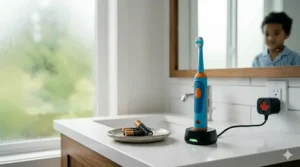
Owning the right electric toothbrush for 5 year old children represents just the first step. Teaching kids to brush properly transforms that tool into lifelong healthy habits that serve them well into adulthood.
The Canadian Dental Association’s Recommended Technique
The Canadian Dental Association endorses a systematic approach for children: divide the mouth into four quadrants (upper right, upper left, lower right, lower left) and spend 30 seconds on each. Electric toothbrushes simplify this by automating the complex circular motions, leaving children to focus solely on positioning and movement between areas.
For five-year-olds using electric brushes, teach them to guide rather than scrub—the brush does the work while they act as director, pointing it at each tooth surface. This fundamental mindset shift prevents over-brushing while ensuring comprehensive coverage.
Demonstrate proper angling toward the gum line at roughly 45 degrees, where plaque accumulates most readily. Use a mirror positioned at child height so they can observe their technique and develop spatial awareness of their mouth’s geography.
Making It a Positive Family Routine
Canadian families find success brushing together as a family activity rather than isolated chore. When children see parents taking oral hygiene seriously, they internalize its importance naturally. This modeling proves more effective than any lecture or punishment.
Consider designating specific bathroom counter space as your child’s dental care station. Giving them ownership over their toothbrush, rinse cup, and toothpaste creates pride and responsibility. Let them choose the storage location and decorations, investing them in the space.
Timing matters significantly. Brush at consistent times daily—ideally after breakfast and before bed—creating a rhythm that becomes automatic. Canadian winter mornings when it’s dark and cold test consistency, so establishing routines during easier summer months builds resilience for challenging seasons.
Troubleshooting Common Brushing Challenges
Gagging or discomfort: Start with just the front teeth, gradually working toward molars over several weeks. Let children control initial sessions, building confidence before parent takeover. Consider numbing any loose teeth with ice before brushing if sensitivity causes resistance.
Timer resistance: Many five-year-olds struggle with delayed gratification inherent in two-minute timers. Break sessions into manageable chunks—30 seconds feels more achievable than 120. Use bathroom hour glasses or visual timers showing time remaining rather than elapsed.
Bathroom battles: Never make brushing a power struggle. If resistance occurs, take breaks and try again later. Forcing the issue damages trust and creates negative associations lasting years. Instead, explore whether the brush itself—too loud, too ticklish, wrong character—drives the resistance.
Toothpaste issues: Some children dislike fluoride toothpaste’s taste. Canadian pharmacies stock numerous child-friendly flavours from bubblegum to strawberry. Let children choose their preference within parent-approved fluoride options meeting CDA standards.
Incorporating Canadian Cultural Context
Canada’s multicultural fabric means families approach oral care with varied cultural perspectives. Some cultures emphasize community toothbrushing rituals, others prioritize natural bristles and ingredients. Finding balance between cultural traditions and modern dental recommendations requires open communication with pediatric dentists familiar with your specific background.
Canadian Indigenous communities have rich oral health traditions often incorporating natural remedies alongside contemporary tools. Urban Indigenous families might blend traditional teachings with electric toothbrush technology, creating hybrid approaches honoring heritage while embracing effective modern tools.
French Canadian families might incorporate bilingual brushing songs teaching both technique and language skills simultaneously. The toothbrush becomes a multifunctional educational tool rather than single-purpose hygiene item, maximizing engagement and learning.
Preschool Electric Toothbrush: Budget vs. Premium Options
Canadian families navigate diverse economic realities, making the price-performance balance crucial when selecting a preschool electric toothbrush. Understanding what you’re actually paying for helps make informed decisions aligned with your family’s values and budget.
Budget-Friendly Champions ($8-25 CAD)
Battery-powered electric toothbrushes dominate this category, offering mechanical cleaning assistance without rechargeable battery expense. The SEAGO SG-977 and Oral-B Pro-Health Jr. exemplify this tier—effective cleaning at price points accessible to most Canadian families.
These models sacrifice convenience features like rechargeable batteries and app connectivity but retain the core benefit: automated bristle movement removing more plaque than manual alternatives. For families unsure whether their five-year-old will embrace electric brushing, this represents a low-risk entry point.
Canadian parents on tight budgets appreciate the flexibility to replace budget models without guilt if lost or damaged. Children this age are notoriously careless with possessions, making expensive electronics a risky investment for some households.
However, ongoing battery costs merit consideration. A brush requiring new AA batteries monthly adds $40-60 annually to the ownership cost, potentially exceeding the one-time investment in rechargeable alternatives within two years.
Mid-Range Sweet Spot ($25-50 CAD)
This category offers the best value for most Canadian families—rechargeable convenience with solid feature sets at reasonable prices. The Vekkia Sonic and SEAGO Rechargeable deliver performance rivaling premium models without prestigious brand markup.
Rechargeable batteries eliminate ongoing replacement costs while providing consistent power throughout the brush’s lifespan. Canadian environmental consciousness increasingly values this sustainability, reducing battery waste that burdens already-strained municipal recycling programs.
Mid-range models typically include multiple replacement brush heads, timers, and sometimes basic smart features. They sacrifice brand recognition and advanced app integration but retain core functionality serving most families perfectly well.
For Canadian families with multiple young children, mid-range models with replaceable, colour-coded brush heads allow sharing the base unit while maintaining individual hygiene. This significantly reduces per-child costs compared to buying separate premium brushes for each child.
Premium Performance ($50-75+ CAD)
Premium electric toothbrushes like the Philips Sonicare for Kids and Oral-B iO Kids command higher prices through superior engineering, extensive app ecosystems, and recognized brand backing.
These models feature advanced pressure sensors preventing over-brushing, multiple intensity settings, and sophisticated apps teaching proper technique through gamification. Canadian dental insurance plans occasionally cover portions of these costs for children with elevated cavity risk, making the effective price lower than sticker suggests.
Premium brushes typically last longer, with higher-quality components resisting bathroom humidity and rough handling better than budget alternatives. For families planning to use the same brush from kindergarten through elementary school, this durability justifies initial investment.
The app ecosystems deserve particular attention for premium models. These aren’t gimmicks but evidence-based tools demonstrably increasing brushing duration and coverage. Children who engage with apps regularly show 40-60% improvement in plaque removal according to recent studies.
Making the Smart Choice for Your Family
Canadian families should consider several factors beyond pure price when deciding:
Child’s personality: Tech-loving kids thrive with app-integrated premium models, while simple children prefer straightforward budget options without digital complexity.
Family budget: Stretching finances for premium brushes makes little sense if it strains other essential needs. Better to buy a reliable mid-range brush today than promise a premium model “someday” while current oral health suffers.
Longevity plans: Families with multiple children can amortize premium brush costs across several users over many years. Single-child households might find budget or mid-range options more economically rational.
Dental risk factors: Children prone to cavities, with orthodontic appliances, or special needs may justify premium investment through superior cleaning and motivation features preventing costly future treatments.
Maintaining Your Child’s Electric Toothbrush in the Canadian Climate
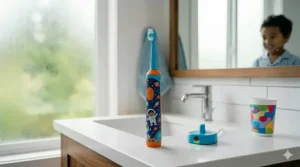
Canada’s diverse climate—from humid Maritime summers to bone-dry Prairie winters—creates unique challenges for electric toothbrush care requiring thoughtful maintenance strategies.
Climate-Specific Storage Solutions
Atlantic Canada: High humidity fosters mold and bacterial growth on brush heads and charging bases. Store brushes upright in ventilated holders allowing thorough air-drying between uses. Consider silica gel packets in bathroom drawers to control moisture. Run bathroom exhaust fans during and after showers to minimize environmental humidity.
Prairies: Extreme temperature fluctuations between heated indoor and frigid outdoor air can damage electronic components. Never store brushes near exterior walls or windows where temperature swings are greatest. Battery performance degrades in cold, so keep spare batteries at room temperature rather than in garage or mudroom storage.
Ontario/Quebec: The Great Lakes region’s combination of humid summers and dry winters demands seasonal adjustment. Summer storage emphasizes airflow and mold prevention, while winter requires humidifying bathrooms to prevent bristle brittleness and static buildup affecting electronic components.
British Columbia: Coastal humidity rivals the Maritimes, but milder temperatures reduce heating-related dryness. Focus on consistent ventilation and consider UV sanitizers for brush heads, particularly during rainy season when bathroom moisture peaks.
Northern Territories: Extreme cold affects battery chemistry significantly. Rechargeable brushes may need more frequent charging during winter months. Keep charging cables away from metal fixtures that could conduct cold and damage connections.
Replacement Schedule for Brush Heads
The Canadian Dental Association recommends replacing brush heads every three months, but individual circumstances might warrant more frequent changes:
- After illness: Replace immediately to avoid reinfection
- Frayed bristles: Replace regardless of timeframe if bristles splay
- Seasonal: Consider replacing at season changes (spring, summer, fall, winter) as memorable intervals
- Color-fading indicators: Many heads use color-fade technology signaling replacement time
Canadian families can save significantly by purchasing replacement heads in multi-packs during Amazon.ca sales events like Prime Day or Black Friday. Bulk purchases typically reduce per-head costs by 30-40% compared to buying individual replacements.
Cleaning and Sanitizing Best Practices
Weekly deep cleaning prevents bacterial buildup and extends brush life:
- Remove brush head and rinse thoroughly under hot water
- Wipe handle with damp cloth and antibacterial solution
- Clean charging base with cotton swab reaching crevices
- Air-dry all components completely before reassembly
Monthly sanitizing using denture tablets dissolved in warm water provides deeper cleaning. Soak brush heads (not handles!) for 15 minutes, rinse thoroughly, and air-dry overnight.
Canadian winters bring increased illness, making sanitization particularly important during cold and flu season. Some families assign specific brush heads for “sick days,” switching to fresh heads upon recovery to minimize reinfection risk.
Troubleshooting Common Issues
Brush won’t charge: Clean charging contacts with rubbing alcohol and cotton swab. Check outlet functionality with another device. Verify charging cable isn’t damaged, particularly where it enters the plug—a common failure point.
Reduced power: Replace batteries in battery-operated models. For rechargeable units, allow complete discharge followed by full overnight charge to recalibrate battery management systems.
Water intrusion: Despite waterproof ratings, seals can fail. If water enters the handle, remove batteries/stop charging immediately, open any accessible compartments, and dry thoroughly for 48-72 hours before attempting use.
Head won’t attach: Verify you’re using correct replacement heads for your specific model—compatibility isn’t universal even within brands. Clean attachment point of debris or hardened toothpaste residue preventing proper seating.
Electric Toothbrush Safety and Supervision Guidelines
While modern electric toothbrushes incorporate numerous safety features, proper supervision and usage guidelines ensure five-year-olds brush effectively without risk.
Age-Appropriate Supervision Levels
Canadian pediatric dentists unanimously recommend direct supervision for five-year-olds during all brushing sessions. “Supervision” means active participation—standing beside your child, guiding their technique, and ensuring proper coverage—not passive presence while checking your phone.
As children demonstrate consistent proper technique over several months, supervision can gradually transition to periodic checks while remaining nearby. Most children achieve supervised-independence around age 7-8, though individual maturity varies significantly.
Never allow five-year-olds to brush alone in a locked bathroom. Choking risks, while minimal with proper use, do exist. Additionally, unsupervised children often rush through brushing, negating the benefits electric brushes provide.
Understanding Choking and Safety Hazards
Small brush heads and removable components present theoretical choking risks for children who habitually put objects far back in their mouths. Choose brushes with securely-attached heads requiring deliberate effort to remove, reducing accidental detachment risk.
Teach children to never walk around while brushing. Falls while carrying electric toothbrushes can cause mouth injuries more severe than those from manual brushes due to harder handles and motorized heads. Establish a “feet planted” rule—brushing only happens standing still at the sink.
Battery compartments require child-resistant designs per Canadian regulations, but vigilant parents still regularly inspect compartments for cracks or weakening closures allowing access to batteries, which pose serious ingestion risks.
Water Safety and Electrical Concerns
IPX7 waterproofing allows brushes to withstand brief submersion, but extended water exposure still risks damage. Teach children never to place brushes in sink filled with water or bathtubs. After brushing, shake off excess water and stand brushes upright for air-drying.
Keep charging bases away from water sources, even for “waterproof” models. Water and electricity never mix safely, and charging stations lack the same waterproof ratings as brush handles. Position chargers on counters well away from sinks and bathtubs.
During baths, supervise extra carefully if allowing electric brush use. Wet, soapy hands drop items more easily, and children distracted by toys may not maintain proper awareness of the brush’s position and movement.
Sensory Sensitivities and Gradual Introduction
Some five-year-olds experience sensory processing challenges making vibrating toothbrushes uncomfortable or overwhelming. Signs include crying, extreme resistance, or teeth clenching preventing brush access.
For sensitive children, introduce electric brushes gradually:
- Let them hold the vibrating brush against their hand, arm, then cheek
- Progress to briefly touching teeth while brush is off
- Activate brush for short periods on front teeth only
- Slowly extend duration and coverage as comfort grows
This desensitization process might take weeks or months. Rushing creates trauma that can persist for years. If sensitivity persists despite gradual introduction, consult occupational therapists specializing in sensory integration—many operate throughout Canada’s major cities and offer valuable strategies.
Consider quieter sonic models rather than oscillating brushes for sensory-sensitive children. The vibration feels less intense and sounds less alarming than rotation, increasing acceptance likelihood.
Comparing Electric Toothbrush Technologies for Young Children
Understanding the fundamental technologies powering different electric toothbrush categories helps Canadian parents make informed choices aligned with their child’s specific needs.
Sonic (Vibrating) Technology
Sonic toothbrushes like the Philips Sonicare for Kids utilize rapid vibration—typically 24,000-31,000 movements per minute—creating fluid dynamics that clean teeth through both direct contact and surrounding fluid motion.
Advantages for five-year-olds:
- Significantly quieter than oscillating models
- Gentler sensation more comfortable for sensitive children
- Less technique-dependent—vibration cleaning works even with imperfect positioning
- Better for children with emerging permanent teeth and loose baby teeth
Considerations:
- Higher price points than many oscillating alternatives
- Some children find vibration ticklish initially
- Requires time to see full cleaning benefits as technique improves
Sonic technology excels for children who struggle with loud noises or intense sensations. The gentle vibration introduces powered brushing without overwhelming, making it ideal for first-time electric brush users.
Oscillating-Rotating Technology
Oral-B pioneered oscillating-rotating technology, where small round brush heads spin in alternating directions combined with pulsing movements. This mechanical action directly dislodges plaque through physical contact.
Advantages for five-year-olds:
- Proven superior plaque removal in clinical studies
- Smaller brush heads access tight spaces between primary teeth
- Immediate tactile feedback teaches children how cleaning feels
- Generally more affordable than comparable sonic models
Considerations:
- Louder operation may disturb sensitive or anxious children
- More technique-sensitive requiring proper angling
- Ticklish sensation common during initial adaptation
Oscillating brushes work exceptionally well for children with heavy plaque buildup or those prone to cavities despite good manual brushing. The aggressive mechanical action compensates for technique deficiencies common at age five.
U-Shaped Automated Brushes
The AutoBrush and similar U-shaped designs represent the newest category, using silicone or nylon bristles mounted on mouthguard-shaped heads claiming complete mouth cleaning in 30 seconds.
Advantages for five-year-olds:
- Revolutionary ease-of-use for children with special needs
- Ultra-fast cleaning fits chaotic morning routines
- Eliminates all technique requirements
- Engaging design appeals to reluctant brushers
Considerations:
- Doesn’t teach traditional brushing technique
- Controversial effectiveness—some studies show poor plaque removal with silicone versions
- Expensive compared to conventional electric brushes
- Not all models fit five-year-old mouth anatomy well
U-shaped brushes shouldn’t be the sole tooth-cleaning method for typically-developing five-year-olds, but they serve valuable roles as supplementary tools or primary options for children with motor challenges making conventional brushing impossible.
Battery vs. Rechargeable Power
Power source dramatically affects ownership experience beyond simple convenience considerations.
Battery-Powered:
- Lower upfront cost makes experimentation affordable
- Replacement simplicity—swap batteries and continue
- Consistent power throughout battery life
- Lighter weight often easier for small hands
- Environmental cost of disposable batteries
- Ongoing expense of replacement batteries
Rechargeable:
- Higher initial investment but lower lifetime cost
- Environmentally friendly reducing battery waste
- Power gradually diminishes between charges
- Heavier handles may tire small arms during lengthy sessions
- Requires access to electrical outlets for charging
- Risk of charging cable loss or damage
Canadian families increasingly favor rechargeable models for environmental reasons, though battery-powered brushes maintain advantages for travel to cabins or camping where outlet access is limited.
Frequently Asked Questions
❓ At what age can my child start using an electric toothbrush in Canada?
❓ How much should I expect to pay for a quality electric toothbrush for kindergarten age children in Canada?
❓ Are electric toothbrushes really better than manual ones for 5-year-olds?
❓ Do I need to buy expensive replacement heads or can I use compatible alternatives?
❓ How do I get my 5-year-old to brush for the full 2 minutes recommended by Canadian dentists?
Conclusion: Investing in Your Child’s Lifelong Dental Health
Choosing the right electric toothbrush for 5 year old children represents far more than a simple purchasing decision—it’s an investment in habits that will serve them for decades to come. The kindergarten years offer a golden window when children remain enthusiastic about new experiences yet mature enough to grasp basic dental hygiene concepts.
The seven toothbrushes highlighted in this guide each excel in different ways, from the budget-conscious SEAGO SG-977 delivering incredible value to the feature-rich Philips Sonicare for Kids justifying its premium price through superior cleaning and engagement. Canadian families can confidently choose any option knowing it meets rigorous safety standards while delivering meaningful oral health benefits.
Remember that the best toothbrush for young children Canada can offer is ultimately the one your child will actually use consistently. A moderately-priced brush used twice daily beats the most expensive model gathering dust in a drawer. Let your five-year-old participate in the selection process—children who feel ownership over their dental care tools demonstrate better compliance and enthusiasm.
As you browse options on Amazon.ca, consider your family’s unique circumstances: your child’s personality, your household budget, Canadian climate challenges in your region, and long-term goals for their oral health journey. Don’t hesitate to start with a budget model while testing whether your child embraces electric brushing before committing to premium options.
The investment you make today in a quality electric toothbrush pales compared to the thousands of dollars saved avoiding cavities, root canals, and orthodontic complications stemming from poor childhood oral hygiene. More importantly, you’re giving your child the gift of confidence—the freedom to smile broadly without embarrassment, knowing their teeth reflect the excellent care you helped them establish during these formative years.
Canadian parents, you’re already doing an amazing job navigating the countless decisions involved in raising healthy, happy children. Adding an effective electric toothbrush to your daily routine represents one of the simpler choices with some of the most lasting positive impacts. Here’s to bright smiles and cavity-free checkups ahead!
Recommended for You
- 7 Best Kids Electric Toothbrush Picks Canada 2026 Guide
- 7 Best Electric Toothbrush for Kids Canada 2026
- 7 Best Kids Manual Toothbrushes in Canada 2026
Disclaimer: This article contains affiliate links to Amazon.ca. If you purchase products through these links, we may earn a small commission at no additional cost to you.
✨ Found this helpful? Share it with your friends! 💬🤗
