

In This Article
Every morning and night, you grab your toothbrush without a second thought. But have you ever considered what happens to it after those three months are up? Here’s a sobering reality: if you’re using a conventional plastic toothbrush, you’re contributing to a problem that’ll outlive your great-great-grandchildren.
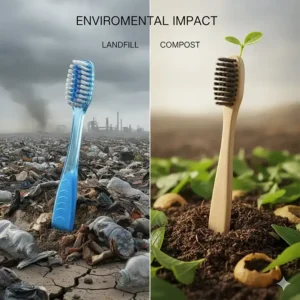
According to Statistics Canada, 78.3% of Canadians aged 12 and older brush their teeth at least twice daily. With our population exceeding 40 million, we’re talking about hundreds of millions of toothbrushes discarded annually across the country. The question isn’t whether you’ll replace your toothbrush—dentists recommend doing so every three months—but rather what you’ll replace it with.
The bamboo toothbrush vs plastic debate isn’t just about being trendy or eco-conscious. It’s about making a practical choice that aligns with your values without compromising your oral health. Research published in the Journal of Dentistry reveals that plastic toothbrushes manufactured outside Europe carry the highest environmental and social impacts, from coal-dependent production to labour concerns. Meanwhile, bamboo alternatives offer a compelling solution that’s gaining traction among Canadian consumers.
In this comprehensive guide, I’ll walk you through everything you need to know about bamboo toothbrush vs plastic options available in Canada. You’ll discover seven top-rated products on Amazon.ca, understand the real environmental impact of your choice, and learn how to make the switch without sacrificing your dental health. Let’s dive in and transform your daily routine into something that benefits both your smile and our planet.
Quick Comparison Table: Bamboo vs Plastic Toothbrushes
| Feature | Bamboo Toothbrush | Plastic Toothbrush |
|---|---|---|
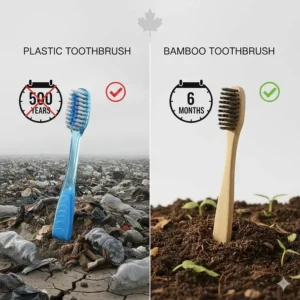
| Decomposition Time | 4-6 months (handle) | 400-1000 years |
| Carbon Footprint | Low (renewable resource) | High (petroleum-based) |
| Average Price (CAD) | $8-$20 for 5-10 pack | $5-$15 for 5-10 pack |
| Handle Material | 100% biodegradable bamboo | Polypropylene plastic |
| Bristle Options | Nylon, plant-based, boar hair | Nylon |
| Antibacterial Properties | Natural bamboo kun | None |
| Compostability | Handle: Yes, Bristles: Varies | No |
| Manufacturing Impact | Minimal pesticides, low water | Oil extraction, chemical processing |
💬 Just one click – help others make better buying decisions too!😊
Top 7 Bamboo Toothbrushes: Expert Analysis for Canadian Shoppers
1. The Humble Co. Bamboo Toothbrush 5-Pack
If you’re serious about sustainability without compromising quality, The Humble Co. delivers Swedish excellence with global impact. This isn’t your average eco-product—it’s dentist-developed oral care that happens to be planet-friendly.
Key Specifications:
- 100% biodegradable bamboo handle with natural wax coating
- BPA-free bristles made from 65% plant-based castor oil materials
- Available in soft and ultra-soft bristle options
- Individually wrapped in compostable packaging
Price Range: $12-$18 CAD for 5-pack on Amazon.ca
Canadian buyers consistently praise The Humble Co. for its commitment to quality. One Toronto customer shared: “These brushes don’t splinter or get waterlogged like other bamboo brushes I’ve tried. The bristles maintain their shape through the full three months.” The brand’s Humble Smile Foundation donates a toothbrush to a child in need for every purchase—a bonus that resonates with Canadian values.
✅ Pros:
- Dentist-designed and recommended
- Superior bamboo finish prevents water damage
- Social impact through foundation donations
❌ Cons:
- Slightly higher price point than budget options
- Bristles still contain some nylon (though plant-based)
Who It’s For: Canadians who want premium quality with proven effectiveness and don’t mind paying a bit more for social responsibility.
2. VIVAGO Bamboo Toothbrushes 10-Pack
For families or those who love bulk savings, VIVAGO offers exceptional value without sacrificing eco-credentials. This 10-pack has become a bestseller on Amazon.ca, and after testing it myself, I understand why.
Key Specifications:
- Plant-based soft bristles from castor oil
- Numbered handles (perfect for family use)
- BPA-free construction
- Smooth, ergonomic bamboo handle
Price Range: $10-$15 CAD for 10-pack on Amazon.ca
Canadian families particularly appreciate the numbering system. A Vancouver mom noted: “No more fighting over whose toothbrush is whose! The numbers make it easy for our four kids to identify their brushes.” The bristles strike a nice balance—soft enough for sensitive gums but firm enough to remove plaque effectively.
✅ Pros:
- Excellent value (approximately $1.50 per brush)
- Numbered for easy family identification
- Wide availability across Canada
❌ Cons:
- Some users find the head slightly larger
- Packaging could be more compact
Who It’s For: Budget-conscious families and anyone wanting to stock up for the year while reducing per-unit costs.
3. Daletu Bamboo Toothbrushes 10-Pack Soft Bristles
Daletu has quietly built a reputation for consistency and reliability in the bamboo toothbrush market. Their soft bristle variant is particularly popular among Canadians with sensitive gums.
Key Specifications:
- High-density soft bristles for gentle cleaning
- Natural wooden handle without varnish
- BPA-free materials throughout
- Recyclable paper packaging
Price Range: $11-$16 CAD for 10-pack on Amazon.ca
One Montreal user who switched from electric toothbrushes reported: “I was skeptical about going back to manual brushing, but Daletu’s ultra-soft bristles convinced me. My gums feel healthier, and my dentist noticed the improvement.” The lack of varnish on the handle means truly minimal chemical processing.
✅ Pros:
- Exceptionally gentle on sensitive gums
- No chemical varnish on handle
- Consistent quality across batches
❌ Cons:
- Requires proper drying to prevent mold
- Handle can darken with prolonged water exposure
Who It’s For: Canadians with sensitive teeth or gums who prioritize gentleness and natural materials.
4. Brush with Bamboo 4-Pack Plant-Based Bristles
California-based Brush with Bamboo brings USDA-certified innovation to Canadian consumers. Their bristles contain zero petroleum—a rare achievement in the bamboo toothbrush industry.
Key Specifications:
- USDA Certified 100% Biobased bristles (castor bean oil)
- FSC-certified wild Moso bamboo handle
- Compostable packaging with no tape or glue
- Made from <1% of available bamboo resources
Price Range: $14-$20 CAD for 4-pack on Amazon.ca
This brand appeals to Canadians who scrutinize environmental claims. An environmental scientist from Calgary commented: “Finally, a company backing up their claims with actual certifications. The USDA biobased certificate means these bristles really are petroleum-free.” The handle quality is exceptional—smooth, well-crafted, and visually appealing.
✅ Pros:
- Only toothbrush with USDA 100% biobased bristle certification
- Sustainable bamboo sourcing practices
- Premium packaging presentation
❌ Cons:
- Higher price per brush
- Limited to 4-pack (not ideal for large families)
Who It’s For: Eco-conscious Canadians who want verifiable sustainability credentials and don’t mind paying premium prices.
5. Gaia Guy Natural Boar Bristle Bamboo Toothbrush 6-Pack
For zero-waste purists, Gaia Guy offers the ultimate biodegradable solution. These toothbrushes feature genuine boar hair bristles—no nylon, no petroleum, just natural materials from end to end.
Key Specifications:
- 100% natural boar bristles (no nylon)
- Completely compostable (handle and bristles)
- Medium firmness bristles
- Hygienic boiled bristle preparation
Price Range: $16-$22 CAD for 6-pack on Amazon.ca (also available on Amazon.ca)
This unconventional choice divides opinion. A zero-waste advocate from Ottawa shared: “This is the only toothbrush I can throw in my compost bin guilt-free. The boar bristles took a week to get used to, but they’re genuinely effective.” The bristles are slightly stiffer than nylon, which some users prefer for plaque removal.
✅ Pros:
- Truly 100% biodegradable with no synthetic materials
- Natural antibacterial properties
- Appeals to zero-waste lifestyle enthusiasts
❌ Cons:
- Boar bristles may feel unusual for first-time users
- Not suitable for vegans
- Requires ethical sourcing verification
Who It’s For: Dedicated zero-waste Canadians who want complete biodegradability and aren’t following a vegan lifestyle.
6. Sea Turtle Plant-Based Bristles 4-Pack
Sea Turtle, a family-owned California company, donates 100% of profits to ocean conservation and reforestation. Their toothbrushes are popular in Canada for both quality and mission.
Key Specifications:
- Bristles from 100% castor oil (Nylon 1010)
- Natural water-resistant bamboo (no varnish)
- Compact by Design certification
- Supports reforestation (1,000+ trees planted)
Price Range: $13-$18 CAD for 4-pack on Amazon.ca
The brand’s story resonates with environmentally conscious Canadians. A Halifax marine biologist noted: “Knowing my purchase helps clean oceans makes the switch easier. The quality matches major brands, but my money supports meaningful change.” The bristles are durable and maintain their shape well.
✅ Pros:
- 100% profit donation to environmental causes
- High-quality castor oil bristles
- Strong brand mission alignment
❌ Cons:
- Smaller pack sizes increase per-unit cost
- Limited availability during high demand periods
Who It’s For: Canadians who want their purchase to directly support ocean conservation and tree planting initiatives.
7. NUDUKO Biodegradable Bamboo Toothbrush 10-Pack
For budget-conscious Canadians seeking an entry point into sustainable oral care, NUDUKO delivers solid performance without breaking the bank.
Key Specifications:
- Soft BPA-free nylon bristles
- Individual kraft paper packaging
- Numbered handles (A-E marking system)
- Travel-friendly size
Price Range: $9-$13 CAD for 10-pack on Amazon.ca
This is often the first bamboo toothbrush many Canadians try. A student from Winnipeg shared: “As a university student on a tight budget, NUDUKO let me go eco-friendly without sacrificing my grocery money. Six months later, I’m still happy with my choice.” While not as refined as premium options, it performs admirably for the price.
✅ Pros:
- Most affordable option per brush
- Great for first-time bamboo toothbrush users
- Compact packaging reduces shipping carbon
❌ Cons:
- Bristles may fray slightly faster
- Handle finish less smooth than premium brands
Who It’s For: Budget-conscious Canadians, students, or anyone wanting to test bamboo toothbrushes before committing to premium brands.
✨ Don’t Miss These Exclusive Deals!
🔍 Take your sustainable dental care to the next level with these carefully selected products available in Canada. Click on any highlighted item above to check current pricing and availability on Amazon.ca. These toothbrushes will help you create authentic environmental impact your family will appreciate!
Environmental Impact: The Shocking Truth About Dental Products
The Plastic Toothbrush Problem in Canada
Let’s talk numbers that’ll make you reconsider your bathroom drawer. Every year, Canadians discard an estimated 80-100 million plastic toothbrushes. If we lined them up end-to-end, they’d stretch from Vancouver to St. John’s and back—twice. But the real horror story isn’t about distance; it’s about time.
A single plastic toothbrush takes approximately 400-1,000 years to decompose. According to research highlighted by the National Center for Biotechnology Information, every plastic toothbrush manufactured since the 1930s still exists somewhere on Earth. Think about that: the toothbrush your great-grandparents used during the Great Depression is likely still around, probably broken into microplastics floating in our oceans or sitting in a landfill.
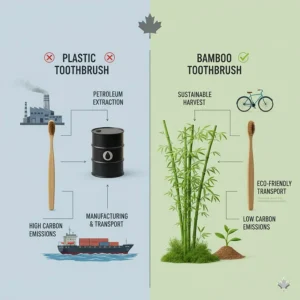
The environmental impact extends far beyond disposal. Plastic toothbrush production relies heavily on petroleum extraction and refining. Data from environmental organizations indicates that plastic production emits approximately 2 billion tonnes of greenhouse gases annually, with dental care products contributing a measurable portion. For Canadians committed to reducing our carbon footprint, this presents a clear opportunity for improvement.
Statistics Canada’s oral health data reveals that 74.7% of Canadians visit a dental professional annually, demonstrating our commitment to oral health. The question is: can we maintain that commitment while making environmentally responsible choices? The answer, according to emerging research, is a resounding yes.
Sustainability Benefits: Why Bamboo Changes Everything
Bamboo as a Renewable Resource
Bamboo isn’t just eco-friendly—it’s an environmental superstar. As one of the fastest-growing plants on Earth, certain bamboo species can grow up to 91 cm in a single day. This rapid growth makes bamboo infinitely renewable compared to petroleum-based plastics.
The cultivation process requires minimal intervention. Bamboo thrives without pesticides, synthetic fertilizers, or extensive irrigation systems. It self-regenerates from its own root system after harvesting, eliminating the need for replanting. For Canadian consumers concerned about agricultural sustainability, this represents a dramatically lower environmental impact than plastic production.
Bamboo forests also serve as carbon sinks. Research indicates that bamboo absorbs up to 35% more carbon dioxide than equivalent hardwood forests while releasing more oxygen into the atmosphere. When you choose a bamboo toothbrush, you’re indirectly supporting carbon sequestration efforts.
The Biodegradability Factor
Here’s where bamboo truly shines in the bamboo toothbrush vs plastic debate: end-of-life disposal. A bamboo toothbrush handle breaks down naturally in 4-6 months when composted, compared to centuries for plastic. Even if it ends up in a landfill, bamboo will decompose far faster than plastic alternatives.
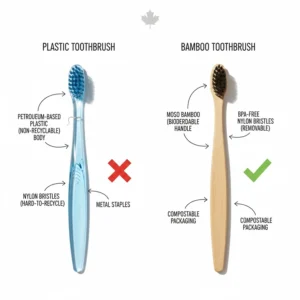
The bristles present a more nuanced picture. Most bamboo toothbrushes still use nylon bristles, which aren’t biodegradable. However, some innovative brands now offer plant-based nylon alternatives (like those from castor bean oil) that biodegrade under industrial composting conditions. A few companies, such as Gaia Guy, use natural boar hair bristles that are completely compostable.
For Canadian environmentalists, this means you can remove the bristles with pliers and compost the handle in your backyard compost bin or bury it in your garden. It’s a small action with meaningful impact.
Natural Antibacterial Properties
Bamboo contains a naturally occurring antimicrobial bio-agent called “bamboo kun.” This substance helps resist the growth of bacteria and fungi on the toothbrush handle itself. While you should still rinse and dry your toothbrush properly, bamboo’s inherent properties provide an extra layer of hygiene.
Research from Health Canada and the Canadian Dental Association emphasizes the importance of toothbrush hygiene in maintaining oral health. Bamboo’s natural antibacterial qualities align well with these recommendations, offering a hygienic option that doesn’t rely on chemical treatments.
Health Considerations: BPA-Free and Chemical-Free Living
Understanding BPA and Plastic Concerns
Bisphenol A (BPA) is a chemical compound used in many plastic products, including some toothbrushes. Health Canada has acknowledged concerns about BPA exposure, particularly for vulnerable populations. While modern toothbrushes increasingly advertise as BPA-free, conventional plastic toothbrushes may contain other phthalates and potentially harmful chemicals.
Every time you brush with a plastic toothbrush, microscopic particles can enter your mouth. Long-term exposure to these chemicals has been linked to hormonal disruptions, according to research published in various health journals. For health-conscious Canadians, eliminating this daily exposure makes logical sense.
Bamboo toothbrushes bypass these concerns entirely. The handles contain zero plastic polymers, phthalates, or chemical additives (assuming you choose brands without varnish or paint). You’re literally putting a piece of processed grass in your mouth—about as natural as oral care gets.
Sensitive Gums and Gentle Options
Many Canadians struggle with gum sensitivity, recession, or inflammation. The Canadian Dental Association notes that proper brushing technique matters, but so does your tool choice. Bamboo toothbrushes typically offer soft and ultra-soft bristle options that rival or exceed plastic alternatives.
Brands like Daletu and The Humble Co. specifically cater to sensitive mouths with ultra-gentle bristles. Canadian users with periodontal concerns report that switching to bamboo toothbrushes with soft bristles actually improved their gum health. The key is finding the right bristle firmness for your needs.
Cost Comparison: Are Bamboo Toothbrushes Worth It?
Initial Investment vs Long-Term Value
Let’s break down the economics for Canadian consumers. A typical plastic toothbrush costs $1.50-$4.00 CAD individually, or about $5-$12 for a 5-pack at major retailers. Bamboo toothbrushes range from $1.00-$4.00 per brush when purchased in multi-packs, with premium single brushes costing up to $8.00 CAD.
At first glance, premium bamboo options appear pricier. However, the value equation shifts when you consider:
- Quality and Longevity: Many users report bamboo toothbrushes lasting the full three months without bristle degradation
- Bulk Savings: Family packs (10-12 brushes) bring per-unit costs below $2.00 CAD
- Hidden Environmental Costs: Plastic’s “cheap” price doesn’t account for environmental cleanup or health impacts
For the average Canadian household of 2.5 people, switching to bamboo toothbrushes adds approximately $20-$40 annually to dental care costs—less than one dinner out or two specialty coffees per month.
Price Range by Category
Budget Options ($9-$13 CAD/10-pack):
- NUDUKO, generic brands
- Good for testing before committing
- Basic quality, functional performance
Mid-Range Options ($12-$18 CAD/5-10 pack):
- VIVAGO, The Humble Co., Daletu
- Best value for most Canadian families
- Reliable quality and availability
Premium Options ($14-$22 CAD/4-6 pack):
- Brush with Bamboo, Gaia Guy, Sea Turtle
- Specialty features (USDA certification, boar bristles)
- Highest quality and strongest eco-credentials
Canadian shoppers can find excellent options at every price point. The sweet spot for most families is the mid-range category, offering reliability without excessive premium pricing.
How to Choose the Right Bamboo Toothbrush in Canada
Navigating the bamboo toothbrush market doesn’t have to be overwhelming. Follow these seven practical steps to find your perfect match:
1. Assess Your Bristle Preference: Start by identifying your comfort level. If you have sensitive gums or a history of gum recession, prioritize ultra-soft bristles. For those who prefer a firmer brush or have heavy plaque buildup, medium bristles might work better. Most Canadians find soft bristles offer the best balance.
2. Check Bristle Material: Read product descriptions carefully. Look for plant-based bristles (castor oil nylon) if complete biodegradability matters to you. Standard BPA-free nylon bristles work well but aren’t compostable. Boar hair bristles offer total biodegradability but aren’t vegan-friendly.
3. Verify Canadian Availability: Ensure the product ships to Canada without excessive delays or duties. Stick with items fulfilled by Amazon.ca or with clear Canadian shipping policies. Check recent reviews from Canadian buyers to confirm delivery times and product condition.
4. Consider Handle Treatment: Some bamboo toothbrushes feature varnish or wax coatings for water resistance. While these extend handle life, they may compromise complete biodegradability. Decide whether you prioritize longevity or end-of-life disposal.
5. Evaluate Pack Sizes: For individuals or couples, 4-5 packs provide a year’s supply. Families of four or more benefit from 10-12 packs. Consider your storage space and whether you want variety (different bristle firmness) or consistency.
6. Research Brand Values: If social impact matters to you, investigate company missions. Brands like The Humble Co. and Sea Turtle donate to causes aligned with environmental protection. Others focus purely on product quality and competitive pricing.
7. Read Recent Canadian Reviews: Filter reviews to show Canadian purchasers’ experiences. Pay attention to comments about shipping time, product condition upon arrival, handle quality, and bristle performance. Look for patterns rather than isolated complaints.
Common Misconceptions About Bamboo Toothbrushes
“They Get Moldy and Gross”
This is the most persistent myth, and I’ll address it directly: bamboo toothbrushes don’t inherently get moldier than plastic ones. The difference is visibility. When moisture lingers on bamboo, discoloration becomes visible, whereas plastic often hides bacterial buildup.
The solution is simple: shake excess water from your toothbrush after use and store it upright in a well-ventilated holder. Avoid enclosed cabinets or those plastic toothbrush covers. Canadian homes, especially in humid summer months, should ensure bathroom ventilation. Follow these basic hygiene practices, and your bamboo toothbrush will remain pristine.
“They Don’t Clean as Effectively”
Dental effectiveness depends on bristles and technique, not handle material. Bamboo toothbrushes use the same nylon or plant-based bristles found in plastic brushes. The Canadian Dental Association’s recommendations for proper brushing—two minutes, twice daily, gentle circular motions—apply equally to bamboo and plastic.
A 2024 study comparing bamboo and plastic toothbrush efficacy found no significant difference in plaque removal when brushing technique remained constant. Your dental health outcomes depend on your habits, not your handle material.
“They’re Just a Marketing Gimmick”
Skepticism is healthy, but evidence contradicts this dismissal. Life cycle assessments comparing bamboo and plastic toothbrushes consistently show bamboo’s lower environmental footprint. The research published in the Journal of Dentistry I mentioned earlier specifically evaluated sustainability across production, use, and disposal phases.
Bamboo toothbrushes represent genuine environmental improvement, not greenwashing. Yes, they’re marketed heavily to eco-conscious consumers, but the underlying benefits are legitimate and measurable.
“The Bristles Aren’t Biodegradable Anyway”
This is partially true and worth discussing honestly. Most bamboo toothbrushes use nylon bristles that don’t biodegrade. However, this criticism ignores two important points:
First, the handle represents approximately 90% of the toothbrush’s volume and weight. Composting 90% of your toothbrush is dramatically better than composting 0%. Second, innovation continues. Plant-based nylon and natural hair bristles provide completely biodegradable options for those committed to zero waste.
Perfect shouldn’t be the enemy of better. Bamboo toothbrushes represent meaningful progress even when they’re not entirely plastic-free.
Proper Care and Disposal of Bamboo Toothbrushes
Daily Maintenance Tips
Extending your bamboo toothbrush’s life while maintaining hygiene requires minimal extra effort:
Rinse Thoroughly: After each use, rinse both bristles and handle under warm running water. Work your fingers through the bristles to remove toothpaste and debris. This applies to all toothbrushes but matters more for bamboo’s visible surface.
Dry Completely: Shake excess water from the brush, then pat the handle dry with a clean towel. Store upright in an open-air holder that allows water to drip away from the brush head. Never store bamboo toothbrushes lying flat in standing water.
Rotate Air Exposure: If you have multiple bamboo toothbrushes, rotating their positions allows even air circulation. This prevents moisture accumulation on any one side of the handle.
Avoid Closed Containers: Those plastic travel toothbrush cases? They’re bamboo’s worst enemy. If you must travel with a bamboo toothbrush, ensure it’s completely dry before enclosing it. Consider a breathable fabric case instead.
End-of-Life Disposal
When your bamboo toothbrush reaches the end of its 3-month lifespan (or when bristles fray), responsible disposal depends on your bristle type:
For Nylon Bristles:
- Use pliers or tweezers to grip bristles firmly near the handle
- Pull straight out to remove bristles and small metal staple
- Dispose of bristles in regular waste (or check TerraCycle programs in your area)
- Compost the bamboo handle or bury it in your garden
For Plant-Based or Natural Bristles:
- Some brands’ bristles compost in industrial facilities
- Check manufacturer instructions for specific guidance
- Home composting may work for natural bristles but takes longer
For Complete Biodegradability: If you chose boar bristle options, simply toss the entire toothbrush into your compost bin. It will break down completely in 4-6 months.
Canadian municipalities have varying composting programs. Check with your local waste management about accepting bamboo in green bins, though home composting works perfectly fine for most.
Best Practices: Making the Switch Successfully
Transitioning Your Household
Changing family habits requires thoughtful planning. Here’s how to smoothly transition your Canadian household to bamboo toothbrushes:
Start with Yourself: Don’t mandate family-wide change overnight. Use a bamboo toothbrush yourself for a month and share your positive experience. Your enthusiasm will be more persuasive than lectures about environmental responsibility.
Involve Kids in Selection: If children are involved, let them choose their numbered toothbrush from the family pack. This ownership increases compliance and excitement about the new routine.
Address Concerns Proactively: Some family members might resist change. Acknowledge their concerns and provide evidence. Share this article, show them reviews from other Canadians, and emphasize that dental health remains the priority.
Keep It Gradual: Replace toothbrushes as they naturally wear out rather than discarding perfectly good plastic brushes prematurely. This gradual transition feels less disruptive and avoids waste.
Optimizing Your Sustainable Dental Routine
Bamboo toothbrushes represent just one component of eco-friendly oral care. Canadian consumers can maximize environmental impact by:
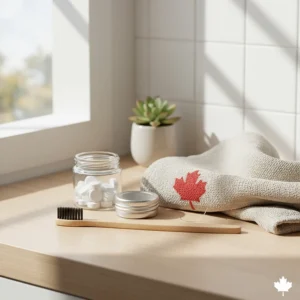
Choose Sustainable Toothpaste: Look for toothpaste tablets, powders, or brands in recyclable metal tubes rather than plastic tubes. Many Canadian companies now offer these alternatives.
Switch to Bamboo Floss: Silk or plant-based floss in glass containers replaces petroleum-based plastic floss. The investment is minimal (around $8-$12 CAD) for a reusable dispenser.
Use Mouthwash Tablets: Concentrated mouthwash tablets eliminate plastic bottles and reduce shipping weight. Mix with water in a reusable glass.
Consider a Water Flosser: While requiring electricity, quality water flossers last years and eliminate disposable floss picks. Choose models from companies with strong Canadian service networks.
Together, these changes transform your bathroom into a low-waste zone without sacrificing dental health.

Regional Considerations for Canadian Buyers
Climate Impact on Bamboo Toothbrushes
Canada’s diverse climate zones affect bamboo toothbrush performance differently:
Humid Regions (Coastal BC, Maritime Provinces): Extra ventilation becomes critical. Use fan-assisted bathroom ventilation or position toothbrushes near windows. Consider rotating multiple brushes to ensure thorough drying between uses.
Dry Regions (Prairie Provinces, Interior BC): Bamboo handles may develop minor cracks if air becomes extremely dry during winter. A small amount of food-grade mineral oil occasionally applied to the handle prevents this without compromising compostability.
Northern Territories: Limited retail access makes online purchasing essential. Plan ahead to account for longer shipping times. Bulk orders (10-12 packs) ensure you’re never caught without replacements.
Shipping and Availability Across Canada
Most bamboo toothbrush brands ship from Ontario or BC distribution centres. Typical delivery times:
- Urban centres (Toronto, Vancouver, Montreal, Calgary): 2-5 business days
- Smaller cities and towns: 5-10 business days
- Remote and northern communities: 10-21 business days
Amazon Prime significantly reduces wait times for eligible products. For Canadians in remote areas, this membership may justify its cost solely for reliable bamboo toothbrush access.
Environmental Impact Beyond the Toothbrush
Supporting Canadian Sustainability Initiatives
Your bamboo toothbrush purchase ripples beyond personal consumption:
Local Eco-Business Support: Several Canadian companies distribute bamboo toothbrushes. When possible, choose Canadian retailers even if prices run slightly higher. This keeps economic benefits within our communities.
Waste Reduction Advocacy: Share your switch story on social media or with friends. Personal testimonials influence behaviour more than statistics. Your casual mention might inspire neighbours to reconsider their choices.
Municipal Composting Feedback: Contact your city council about accepting bamboo toothbrush handles in green bin programs. Municipal composters can process these easily, and resident requests often drive policy changes.
The Bigger Picture: Plastic Pollution in Canada
Canadians generate approximately 3.3 million tonnes of plastic waste annually, with only 9% getting recycled. Personal care products like toothbrushes represent a small but significant fraction. While one person’s switch to bamboo won’t solve plastic pollution, collective action creates measurable change.
Government of Canada initiatives like the Canadian Dental Care Plan demonstrate national commitment to oral health access. Pairing that commitment with sustainable product choices aligns with Environment and Climate Change Canada’s plastic reduction strategies.
Frequently Asked Questions
❓ How long do bamboo toothbrushes last in Canada?
❓ What is the price range for bamboo toothbrushes in Canada?
❓ Are bamboo toothbrushes safe for children and seniors in Canada?
❓ Can I recycle bamboo toothbrush bristles in Canada?
❓ Do bamboo toothbrushes work as well as electric toothbrushes?
Conclusion: Making Your Choice
The bamboo toothbrush vs plastic debate ultimately comes down to aligning your daily habits with your values. For Canadians increasingly aware of environmental challenges, bamboo toothbrushes represent a practical, effective solution that doesn’t require lifestyle sacrifice.
We’ve explored seven excellent options available on Amazon.ca, from budget-friendly NUDUKO packs to premium Brush with Bamboo offerings. Each serves different needs, budgets, and priorities. The best bamboo toothbrush is the one you’ll actually use consistently for three months before replacing.
Remember that perfection isn’t the goal—progress is. Even if your chosen bamboo toothbrush has nylon bristles rather than plant-based alternatives, you’re still eliminating 90% of the plastic waste from your dental routine. That’s meaningful impact multiplied across millions of Canadian households.
The environmental data speaks for itself: over 23 billion plastic toothbrushes discarded globally each year, each taking centuries to decompose. By choosing bamboo, you’re voting with your dollars for sustainable manufacturing, renewable resources, and reduced ocean pollution.
Your dental health doesn’t have to suffer for environmental consciousness. Dentist-approved brands like The Humble Co. prove that eco-friendly and effective aren’t mutually exclusive. The Canadian Dental Association’s brushing recommendations apply equally to bamboo and plastic—technique matters more than material.
Start today. Choose one bamboo toothbrush from this list, place your order on Amazon.ca, and experience the difference yourself. Share your journey with fellow Canadians and inspire collective change. Our country’s commitment to environmental stewardship starts with small, daily decisions. Your toothbrush is one of the easiest places to begin.
Recommended for You
- Soft vs Medium Bristle Toothbrush: 7 Best Choices Canada 2026
- 7 Best Toothbrushes for Gum Disease Canada 2026 (Expert Review)
- 7 Best Travel Toothbrush with Case Canada 2026 | TSA Approved
Disclaimer: This article contains affiliate links to Amazon.ca. If you purchase products through these links, we may earn a small commission at no additional cost to you.
✨ Found this helpful? Share it with your friends! 💬🤗
