
In This Article
You’re standing in the oral care aisle, staring at dozens of toothbrush options, and suddenly a simple question becomes surprisingly complex: should you stick with your trusty manual toothbrush or make the switch to electric? It’s a decision that affects not just your wallet but your dental health for years to come.
The toothbrush debate has evolved significantly since the first electric model hit Canadian shelves decades ago. What was once a luxury item reserved for dental enthusiasts has become mainstream, with prices now accessible to most Canadian households. According to research from the Canadian Dental Association, proper brushing technique matters more than the type of toothbrush you use, but modern technology has made achieving that proper technique significantly easier.
Here’s what makes this choice particularly interesting in 2026: electric toothbrushes have become more affordable, manual toothbrushes have become more sophisticated, and the science comparing them is clearer than ever. Whether you’re looking at a $5 manual brush or a $200 smart electric model, the key is understanding what actually makes a difference for your oral health. Canadian buyers also need to consider factors like replacement costs, shipping times, and compatibility with products available on Amazon.ca.
This guide cuts through the marketing hype to give you evidence-based insights on manual vs electric toothbrush performance, real product recommendations available in Canada with CAD pricing, and practical advice to help you make the best choice for your smile.
Quick Comparison Table: Manual vs Electric Toothbrush
| Feature | Manual Toothbrush | Electric Toothbrush |
|---|---|---|
| Initial Cost | $2-12 CAD | $45-250 CAD |
| Plaque Removal | Effective with proper technique | 11-21% more effective (research-backed) |
| Ease of Use | Requires manual dexterity | Does most work automatically |
| Travel-Friendly | ✅ Extremely portable | ⚠️ Needs charging, bulkier |
| Replacement Cost | $2-12 CAD every 3 months | $15-30 CAD every 3 months (heads) |
| Best For | Budget-conscious, travelers, proper technique users | Those with dexterity issues, braces, gum disease |
| Gum Protection | Depends on pressure applied | Built-in pressure sensors (premium models) |
| Battery Life | N/A | 7-21 days per charge |
💬 Just one click – help others make better buying decisions too! 😊
Top 7 Toothbrushes for Canadians: Expert Analysis
1. Philips Sonicare 4100 Power Toothbrush
The Philips Sonicare 4100 dominates Amazon.ca’s bestseller list for excellent reason. This sonic electric toothbrush delivers 31,000 brush strokes per minute, removes up to 7 times more plaque than a manual toothbrush, and includes a pressure sensor that protects your gums from over-brushing. Canadian buyers particularly appreciate the USB charging base that eliminates bulky wall adapters, making it perfect for travel across provinces.
Key Specs: 14-day battery life, 2 intensity settings, QuadPacer timer
Price Range: $45-60 CAD on Amazon.ca
Canadian Availability: Widely available with Prime shipping
Customer feedback from Canadian buyers highlights the gentle yet effective cleaning action and the quiet operation compared to competing brands. One Toronto reviewer mentioned, “After three months of use, my dental hygienist noticed significantly less plaque buildup.”
Pros:
✅ Gentle on sensitive teeth and gums
✅ Long battery life reduces charging frequency
✅ USB charging works with standard phone chargers
Cons:
❌ Only 2 intensity settings (competitors offer more)
❌ Replacement heads cost $20-25 CAD for 2-pack
2. Oral-B iO Series 6 Electric Toothbrush
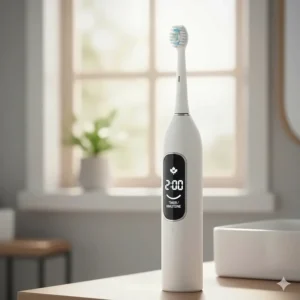
The Oral-B iO Series 6 represents a significant leap in toothbrush technology with its linear magnetic drive system that delivers micro-vibrations directly to bristle tips. This CDA-validated model features 5 smart cleaning modes, an interactive display for real-time coaching, and AI technology that learns your brushing style. Canadian retailers including Best Buy Canada stock this model at $230 CAD, though Amazon.ca frequently offers sales.
Key Specs: Oscillating-rotating action, 5 cleaning modes, magnetic charger
Price Range: $180-230 CAD
Canadian Availability: Available at Best Buy, Amazon.ca, Canadian Tire
The pressure sensor uses a light system—green for optimal pressure, red for too hard—that has helped countless Canadians protect their enamel from damage. Montreal users report the interactive display makes brushing feel less like a chore and more like using smart technology.
Pros:
✅ Advanced AI technology personalizes cleaning
✅ Interactive display provides instant feedback
✅ 100% healthier gums in one week (clinical studies)
Cons:
❌ Higher price point than budget models
❌ Replacement heads expensive ($25-35 CAD each)
3. Aquasonic Black Series Ultra Whitening Toothbrush
For budget-conscious Canadians, the Aquasonic Black Series offers impressive features at a fraction of premium prices. This ADA-accepted electric toothbrush includes 8 replacement brush heads and a travel case, making it exceptional value at $40-50 CAD on Amazon.ca. The 40,000 VPM motor delivers powerful cleaning, while 4 operating modes handle everything from daily cleaning to sensitive teeth.
Key Specs: Wireless charging, 4 cleaning modes, 30-day battery
Price Range: $40-55 CAD with 8 heads included
Canadian Availability: Amazon.ca Prime eligible
Canadian buyers particularly appreciate the generous brush head supply—8 heads provides two years of replacements. Vancouver customers note the wireless charging base is convenient and the battery life easily handles week-long trips without charging.
Pros:
✅ Exceptional value with 8 replacement heads
✅ Wireless charging is modern and convenient
✅ 30-day battery life perfect for travel
Cons:
❌ Less established brand than Philips or Oral-B
❌ No pressure sensor on base model
4. Colgate 360 Whole Mouth Manual Toothbrush
The Colgate 360 Whole Mouth proves that manual toothbrushes remain highly effective when properly designed. This medium-bristle brush features a cheek and tongue cleaner, multi-height bristles for deep cleaning between teeth, and an ergonomic handle. Available in 4-packs for $8-12 CAD on Amazon.ca, it’s the budget champion for Canadians who prefer traditional brushing.
Key Specs: 360-degree cleaning surfaces, tongue cleaner, medium bristles
Price Range: $2-3 CAD each, $8-12 CAD for 4-pack
Canadian Availability: Nationwide at pharmacies, Amazon.ca, Walmart
Halifax customers appreciate the whole-mouth approach that addresses bad breath bacteria on the tongue and cheeks. The compact head reaches back molars easily, and the textured grip prevents slipping during brushing.
Pros:
✅ Extremely affordable for Canadian budgets
✅ No batteries or charging required
✅ Tongue cleaner tackles bad breath effectively
Cons:
❌ Requires proper manual technique
❌ No built-in timer or pressure guidance
5. Oral-B Pro 1000 CrossAction Electric Toothbrush
The Oral-B Pro 1000 is Canada’s entry-level electric toothbrush that doesn’t compromise on essential features. This oscillating-rotating model removes 300% more plaque along the gumline versus a manual toothbrush and includes a professional timer. At $50-70 CAD on Amazon.ca, it’s perfectly positioned for first-time electric brush buyers.
Key Specs: 3D cleaning action, professional timer, compatible with all Oral-B heads
Price Range: $50-70 CAD
Canadian Availability: Amazon.ca, Costco, Walmart Canada
Edmonton buyers praise the CrossAction brush head that surrounds each tooth for comprehensive cleaning. The simple one-button design appeals to seniors and those who don’t need multiple modes. Replacement heads are widely available across Canada at competitive prices.
Pros:
✅ Proven 3D cleaning technology
✅ Simple, intuitive operation
✅ Compatible with extensive Oral-B head selection
Cons:
❌ No pressure sensor (premium models have this)
❌ Single cleaning mode may not suit everyone
6. GUM Technique Sensitive Clean Manual Toothbrush
The GUM Technique Sensitive Clean targets Canadians with sensitive teeth and receding gums. This ultra-soft brush features a quad-grip handle that naturally positions bristles at the dentist-recommended 45-degree angle. The compact head and tapered bristles reach deep between teeth without causing discomfort. Available in 6-packs for $18-22 CAD on Amazon.ca, each brush lasts the recommended 3-month replacement cycle.
Key Specs: Ultra-soft bristles, quad-grip handle, compact head
Price Range: $3-4 CAD each
Canadian Availability: Amazon.ca, Jean Coutu, Shoppers Drug Mart
Ottawa dental patients report significant reduction in gum bleeding after switching to this ultra-soft option. The quad-grip handle is particularly helpful for those recovering from dental procedures or managing chronic gum sensitivity.
Pros:
✅ Ultra-soft bristles perfect for sensitive gums
✅ Quad-grip promotes proper angle automatically
✅ Affordable for frequent replacement
Cons:
❌ Ultra-soft may feel too gentle for some
❌ No tongue cleaner included
7. Philips Sonicare ProtectiveClean 5300
The Philips Sonicare ProtectiveClean 5300 serves as the mid-range sweet spot for Canadians wanting premium features without flagship pricing. This sonic brush offers 3 cleaning modes, BrushSync technology that tracks brush head life, and 14-day battery performance. The included travel case makes it ideal for frequent travelers. Available for $90-120 CAD on Amazon.ca with 2 bonus brush heads.
Key Specs: 3 modes, BrushSync tracking, pressure sensor, premium brush heads
Price Range: $90-130 CAD
Canadian Availability: Amazon.ca, The Bay, London Drugs
Calgary customers value the pressure sensor that automatically reduces vibration when brushing too hard, protecting enamel from gradual wear. The travel case holds both the brush and an extra head, perfect for business travelers and family vacations.
Pros:
✅ BrushSync reminds when to replace heads
✅ Premium travel case included
✅ 3 modes handle various dental needs
Cons:
❌ Mid-range pricing may not suit tight budgets
❌ Heavier than basic models
✨ Don’t Miss These Exclusive Deals!
🔍 Take your oral health routine to the next level with these carefully selected toothbrushes available in Canada. Click on any highlighted item to check current pricing and availability on Amazon.ca. These tools will help you achieve that professional-clean feeling your dentist will notice!
Understanding Manual Toothbrush Benefits
Manual toothbrushes deserve more credit than they typically receive in 2026. These traditional tools have evolved significantly, incorporating research-backed design improvements that maximize plaque removal when used with proper technique. Understanding manual toothbrush benefits helps you make an informed decision rather than defaulting to electric simply because it’s “modern.”
Cost-Effectiveness That Actually Matters
The financial advantage of manual brushes extends beyond the initial $2-10 CAD purchase price. Over five years, a diligent brusher replacing their manual toothbrush every three months (as recommended by the Canadian Dental Association) spends approximately $60-120 CAD total. Compare this to electric toothbrush ownership: $100-250 CAD initial investment plus $60-120 CAD annually for replacement heads equals $400-850 CAD over the same period.
For Canadian families, these numbers multiply. A household of four using manual brushes spends $240-480 CAD over five years versus $1,600-3,400 CAD for electric models. That’s savings that could fund two professional cleaning appointments per family member annually.
Travel Convenience in a Connected World
Canadian travelers know the frustration of packing chargers, adapters, and bulky cases. Manual toothbrushes eliminate this entirely. Whether you’re flying to Vancouver from St. John’s or driving across the prairies, a manual brush fits in any pocket without worrying about battery life, TSA liquid limits (for electric toothbrush heads), or finding compatible outlets.
The portability factor matters especially for Canadians who camp, hike, or enjoy cottage country. No electricity? No problem. Your manual brush performs identically whether you’re in downtown Toronto or backcountry Algonquin Park.
Control and Tactile Feedback
Skilled manual brushers develop precise control over pressure, angle, and movement that some prefer over automated brushing. This tactile connection helps you feel plaque disruption, detect sensitive spots immediately, and adjust technique in real-time. Research published in the National Library of Medicine shows that manual brushers who receive proper instruction can match electric toothbrush effectiveness.
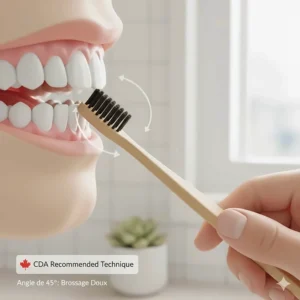
The learning curve for proper technique is real, but once mastered, manual brushing becomes second nature. Many Canadian dental hygienists teach the “modified Bass technique”—holding bristles at a 45-degree angle to the gumline and making gentle circular motions. This method effectively removes plaque without requiring battery power.
When to Use Manual Toothbrush: Specific Scenarios
Certain situations make manual toothbrushes the obvious choice, regardless of electric brush advantages. Understanding when to use manual toothbrush options ensures you’re not overspending on technology that doesn’t suit your lifestyle or dental needs.
Budget Constraints and Economic Realities
For many Canadian households, $50-250 CAD for an electric toothbrush simply isn’t feasible, especially when multiplied across family members. Student loans, mortgage payments, and rising grocery costs leave limited room for premium oral care products. Manual toothbrushes provide clinically effective cleaning for a fraction of the cost.
Food banks across Canada often include hygiene items in their distributions, but these are invariably manual toothbrushes. For Canadians facing financial hardship, a quality manual brush from brands like Colgate or Oral-B (available at dollar stores for $1-3 CAD) delivers the essential cleaning power to maintain oral health without breaking the bank.
Children Learning Proper Technique
Dental professionals often recommend manual toothbrushes for children ages 3-7 who are developing brushing skills. The physical action of manual brushing teaches motor control, establishes proper angles and pressure, and creates muscle memory that benefits lifelong oral health. Electric brushes can actually hinder this learning process by automating movements children need to practice themselves.
Parents across Quebec to British Columbia report that kids understand the cause-and-effect relationship better with manual brushes: they see and feel the brushing action creating results. This builds awareness that translates to better oral hygiene habits as they mature. Plus, at $3-5 CAD for a child’s manual brush versus $40-80 CAD for a child’s electric model, replacing lost or damaged toothbrushes doesn’t strain household budgets.
Travel and Outdoor Activities
The ruggedness of manual toothbrushes makes them ideal for Canadian outdoor enthusiasts. Camping in the Rockies, kayaking in the Maritimes, or ice fishing in Saskatchewan—manual brushes withstand temperature extremes, moisture, and rough handling that would damage electronic components.
Adventure travelers appreciate that manual brushes never run out of battery mid-trip. Whether you’re on a two-week canoe expedition or a cross-country road trip hitting every province, your toothbrush maintains consistent performance without requiring electrical access or charging stops.
Dental Work and Sensitivity
Following certain dental procedures—root canals, gum surgery, or crown placements—dentists may temporarily recommend manual brushes for gentler cleaning. The ability to control every aspect of pressure and movement helps patients navigate tender areas while healing. Electric brush vibrations can feel uncomfortable or even painful on recently treated gums.
Canadian dental patients also find manual brushes useful for cleaning around temporary work. When you have a temporary crown or bridge, the ultra-gentle touch of a soft manual brush reduces risk of dislodging restoration before permanent placement.

Cost Comparison Manual Electric: The Real Numbers
A thorough cost comparison manual electric analysis reveals expenses extending far beyond the checkout price. Canadian consumers deserve transparency about the true financial commitment of electric toothbrush ownership versus sticking with manual options.
Initial Investment Breakdown
Manual Toothbrush Costs:
- Budget option: $1-3 CAD (drugstore brands)
- Mid-range: $4-7 CAD (Colgate, Oral-B, GUM)
- Premium manual: $8-12 CAD (specialized designs, eco-friendly)
Electric Toothbrush Costs:
- Budget electric: $40-60 CAD (Aquasonic, basic Oral-B)
- Mid-range: $90-150 CAD (Philips Sonicare 4100, Oral-B Pro series)
- Premium electric: $180-300 CAD (Oral-B iO series, Philips Diamond Clean)
The price gap is substantial. A Canadian family of four can equip everyone with quality manual brushes for $20-40 CAD versus $160-1,200 CAD for electric models. This initial difference determines whether oral care fits comfortably in monthly budgets or requires saving and planning.
Replacement Head Economics
Here’s where electric toothbrush math gets interesting. Dental professionals recommend replacing brush heads every 3 months (sooner if bristles fray). Canadian replacement costs reveal the ongoing financial commitment:
Electric Replacement Heads (per 3 months):
- Budget electric heads: $5-8 CAD each
- Philips Sonicare genuine heads: $10-15 CAD each
- Oral-B genuine heads: $8-12 CAD each
- Premium iO series heads: $15-20 CAD each
Manual Brush Replacement (per 3 months):
- Budget manual: $1-3 CAD
- Mid-range manual: $4-7 CAD
- Premium manual: $8-12 CAD
Over one year, an electric toothbrush user spends $40-80 CAD on replacement heads versus $16-48 CAD for manual brushes. This $24-32 CAD annual difference compounds over decades of use. A 30-year-old Canadian choosing electric could spend an extra $1,200-1,600 CAD on replacement heads alone by age 65 compared to manual brush users.
Hidden Costs and Considerations
Electricity consumption adds minimal cost—roughly $1-2 CAD annually—but replacement batteries for certain models can add $20-40 CAD every 2-3 years. If you lose or break an electric toothbrush, you’re replacing a $50-250 CAD device versus a $3-10 CAD manual brush.
Canadians also encounter shipping delays when ordering specialized replacement heads from Amazon.ca. Running out means either using a worn head (reducing effectiveness) or making emergency purchases at pharmacy prices (often 30-50% higher than online). Manual brushes, available at every convenience store, never create this problem.
When Electric Brushes Justify the Cost
Despite higher expenses, electric toothbrushes often prove worthwhile for Canadians with:
- Arthritis or limited hand mobility (convenience outweighs cost)
- Orthodontic work requiring extra cleaning power
- History of gum disease needing superior plaque removal
- Disability making manual brushing challenging
For these groups, the 11-21% better plaque removal documented in research studies translates to fewer cavities, less gum disease, and potentially lower dental bills long-term. When electric brushes prevent even one $500-1,500 CAD crown or root canal, they’ve paid for themselves.
Effective Brushing Techniques for Both Types
Effective brushing techniques determine oral health outcomes more than toothbrush type. Canadian Dental Hygienists Association emphasizes that a $3 manual brush used correctly outperforms a $200 electric brush used poorly. Mastering these techniques gives you professional-quality cleaning regardless of your choice.
The Modified Bass Technique (Manual Brushing)
This method, recommended by dentists across Canada, targets the gumline where plaque accumulates most aggressively:
Step 1: Hold your brush at a 45-degree angle toward the gumline
Step 2: Place half the bristles on gums, half on teeth
Step 3: Use gentle circular or vibrating motions
Step 4: Brush 2-3 teeth at a time using 15-20 strokes per area
Step 5: Move systematically around your mouth, spending 30 seconds per quadrant
For chewing surfaces, use back-and-forth scrubbing motions. For inner surfaces of front teeth, tilt the brush vertically and make gentle up-and-down strokes. The entire process should take the ADA-recommended 2 minutes.
Common mistakes Canadian manual brushers make include brushing too hard (which damages enamel), rushing through quadrants (leaving plaque behind), and forgetting the tongue (which harbors odor-causing bacteria). Setting a timer on your phone helps ensure you’re brushing long enough.
Electric Toothbrush Optimal Use
Electric brushes require less manual effort but still demand proper technique:
Step 1: Let the brush do the work—don’t scrub or apply heavy pressure
Step 2: Guide the brush head slowly along each tooth’s surface
Step 3: Hold the brush at the gumline for 2-3 seconds per tooth
Step 4: Follow the QuadPacer signals (30 seconds per mouth quadrant)
Step 5: Use the pressure sensor as guidance—if it lights up red, you’re pressing too hard
Many Canadians make the mistake of moving electric brushes too quickly across teeth, reducing contact time and effectiveness. Think of yourself as guiding the technology rather than doing the brushing yourself. The oscillating or sonic action handles plaque disruption; you’re simply positioning it correctly.
For the 50% of Canadians who brush less than 2 minutes daily, electric toothbrushes with built-in timers prove transformative. That automated buzzing at 30-second intervals removes the guesswork and ensures adequate cleaning time.
Common Technique Errors to Avoid
Manual Brush Mistakes:
- Horizontal scrubbing motion (damages gums)
- Skipping hard-to-reach back molars
- Using the same brush past 3 months
- Forgetting the tongue and roof of mouth
Electric Brush Mistakes:
- Applying too much pressure (negates pressure sensor benefits)
- Moving the brush head too quickly
- Ignoring the app coaching (if using smart models)
- Charging inconsistently, leading to weakened battery performance
Winnipeg dental hygienists report that most patients benefit from annual technique reviews. Your brushing form might deteriorate over time without professional feedback, reducing effectiveness regardless of toothbrush quality.
Oral Hygiene Effectiveness: What Research Shows
Oral hygiene effectiveness depends on multiple factors beyond just your toothbrush choice. Canadian and international research provides clear evidence about what actually matters for maintaining healthy teeth and gums throughout your lifetime.
The Cochrane Review Findings
The most comprehensive analysis of toothbrush effectiveness—a 2014 Cochrane Review examining 56 clinical trials with over 5,000 participants—found that powered toothbrushes reduced plaque by 11% at 1-3 months and 21% after 3 months compared to manual brushes. Gum inflammation (gingivitis) decreased by 6% at 1-3 months and 11% at 3+ months.
While these percentages sound modest, they translate to meaningful clinical benefits. For someone prone to gum disease, an 11% reduction in inflammation could prevent progression to periodontitis, which affects nearly 50% of Canadian adults over 30 according to Health Canada data.
The review also found oscillating-rotating electric brushes (Oral-B style) slightly more effective than sonic brushes (Sonicare style), though both outperformed manual brushing in most metrics.
Long-Term Study Results
A landmark 11-year German study published in the Journal of Clinical Periodontology followed 2,819 adults and found electric toothbrush users retained 19% more teeth over the study period. They also showed slower periodontal disease progression and healthier gums overall.
This research matters for aging Canadians concerned about tooth loss. The difference between keeping your natural teeth at 70 versus requiring dentures or implants represents both quality of life and significant cost savings (implants range $2,000-6,000 CAD per tooth in Canada).
Technique Trumps Technology
Multiple studies confirm what dentists tell patients daily: proper technique with a manual brush matches poor technique with an electric brush. Research from the University of Iowa College of Dentistry found no significant difference between electric and manual toothbrushes when users received proper instruction and maintained correct technique.
This explains why some Canadians see dramatic improvements after switching to electric (their manual technique was poor) while others notice little change (their manual technique was already excellent). If your dentist consistently finds minimal plaque at checkups, your current approach works regardless of brush type.
The Consistency Factor
A 2025 study in the International Journal of Dental Hygiene revealed that electric toothbrush users maintained more consistent brushing habits. Built-in timers, pressure sensors, and app reminders created accountability that improved compliance. This consistency factor—brushing twice daily for the full 2 minutes—matters more than marginal plaque removal differences between brush types.
For Canadians struggling to maintain regular brushing routines, electric toothbrushes serve as technological motivation. The gamification aspects of smart brushes particularly benefit children and teenagers, demographics notoriously inconsistent with oral hygiene.
Dental Cleaning Methods: Professional vs At-Home
Dental cleaning methods vary dramatically in scope and effectiveness. Understanding the relationship between professional cleanings and at-home maintenance helps Canadians maximize oral health while managing the costs not always covered by provincial health insurance.
Professional Dental Cleanings
Canadian dental hygienists perform cleanings that remove calculus (hardened plaque) no toothbrush can eliminate. These appointments typically include:
Scaling: Using metal instruments and ultrasonic tools to remove tartar buildup above and below the gumline
Polishing: Buffing teeth with gritty paste to remove surface stains and create smooth surfaces resistant to bacterial adhesion
Fluoride Treatment: Applying concentrated fluoride to strengthen enamel and prevent decay
Most Canadian dental insurance plans cover two cleanings annually, though periodontal disease patients may need quarterly appointments. Out-of-pocket costs range $150-300 CAD per cleaning depending on province and complexity.
The Canadian Dental Association recommends professional cleanings every 6 months for most adults, though some need more frequent intervention. Your personal recommendation depends on plaque buildup rate, gum health, medical history, and at-home hygiene effectiveness.
The Gap Your Toothbrush Must Fill
Between professional cleanings, your toothbrush shoulders the entire responsibility for plaque control. Bacterial biofilm reforms on teeth within 24 hours of removal, meaning yesterday’s brushing doesn’t protect today’s teeth. This daily battle determines whether you arrive at your next cleaning appointment with minor buildup or significant problems.
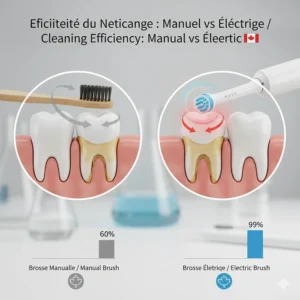
Research shows the average person removes only 50% of plaque present during brushing. Electric toothbrushes boost this to approximately 60-70%, while skilled manual brushers achieve similar results. The remaining 30-40% of plaque accumulates in hard-to-reach areas: between teeth (requiring floss), along the gumline, and around back molars.
This is why Canadian dentists emphasize that no toothbrush, regardless of cost or technology, eliminates the need for flossing. The contact points between teeth remain unreachable by bristles, creating breeding grounds for bacteria unless physically disrupted by floss or interdental brushes.
Preventing the Need for Advanced Treatment
Effective at-home cleaning prevents costly dental procedures. Consider these average Canadian costs:
- Cavity filling: $150-400 CAD
- Root canal: $800-1,500 CAD
- Crown: $1,000-2,500 CAD
- Tooth extraction: $200-600 CAD
- Dental implant: $2,000-6,000 CAD per tooth
An electric toothbrush costing $100-200 CAD that prevents even one crown pays for itself many times over. For Canadians without comprehensive dental insurance (approximately 30% of the population), prevention through superior at-home care becomes economically essential.
Complementary Tools and Techniques
Optimal oral hygiene requires more than just brushing:
Flossing: Daily flossing removes 40% of tooth surface plaque missed by brushing
Interdental Brushes: Tiny cone-shaped brushes clean spaces between teeth, particularly effective for those with gum recession
Water Flossers: Pulsating water removes debris and bacteria from hard-to-reach areas
Antimicrobial Mouthwash: Reduces bacterial load between brushings
Tongue Scraping: Removes odor-causing bacteria from tongue surface
Many electric toothbrushes now include companion apps that remind users to floss and use mouthwash, creating comprehensive routines rather than focusing solely on brushing. This holistic approach delivers the dramatic oral health improvements Canadians seek.
Special Considerations for Different Age Groups
Different age groups across Canada have unique oral health needs that influence whether manual or electric toothbrushes serve them better. Matching the tool to the user’s abilities and requirements maximizes both effectiveness and safety.
Children and Adolescents (Ages 3-17)
Young Children (3-6 years): Dentists generally recommend manual brushes to develop motor skills and establish proper technique. Kids this age need parental supervision regardless of brush type. Manual brushes cost $3-5 CAD and don’t create financial stress when lost or damaged—a near-certainty with young children.
Elementary Age (7-11 years): This transition period benefits from either approach. Electric brushes with timers help kids who rush through brushing, while manual brushes suit those who’ve mastered technique. Kid-focused electric models from Oral-B and Philips ($40-60 CAD on Amazon.ca) feature fun designs and gentle oscillation appropriate for developing teeth.
Teens (12-17 years): Teenagers with braces especially benefit from electric toothbrushes. Orthodontic hardware creates dozens of plaque traps that electric brush power helps clean. Canadian orthodontists consistently report better outcomes in patients using electric brushes throughout treatment. Smart brushes with app connectivity also appeal to tech-savvy teens more likely to maintain consistent habits.
Adults (Ages 18-64)
Most working-age Canadians choose based on lifestyle factors rather than dental needs:
Busy Professionals: Electric brushes with 2-minute timers ensure adequate cleaning despite rushed morning routines
Frequent Travelers: Manual brushes eliminate packing chargers and finding compatible outlets
Parents: Manual brushes for the whole family minimize costs and complexity
Those with Dental Issues: Electric brushes provide superior cleaning for anyone fighting gum disease or prone to cavities
Adults with arthritis, carpal tunnel, or other hand mobility issues find electric brushes dramatically easier. The powered motion reduces the dexterity required for effective cleaning, maintaining oral health when manual brushing becomes physically challenging.
Seniors (Ages 65+)
Older Canadians face unique considerations:
Dexterity Challenges: Arthritis, tremors, or reduced grip strength make electric brushes essential for some seniors. The larger, heavier handle provides better grip, while automated motion compensates for reduced manual ability.
Gum Recession: Many seniors experience receding gums that expose sensitive root surfaces. Electric brushes with pressure sensors prevent damage from over-brushing these vulnerable areas.
Dry Mouth: Medications cause dry mouth in many older adults, increasing cavity risk. Electric brushes’ superior plaque removal becomes more important when saliva’s protective effects diminish.
Fixed Income Concerns: Seniors on limited budgets may prioritize manual brushes despite potential benefits from electric models. Some provincial programs and community health centres provide free or subsidized oral care products to low-income seniors.
Canadian long-term care facilities typically provide manual brushes due to cost constraints and the difficulty of managing charging stations for dozens of residents. However, family members often supply electric brushes for relatives who benefit from their ease of use.
Environmental Impact and Sustainability
Environmental impact increasingly influences purchasing decisions for climate-conscious Canadians. The sustainability aspects of manual vs electric toothbrushes reveal surprising complexities beyond simple plastic waste calculations.
Plastic Waste Comparison
Manual Toothbrushes: Canadians discard approximately 85 million manual toothbrushes annually (based on population and replacement frequency). At 18-20 grams each, that’s roughly 1,530-1,700 tonnes of plastic waste yearly. Most end up in landfills where they persist for 400+ years without biodegrading.
Electric Toothbrushes: While the handle lasts years, replacement heads generate comparable waste to manual brushes. An electric toothbrush user replacing heads quarterly still discards 4 plastic items annually. The additional electronic components (batteries, motors, circuit boards) create e-waste requiring specialized recycling unavailable in many Canadian municipalities.
Sustainable Alternatives
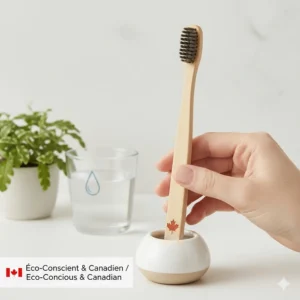
Bamboo Toothbrushes: These eco-friendly manual options ($3-8 CAD on Amazon.ca) feature biodegradable handles and plant-based bristles. Popular Canadian brands like The Humble Co. and Mother Earth deliver bamboo brushes nationwide. While bristles must be removed before composting handles, the environmental impact drops significantly.
Recyclable Electric Brush Heads: Philips’ “SnapOn” recycling program allows Canadians to mail used Sonicare heads for recycling, though participation remains low due to shipping hassle. Some municipal recycling programs now accept electric toothbrush heads if batteries are removed.
Rechargeable vs. Battery-Powered: Rechargeable electric brushes (all models featured in this guide) avoid the disposable battery waste created by cheaper battery-powered electric brushes. Those AA-powered models (often $10-20 CAD) create ongoing battery waste unless users commit to rechargeable batteries.
Energy Consumption
Electric toothbrushes consume minimal electricity—roughly 2-4 kWh annually when charged regularly. In provinces with clean energy grids (Quebec, Manitoba, British Columbia), this environmental impact is negligible. However, Canadians in Alberta, Saskatchewan, and Nova Scotia charging brushes with coal or oil-generated electricity contribute more to carbon emissions.
The manufacturing energy for electric toothbrushes exceeds manual brushes substantially. Production requires mining rare earth elements for batteries, creating circuit boards, and assembling complex components. A single electric toothbrush embodies roughly 10 times the manufacturing energy of a manual brush.
Long-Term Sustainability Assessment
From a pure environmental perspective, well-made manual toothbrushes (especially bamboo options) win decisively. However, if electric brushes prevent dental problems requiring energy-intensive treatments (drilling, crown manufacturing, implant surgery), they might offset their higher manufacturing impact through reduced overall healthcare resource consumption.
Canadian consumers seeking maximum sustainability should consider:
- Bamboo manual brushes for eco-conscious minimal impact
- High-quality electric brushes kept for 5-10 years rather than upgrading frequently
- Recycling programs for both manual and electric brush disposal
- Reduced consumption overall by properly caring for brushes to maximize lifespan
Making Your Decision: Which Toothbrush is Right for You?
After examining research, costs, techniques, and special considerations, the decision framework becomes clear. Canadian consumers should evaluate their specific situation against these practical guidelines rather than assuming one option universally superior.
Choose Manual Toothbrushes If:
✅ You’re comfortable with proper brushing technique
✅ Budget constraints make $50-250 CAD purchases impractical
✅ You travel frequently and value minimal packing
✅ Environmental sustainability is a top priority
✅ You’re teaching children foundational brushing skills
✅ You have no hand mobility or dexterity issues
✅ Your dental checkups consistently show good oral health
Manual brushes serve Canadians excellently when used correctly. Don’t let marketing convince you that “basic” equals “inadequate.” A $5 manual brush wielded with skill outperforms a $200 electric brush used carelessly.
Choose Electric Toothbrushes If:
✅ You have arthritis, carpal tunnel, or limited hand mobility
✅ Your dental checkups reveal consistent plaque buildup
✅ You have orthodontic work (braces, permanent retainers)
✅ You struggle to brush for the full 2 minutes
✅ You have gum disease requiring superior plaque removal
✅ You find technology motivating for habit formation
✅ Budget allows for $100-250 CAD initial investment plus replacement heads
Electric brushes excel for Canadians who need assistance overcoming physical limitations or behavioral challenges. The built-in timers, pressure sensors, and automated motion create foolproof cleaning that manual brushing struggles to match.
The Hybrid Approach
Many Canadians find success using both:
- Electric toothbrush at home for thorough daily cleaning
- Manual toothbrush for travel, work, or emergency backup
- Different family members using different brushes based on individual needs
This flexibility optimizes outcomes without rigid adherence to one approach. Your 12-year-old with braces might need electric while your 8-year-old thrives with manual. That’s perfectly fine.
Trial Period Recommendations
If uncertain, try electric brushing for 3 months (one full dental checkup cycle). Your hygienist can objectively measure whether plaque levels improved, gums appear healthier, or oral health metrics declined. This evidence-based assessment removes guesswork from the decision.
Amazon.ca’s return policies allow testing electric toothbrushes risk-free within 30 days if unopened packages are maintained. Some Canadian dental offices loan demo brushes to patients considering the switch, eliminating financial risk entirely.

Frequently Asked Questions
❓ Are electric toothbrushes better for receding gums in Canada?
❓ How much does it cost to maintain an electric toothbrush in Canada per year?
❓ Do Canadian dental insurance plans cover electric toothbrushes?
❓ Which toothbrush type is better for children with braces in Canada?
❓ Can manual toothbrushes remove as much plaque as electric ones?
Conclusion: Your Path to Better Oral Health
The manual vs electric toothbrush debate ultimately comes down to your unique circumstances rather than one option universally conquering the other. Canadian dental professionals consistently emphasize that proper technique, adequate time, and daily consistency matter far more than toothbrush technology. A committed user achieves excellent oral health with either approach.
For budget-conscious Canadians, manual toothbrushes deliver professional-quality cleaning at minimal cost. The Colgate 360 Whole Mouth ($8-12 CAD for 4-pack) or GUM Technique Sensitive Clean ($18-22 CAD for 6-pack) provide everything needed for healthy teeth and gums when used correctly. Your money might better serve you invested in professional cleanings, fluoride treatments, or quality dental floss rather than expensive electric brushes.
However, Canadians struggling with consistency, dexterity challenges, or chronic gum problems find electric toothbrushes transformative. The Philips Sonicare 4100 ($45-60 CAD) represents exceptional value with pressure sensors and long battery life, while the Oral-B iO Series 6 ($180-230 CAD) offers premium features for those wanting cutting-edge technology. These tools compensate for human error and physical limitations, delivering results that manual brushing struggles to match for average users.
The real winner? Whichever toothbrush you’ll actually use for 2 minutes, twice daily, every single day. That consistency trumps every technological advancement or cost consideration. Choose the option that fits your budget, matches your abilities, and motivates regular use. Your dentist will notice the difference at your next cleaning appointment, regardless of whether you spent $5 or $250.
Recommended for You
- Bamboo Toothbrush vs Plastic: 7 Best Eco Options Canada 2026
- Soft vs Medium Bristle Toothbrush: 7 Best Choices Canada 2026
- 7 Best Toothbrushes for Gum Disease Canada 2026 (Expert Review)
Disclaimer: This article contains affiliate links to Amazon.ca. If you purchase products through these links, we may earn a small commission at no additional cost to you.
✨ Found this helpful? Share it with your friends! 💬🤗
