In This Article
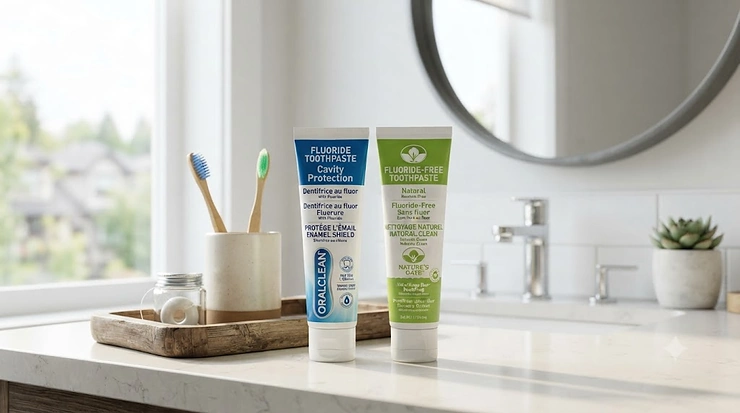
Stand in the toothpaste aisle at your local Shoppers Drug Mart long enough and you’ll start to feel like you wandered into a debate you didn’t sign up for. Fluoride-free toothpaste vs fluoride toothpaste isn’t just a marketing split anymore — it’s become a genuine, occasionally heated conversation among parents, dentists, and anyone who’s ever squinted at a tube label wondering what “nano-hydroxyapatite” even means. Here’s the short version: fluoride toothpaste is a mineral-based paste containing a fluoride compound (sodium fluoride, stannous fluoride, or sodium monofluorophosphate) that remineralizes enamel and is backed by decades of clinical evidence; fluoride-free toothpaste swaps that ingredient for alternatives like xylitol or hydroxyapatite, aiming for similar cavity protection without systemic fluoride exposure. Neither side of this argument is purely right or purely wrong, and that’s precisely why it deserves more than a quick skim of a listing page.
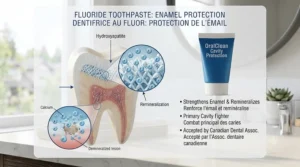
This isn’t a rehash of the usual “top 10 toothpastes” roundup you’ve already scrolled past a dozen times. We’re centering the actual debate — what fluoride does, what its alternatives can and can’t do, and where the real evidence lands — before we ever get to a single product recommendation. Along the way we’ll lean on guidance from the Canadian Dental Association, because when it comes to something you put in your mouth twice a day, opinions matter less than what the research actually says.
We researched seven real, currently available toothpastes — a mix of Canadian, American, and clinical brands spanning budget drugstore staples to prescription-strength formulas — and dug into their actual ingredient lists, aggregated review sentiment, and where each one genuinely shines. No invented five-star quotes, no pretending we’ve personally brushed with all seven for a year. Just an honest, Canadian-focused breakdown of fluoride-free toothpaste vs fluoride toothpaste so you can walk out of that aisle with a decision you actually understand.
Quick Comparison Table
Before the deep dive, here’s the lay of the land. This table pulls together the seven products we’re covering, sorted loosely from budget to premium, so you can jump straight to whichever tier fits your bathroom cabinet.
| Product | Type | Price Range (CAD) | Best For |
|---|---|---|---|
| Green Beaver Naturapeutic Fluoride-Free Toothpaste | Fluoride-free (xylitol) | around C$8-C$12 | Canadian families wanting a domestic, Health Canada–approved option |
| Tom’s of Maine Rapid Relief Sensitive | Fluoride-free (arginine) | around C$8-C$11 | Fast-acting sensitivity relief without fluoride |
| Sensodyne Repair & Protect Whitening | Fluoride (stannous) | around C$7-C$10 | Budget-friendly sensitivity plus whitening |
| Colgate Total Active Prevention | Fluoride (sodium) | around C$6-C$9 | Everyday all-rounder for cavity and gum protection |
| Boka Ela Mint Nano-Hydroxyapatite Toothpaste | Fluoride-free (n-HAp) | C$15-C$20 range | Buyers who want clinical-grade fluoride alternative science |
| X-PUR Remin Fluoride-Free Toothpaste | Fluoride-free (n-HAp) | C$18-C$24 range | Dry mouth, gingivitis-prone, or xerostomia sufferers |
| 3M Clinpro 5000 | Fluoride (prescription-strength sodium) | C$18-C$25 range | High-caries-risk adults under a dentist’s care |
A quick read on this table tells its own little story. Notice that the fluoride-free camp isn’t automatically the “premium” or “budget” option — Green Beaver Naturapeutic Fluoride-Free Toothpaste undercuts several fluoride pastes on price, while 3M Clinpro 5000 sits at the top of the price range precisely because it’s a prescription-strength fluoride product meant for people with documented high cavity risk. If you’re brushing with no particular dental issues, the mid-tier options in either column will likely serve you fine; if you’ve got a specific problem (sensitivity, dry mouth, active decay), that’s where the picks start to diverge sharply.
💬 Just one click — help others make better buying decisions too!😊
Top 7 Fluoride-Free and Fluoride Toothpastes: Expert Analysis
We picked these seven to represent every corner of the fluoride-free toothpaste vs fluoride toothpaste conversation — budget and premium, Canadian and international, everyday and prescription-only. Every product below is real and currently sold, though as always, check current price and availability before buying since retail listings shift constantly.
1. Green Beaver Naturapeutic Fluoride-Free Toothpaste — Canada’s own Health Canada–approved cavity fighter
Green Beaver is a Canadian company, and its Naturapeutic line stands out as one of the only fluoride-free toothpastes with actual Health Canada approval for anti-cavity claims, not just a “natural” label slapped on the box. The formula uses xylitol as its active cavity-fighting ingredient, a sugar alcohol that starves the bacteria responsible for decay rather than relying on mineral remineralization the way fluoride does. Based on the ingredient comparison, this matters practically: xylitol is safe to swallow, which makes it a reasonable pick for households with young kids who haven’t mastered the “spit, don’t swallow” routine yet. Reviewers consistently report that the mint and cinnamon flavour options taste noticeably more natural than typical drugstore toothpaste, though a smaller but vocal segment of reviews mention a less foamy, less “clean-feeling” brushing sensation compared to SLS-containing pastes — that’s simply the tradeoff of an SLS-free formula, not a defect. This is a toothpaste for the buyer who wants fluoride-free protection but isn’t willing to sacrifice a Canadian regulatory stamp of approval to get it.
Pros:
- ✅ Health Canada–approved anti-cavity claim, not just marketing
- ✅ Canadian-made, supporting a domestic natural care brand
- ✅ Safe-to-swallow formula suits young kids well
Cons:
- ❌ Less foamy brushing feel than SLS-based pastes
- ❌ Fewer independent clinical trials than fluoride or hydroxyapatite rivals
Priced around C$8-C$12 depending on flavour and size, this is a genuinely fair-value entry point into fluoride-free toothpaste vs fluoride toothpaste territory — you’re not paying a premium just for the “natural” label, and the regulatory backing is a real point of difference.
2. Tom’s of Maine Rapid Relief Sensitive — fastest fluoride-free relief for zingy teeth
Tom’s of Maine built its entire brand identity on naturally sourced ingredients, and its Rapid Relief Sensitive line leans on arginine and calcium carbonate instead of fluoride to physically plug the microscopic tubules in exposed dentin that transmit pain signals to the nerve. What that means in practice: rather than numbing the nerve chemically (the way potassium nitrate works in many fluoride sensitivity pastes), this formula works more like spackle for your teeth, sealing the pathway before pain even starts. This is a solid pick for someone who wants fast sensitivity relief but has specifically chosen to avoid fluoride, whether for personal preference or dietary reasons. Aggregated review sentiment skews positive on the sensitivity relief timeline, with many users reporting noticeable improvement within roughly two weeks of consistent twice-daily brushing, though a recurring theme in complaints is that the flavour profile (wintermint, cinnamon clove) is more polarizing than mainstream mint pastes — some people love it, others find it too herbal.
Pros:
- ✅ Arginine technology physically blocks dentin tubules
- ✅ Vegan and cruelty-free ingredient sourcing
- ✅ No artificial sweeteners, colours, or preservatives
Cons:
- ❌ Flavour profile is polarizing for mainstream-mint drinkers
- ❌ Relief timeline is slower than prescription desensitizing gels
At around C$8-C$11, this sits comfortably in budget territory and gives sensitivity sufferers a legitimate fluoride-free lane to explore before reaching for a prescription-strength alternative.
3. Boka Ela Mint Nano-Hydroxyapatite Toothpaste — the science-backed fluoride alternative
If there’s one fluoride-free ingredient that’s earned real clinical respect rather than just wellness-aisle buzz, it’s nano-hydroxyapatite, and Boka built its entire product around it. Hydroxyapatite is the mineral that already makes up the majority of your natural tooth enamel, so the logic here isn’t “avoid minerals,” it’s “use the same mineral your teeth are made of instead of a different one.” What most buyers overlook about this category is that it’s not just theoretical: recent double-blind randomized trials, including one in adults and one in children, have found roughly 10% hydroxyapatite formulas performing on par with fluoride toothpaste for preventing new cavities over extended periods — the strongest head-to-head evidence any fluoride alternative currently has behind it. Reviewers frequently mention a noticeably smoother, glossier “tooth feel” after use, alongside praise for the low-foam texture that makes brushing feel gentler on sensitive gums. The catch, and it’s a real one: because the ingredient and research pedigree come at a cost, this toothpaste sits well above drugstore pricing.
Pros:
- ✅ Backed by actual double-blind clinical trials, not just anecdote
- ✅ Uses the same mineral that makes up natural enamel
- ✅ Low-foam formula is gentle on sensitive gum tissue
Cons:
- ❌ Noticeably pricier than mainstream fluoride-free options
- ❌ Whitening effect is gradual compared to chemical whitening agents
Expect to pay in the C$15-C$20 range, which puts Boka Ela Mint Nano-Hydroxyapatite Toothpaste squarely in “worth it if you’ve done your research” territory rather than an impulse-buy price point.
4. X-PUR Remin Fluoride-Free Toothpaste — built for dry mouth and gum trouble
X-PUR Remin occupies a narrower niche than most toothpaste on this list, and that’s exactly its strength. It pairs nano-hydroxyapatite with natural xylitol specifically targeting dry mouth (xerostomia) and early gingivitis, two conditions that quietly compound each other — reduced saliva flow means less natural remineralization and a higher bacterial load, which is precisely the gap this formula is trying to close. On paper, this means the product is less about general-purpose brushing and more about a targeted second toothpaste for people managing a specific chronic condition, whether that’s from medication side effects, autoimmune conditions like Sjögren’s, or age-related salivary changes. Reviewers commonly describe relief from the “cotton mouth” sensation shortly after switching, alongside reports that gum bleeding and tenderness eased over several weeks of use — though it’s worth noting that verified review volume for this smaller brand is thinner than for the mainstream names on this list, so treat individual anecdotes as exactly that.
Pros:
- ✅ Specifically formulated for dry mouth and gingivitis
- ✅ Non-irritating, neutral pH formula suits sensitive tissue
- ✅ Combines xylitol with hydroxyapatite for dual-action support
Cons:
- ❌ Smaller review pool than major national brands
- ❌ Niche formula isn’t necessary for people without dry mouth or gum issues
At C$18-C$24, this isn’t your everyday toothpaste purchase — it’s a targeted solution, and the value verdict depends entirely on whether dry mouth or gum sensitivity is actually a problem you’re managing.
5. Sensodyne Repair & Protect Whitening — stannous fluoride shield for sensitive smiles
Sensodyne has built an entire market position around being the toothpaste dentists reach for first when a patient complains about sensitivity, and its Repair & Protect Whitening formula uses stannous fluoride rather than the sodium fluoride found in most mainstream pastes. Here’s what the spec sheet won’t spell out clearly: stannous fluoride does double duty, both remineralizing enamel and forming a physical antibacterial barrier over exposed dentin tubules, which is why dentists specifically recommend it over plain sodium fluoride for sensitivity cases. Based on the spec comparison with other sensitivity pastes on this list, the whitening claim here is modest — it’s polishing-based rather than chemical bleaching, so don’t expect dramatic shade changes. Aggregated customer sentiment is strongly positive on sensitivity relief specifically, with reviewers frequently noting reduced pain when eating or drinking cold items within a couple of weeks, alongside occasional complaints about a lingering aftertaste some describe as slightly metallic, a known characteristic of stannous fluoride formulas.
Pros:
- ✅ Stannous fluoride forms a protective barrier over exposed dentin
- ✅ Widely available at every Canadian pharmacy and grocery store
- ✅ Strong, well-documented sensitivity relief track record
Cons:
- ❌ Mild metallic aftertaste reported by some users
- ❌ Whitening effect is subtle, not a substitute for professional whitening
Priced around C$7-C$10, Sensodyne Repair & Protect Whitening remains one of the best-value sensitivity-specific fluoride pastes on Canadian shelves, and it’s an easy toothpaste to recommend without hesitation for anyone dealing with cold-and-hot discomfort.
6. Colgate Total Active Prevention — the reliable everyday cavity-and-gum all-rounder
Colgate Total Active Prevention (marketed in some listings as Colgate Total Plaque Pro-Release, depending on regional packaging) is the toothpaste equivalent of a reliable sedan — nothing flashy, but it consistently does the job. It uses sodium fluoride paired with an antibacterial system aimed at controlling plaque along the gumline, the spot where most everyday cavity and gum problems actually start. What most people miss when comparing specs is that gum-line plaque control matters more for long-term cavity prevention than whitening power or flavour intensity, since untreated plaque buildup is a leading driver of both cavities and gingivitis. Reviewers describe a satisfying foamy texture and a “just brushed at the dentist” clean feeling, and the brand consistently earns high review volume and ratings across major Canadian and American retailers — though a recurring minor complaint is that the foaming action can feel almost too intense for people who prefer a gentler brushing experience.
Pros:
- ✅ Strong antibacterial plaque control along the gumline
- ✅ Widely trusted, high review volume across retailers
- ✅ Affordable everyday price point for daily use
Cons:
- ❌ Foaming intensity may feel like too much for some brushers
- ❌ No specialized sensitivity or whitening claims beyond standard formula
At roughly C$6-C$9, this is the toothpaste we’d point a first-time buyer toward if they have no specific dental complaint and just want dependable, everyday cavity and gum protection without overthinking it.
7. 3M Clinpro 5000 — prescription-strength fluoride for high-risk mouths
3M Clinpro 5000 sits in a different category entirely from the other six products here: it’s a prescription-strength anti-cavity toothpaste containing 1.1% sodium fluoride, roughly five times the concentration found in standard over-the-counter fluoride toothpaste. Dentists typically prescribe this for patients with a documented history of frequent cavities, dry mouth from medication, orthodontic appliances, or radiation therapy affecting saliva production — situations where standard-strength fluoride simply isn’t providing enough protection. Based on the spec comparison, the higher fluoride concentration combined with added calcium and phosphate ions is designed to actively remineralize early white-spot lesions before they progress into full cavities, which is a meaningfully different job than routine daily maintenance. Reviewers who’ve been prescribed this product (often after a dentist visit flagged high caries risk) frequently report visible improvement in white-spot lesions and reduced new-cavity rates at subsequent checkups, though it’s worth being clear-eyed that this isn’t a toothpaste to self-prescribe — it requires a dentist’s recommendation and, in many cases, a prescription to access.
Pros:
- ✅ Prescription-strength fluoride concentration for high-risk cases
- ✅ Added calcium and phosphate support active remineralization
- ✅ Backed by strong evidence for reversing early enamel lesions
Cons:
- ❌ Requires a dentist’s prescription in most cases
- ❌ Not appropriate for general use without a documented risk factor
Pricing varies by pharmacy and typically lands in the C$18-C$25 range, but the real value here isn’t measured in dollars — it’s measured in whether it prevents a C$200+ filling down the road for someone whose cavity risk genuinely warrants this level of fluoride.
How to Switch Between Fluoride and Fluoride-Free Toothpaste
Deciding to switch categories — whether you’re moving toward fluoride-free for personal reasons or adding fluoride back in after a dentist’s recommendation — isn’t something to do overnight and forget about. Here’s how to make the transition without any awkward surprises.
Start by giving any new toothpaste at least two to three weeks before judging it. Sensitivity relief formulas, whether fluoride-based stannous fluoride or fluoride-free arginine, need consistent twice-daily use to build up their protective effect; switching back and forth every few days resets that clock and you’ll never see the actual benefit. If you’re moving from a fluoride paste to a fluoride-free one specifically because of sensitivity or gum irritation, keep a simple log of symptoms for the first month — even a note on your phone works — so you have real data instead of a vague impression when you talk to your dentist at your next cleaning.
A common first-30-days mistake is over-brushing in an attempt to compensate for a formula that feels less “foamy” or less minty than what you’re used to. Scrubbing harder or longer doesn’t make xylitol or hydroxyapatite work faster, and it can actually cause gum recession over time. Stick to two minutes, twice daily, with a soft-bristled brush regardless of which toothpaste you’re using. And if you’re switching to a fluoride-free option specifically because you’re pregnant, immunocompromised, or managing a chronic condition, mention the switch to your dentist at your next visit rather than waiting for them to ask — it genuinely changes what they’ll watch for on your X-rays.
Real-World Scenarios: Who Should Choose Which Toothpaste
Sometimes the abstract “which is better” question dissolves the moment you picture an actual person and their actual mouth. Here are three composite scenarios built from common situations dentists describe.
Picture a university student living on a tight budget, drinking a lot of coffee and energy drinks, and brushing inconsistently between exam crunches. This is a textbook case for a standard fluoride toothpaste like Colgate Total Active Prevention — cheap, effective, and forgiving of imperfect brushing habits, which matters more than any premium ingredient when consistency itself is the weak link.
Now picture a parent of a toddler who’s still learning not to swallow toothpaste, living in a Canadian city with fluoridated municipal water. Because the child is already getting some fluoride exposure from tap water, a fluoride-free option like Green Beaver Naturapeutic Fluoride-Free Toothpaste reduces total fluoride intake risk without giving up cavity protection entirely, which is exactly the kind of layered decision the Canadian Dental Association’s fluoride guidance is built to help parents make.
Finally, picture an adult managing dry mouth from a common blood-pressure medication, dealing with early gum sensitivity and occasional bleeding. X-PUR Remin Fluoride-Free Toothpaste was practically built for this exact profile — the combination of xylitol and hydroxyapatite addresses both the reduced-saliva remineralization gap and the gum irritation simultaneously, in a way a general-purpose paste from either category simply isn’t designed to.
Your Buyer’s Decision Framework
If you want a shortcut instead of reading every product breakdown twice, work through this simple checklist in order.
If you have a documented history of frequent cavities or a dentist has flagged high caries risk, choose a prescription-strength fluoride option like 3M Clinpro 5000, because standard-strength formulas aren’t concentrated enough to reverse existing early lesions. If you have no specific dental complaints and just want reliable daily protection, choose a mainstream fluoride paste like Colgate Total Active Prevention, because the evidence base is deepest here and the price is lowest. If sensitivity is your main issue and you’re comfortable with fluoride, choose Sensodyne Repair & Protect Whitening for its stannous fluoride barrier effect. If you specifically want to avoid fluoride — whether for a toddler, personal preference, or a documented sensitivity to it — but still want backed cavity-prevention claims, choose Green Beaver Naturapeutic Fluoride-Free Toothpaste for its Health Canada approval. And if you want the strongest available science behind a fluoride-free alternative and don’t mind paying more for it, choose Boka Ela Mint Nano-Hydroxyapatite Toothpaste.
The Fluoride Debate: What the Science Actually Shows
Here’s where we step back from product recommendations entirely and look squarely at the debate itself, because “fluoride-free toothpaste vs fluoride toothpaste” gets framed online as a much bigger controversy than the actual clinical evidence supports.
Fluoride’s cavity-prevention benefit isn’t a marketing claim — it’s one of the most extensively studied interventions in modern dentistry, dating back to community water fluoridation studies from the 1930s and 40s. According to a long-running Canadian government technical review of fluoride safety data, the two documented risks of excess fluoride exposure are dental fluorosis (cosmetic white spotting from ingestion during tooth development) and, at much higher doses, skeletal fluorosis — with no other confirmed adverse health effects identified across decades of research. That’s a meaningfully narrower risk profile than the more alarming claims that circulate on social media, and it’s worth separating “fluoride carries some risk at high doses” from “fluoride is dangerous,” because those are very different statements.
At the same time, the fluoride-free movement isn’t purely marketing fluff either. Nano-hydroxyapatite in particular has real double-blind trial data showing non-inferiority to fluoride for cavity prevention in both adults and children, which is a genuinely different evidence tier than, say, plain baking-soda toothpaste with no active remineralizing ingredient at all. Xylitol has a smaller but still real body of research supporting its anti-cariogenic bacterial effect, distinct from fluoride’s remineralization mechanism entirely. What most of the online debate misses is that these aren’t necessarily competing claims — a xylitol or hydroxyapatite formula and a fluoride formula are attacking the cavity problem from different angles, and for most people without a specific medical reason to avoid fluoride, the honest answer is that both categories can genuinely work, just via different mechanisms and with different depths of supporting evidence.
How to Choose Between Fluoride and Fluoride-Free Toothpaste
If you’re still torn, work through these seven questions in order — they’re the same ones a dentist would effectively walk through with you at a checkup.
- Do you have a documented history of cavities? If yes, lean fluoride, ideally at prescription strength if your dentist recommends it, since the remineralization evidence is deepest here.
- Do you live in an area with fluoridated municipal water? If so, factor in your total fluoride exposure before assuming you need maximum-strength toothpaste on top of it.
- Do you have a specific medical reason to avoid fluoride? Certain kidney conditions or documented sensitivities are legitimate reasons to go fluoride-free under medical guidance.
- Is dental sensitivity your primary complaint? Both stannous fluoride and arginine-based fluoride-free formulas target this effectively — pick based on whether you’re comfortable with fluoride generally.
- Are you brushing a young child’s teeth? Follow the Canadian Dental Association’s age-based guidance on toothpaste amount and fluoride exposure rather than guessing.
- How consistent is your brushing routine? If it’s inconsistent, prioritize an evidence-strong mainstream option over a niche formula that needs perfect daily use to show results.
- What’s your budget for a toothpaste you’ll use twice daily for months? Mid-tier options in either category typically deliver 90% of the benefit of premium picks for a fraction of the price.
Fluoride-Free Toothpaste for Cavity Prevention
The single biggest misconception about fluoride-free toothpaste for cavity prevention is that “fluoride-free” automatically means “no cavity protection.” That’s simply not accurate for the better-formulated products in this category, though it is accurate for some cheaper fluoride-free pastes that skip an active ingredient entirely and rely purely on abrasive cleaning.
The two ingredients doing real cavity-prevention work in quality fluoride-free formulas are xylitol and nano-hydroxyapatite, and they work through genuinely different mechanisms than fluoride. Xylitol, found in Green Beaver Naturapeutic Fluoride-Free Toothpaste and Tom’s of Maine Rapid Relief Sensitive, starves the specific bacteria (primarily Streptococcus mutans) responsible for producing the acid that erodes enamel — it’s a bacterial-starvation strategy rather than a remineralization one. Nano-hydroxyapatite, the star ingredient in Boka Ela Mint Nano-Hydroxyapatite Toothpaste and X-PUR Remin Fluoride-Free Toothpaste, takes the opposite approach: it directly deposits mineral onto the enamel surface, physically filling microscopic gaps the same way fluoride’s remineralization process does, just using a different compound. The practical upshot for someone specifically shopping for fluoride-free toothpaste for cavity prevention is to check the active ingredient list carefully — a fluoride-free toothpaste with neither xylitol nor hydroxyapatite as an active ingredient is likely offering cleaning without meaningful decay prevention, whereas either of those ingredients, used consistently, has genuine evidence behind it.
Fluoride-Free Toothpaste for Sensitive Gums
Sensitive gums and sensitive teeth aren’t quite the same complaint, though they often show up together, and fluoride-free toothpaste for sensitive gums specifically needs to address inflammation and irritation rather than just nerve-level tooth pain.
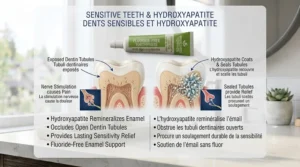
Arginine-based formulas like Tom’s of Maine Rapid Relief Sensitive were originally developed to address dentin hypersensitivity, but the same tubule-sealing mechanism also reduces the irritation that comes from exposed root surfaces rubbing against food and brushing pressure — a common source of gum-adjacent discomfort. For gum tissue specifically, aloe vera and calming botanical extracts, found in several Green Beaver formulations, add a soothing layer that pure mineral-based pastes don’t offer. What most buyers overlook here is that SLS (sodium lauryl sulfate), the foaming agent in most mainstream toothpaste, is itself a documented irritant for some people’s gum tissue — so a fluoride-free toothpaste that’s also SLS-free, like most of the natural brands covered here, may resolve sensitive-gum symptoms simply by removing that ingredient, independent of whether fluoride was ever the actual problem. If you’re dealing with persistent gum bleeding or swelling rather than just tenderness, though, that’s a signal to see a dentist rather than toothpaste-shop your way through it — early gingivitis responds well to treatment but can progress if ignored.
Canadian Dental Association Guidance: What the Experts Actually Recommend
The Canadian Dental Association’s position statement on fluoride use remains the most authoritative Canadian-specific source on this topic, and it’s worth reading past the headline takeaway of “fluoride prevents cavities” to the nuanced, age-specific guidance underneath.
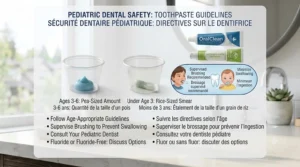
For children from birth to age three, the CDA recommends an adult brush the child’s teeth, with fluoridated toothpaste use determined by individual risk factors — not a blanket yes or no. From ages three to six, the recommendation shifts to a pea-sized amount of fluoridated toothpaste under adult supervision, specifically to balance cavity protection against the fluorosis risk that comes with a young child’s tendency to swallow toothpaste. This age-tiered approach is exactly why so many Canadian parents end up considering fluoride-free toothpaste vs fluoride toothpaste for their toddlers specifically, rather than for themselves — the risk-benefit calculation genuinely shifts with age. For adults, the CDA’s position is more straightforwardly supportive of fluoridated toothpaste twice daily as a baseline recommendation, based on a substantial body of studies showing meaningful reductions in cavity rates. What the CDA guidance doesn’t do is dismiss fluoride-free alternatives outright — it’s silent on newer ingredients like hydroxyapatite simply because the position statement predates much of that research, which is a good reminder that dental guidance evolves and it’s worth discussing your specific situation with your own dentist rather than treating any single document as the final word.
Understanding Your Tooth Decay Risk
Tooth decay risk isn’t evenly distributed, and understanding where you personally land on that spectrum matters more for choosing a toothpaste than any brand’s marketing copy does.
Several factors meaningfully raise tooth decay risk: frequent snacking on sugary or starchy foods (which keeps your mouth in an acidic state for longer stretches than three discrete meals would), dry mouth from medications or medical conditions, exposed root surfaces from gum recession, deep grooves in molars that trap food, and simply inconsistent brushing or flossing habits. Genetics plays a role too — some people naturally have more cavity-causing bacteria or thinner enamel, through no fault of their brushing routine. If several of these apply to you, that’s a real signal to lean toward the stronger end of the fluoride spectrum, potentially even discussing prescription-strength options like 3M Clinpro 5000 with your dentist, rather than assuming a trendy fluoride-free formula will keep pace. Conversely, if you have low decay risk — good genetics, consistent brushing, minimal snacking, healthy saliva flow — you have considerably more flexibility to choose based on preference, ingredient philosophy, or sensitivity needs rather than raw cavity-fighting power, since the baseline risk you’re protecting against is already low.
Common Mistakes When Buying Toothpaste
A few recurring mistakes show up again and again when Canadians shop for toothpaste, and most of them are easy to avoid once you know what to look for.
The first is choosing based on whitening claims alone, ignoring the active ingredient entirely — a toothpaste can whiten your teeth cosmetically while doing nothing meaningful for cavity prevention, and vice versa. The second is assuming “natural” automatically means “effective,” when in reality some fluoride-free pastes skip active cavity-fighting ingredients altogether in favour of a clean-sounding ingredient list. The third mistake is switching toothpaste every few weeks chasing reviews, which resets the multi-week timeline that sensitivity and whitening formulas both need to actually show results. The fourth is ignoring your specific risk profile — buying a gentle, low-fluoride “family” formula when you personally have high cavity risk, or reaching for prescription-strength fluoride when you have no documented risk factors at all. And the fifth, specific to Canadian shoppers, is not checking whether a product is even readily available through Canadian retailers before falling in love with a US-only brand’s marketing — cross-border shipping and duties can turn a C$10 tube into a genuinely bad deal.
Safety, Regulations & Fluoride Compliance in Canada
Toothpaste sold in Canada, whether fluoride or fluoride-free, falls under Health Canada’s Natural Health Products and drug regulations, and there are real, enforced limits involved rather than a total regulatory free-for-all.
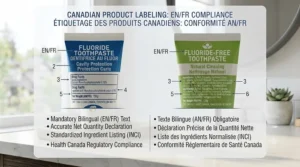
Federal limits cap heavy metal content (lead, arsenic, cadmium, mercury) in both fluoride and fluoride-free toothpaste, with slightly different thresholds for each category based on differing risk profiles. For fluoride-specific products, Health Canada mandates warning labelling on any product containing enough fluoride to pose a risk if a child swallowed a significant amount, and prescription-strength products like 3M Clinpro 5000 are restricted specifically because their fluoride concentration crosses into territory requiring professional oversight. If you’re ever concerned about a child swallowing a meaningful amount of fluoride toothpaste, provincial poison control services (such as Alberta’s Poison and Drug Information Service guidance for that province, with equivalent services in every other province) are the right resource, not a Google search. On the fluoride-free side, Health Canada does require actual evidence before allowing anti-cavity claims on packaging, which is exactly why Green Beaver Naturapeutic Fluoride-Free Toothpaste‘s Health Canada–approved status is a meaningfully different bar than a fluoride-free product simply calling itself “natural” with no formal approval behind that specific claim.
✨ Don’t Miss These Exclusive Deals!
🔍 Take your oral care routine to the next level with these carefully researched picks. Click on any highlighted product to check current pricing and availability on amazon.ca. A little research now saves you from a guessing game every time you’re standing in the toothpaste aisle!
Frequently Asked Questions
❓ Is fluoride-free toothpaste as effective as fluoride toothpaste?
❓ Can fluoride-free toothpaste still prevent cavities?
❓ Is fluoride toothpaste safe for toddlers?
❓ Why do some dentists recommend fluoride-free toothpaste?
❓ What's the difference between hydroxyapatite and fluoride toothpaste?
Conclusion
The fluoride-free toothpaste vs fluoride toothpaste debate deserves more nuance than either side of the internet usually gives it. Fluoride remains the most extensively studied cavity-prevention ingredient in dentistry, and for most adults with no specific reason to avoid it, a fluoride toothpaste like Colgate Total Active Prevention or Sensodyne Repair & Protect Whitening remains a perfectly sound, evidence-backed daily choice. At the same time, fluoride-free alternatives — particularly xylitol-based options like Green Beaver Naturapeutic Fluoride-Free Toothpaste and hydroxyapatite formulas like Boka Ela Mint Nano-Hydroxyapatite Toothpaste — have earned a legitimate place in the conversation, backed by real research rather than pure marketing.
The right answer genuinely depends on your cavity risk, any medical considerations, your family’s specific needs, and honestly, your personal comfort level with the ingredients you’re putting in your mouth twice a day. If you’re still unsure after all this, that uncertainty is a completely reasonable reason to bring the question to your own dentist at your next cleaning — they know your mouth, your history, and your risk factors far better than any article, including this one, ever could.
Recommended for You
- Fluoride-Free Toothpaste: 7 Top Picks for Canadians in 2026
- Natural Toothpaste for Sensitive Teeth: 7 Picks That Work (2026)
- Natural Toothpaste vs Regular Toothpaste: 7 Picks Compared (2026)
Disclaimer: This article contains affiliate links. As an Amazon Associate, I earn from qualifying purchases. If you purchase products through these links, we may earn a small commission at no additional cost to you.
✨ Found this helpful? Share it with your friends! 💬🤗
