In This Article
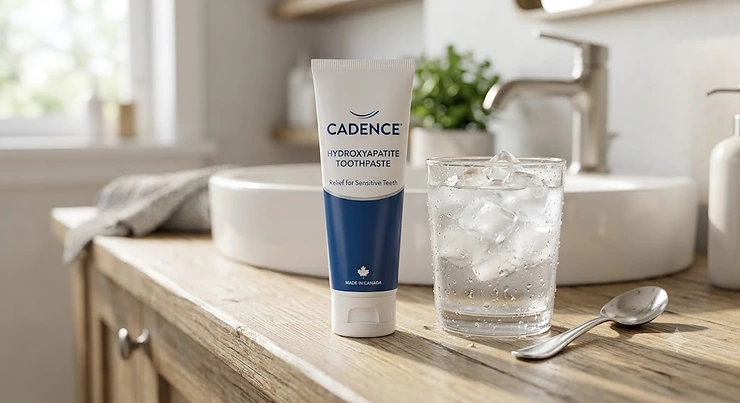
Your teeth zing every time cold water hits them, and you have quietly started drinking lukewarm coffee to avoid the wince. If that sounds familiar, you have probably already stumbled across hydroxyapatite toothpaste for sensitive teeth in a Reddit thread or a dentist’s Instagram reel, wedged between claims that it is “basically liquid enamel” and warnings that it is “just marketing.” Neither extreme is quite right, and that gap is exactly where this guide lives.
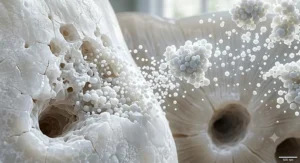
Hydroxyapatite is not some lab-invented gimmick. It is the actual mineral that makes up roughly 97% of your tooth enamel and about 70% of the dentin underneath it, and toothpaste formulated with a synthetic, nano-sized version of that mineral has been sold in Japan since the 1970s. In Canada, a fluoride-free nano-hydroxyapatite toothpaste was recognized by Health Canada as an anti-cavity natural health product back in 2015, which tells you this is not a fringe idea; it is a regulated one. This article walks through seven real products sold to Canadian shoppers, breaks down what “dentin tubule occlusion” actually means for your morning wince, and gives you a decision framework so you are not just guessing at the drugstore shelf.
We will look at concentration, ingredient quality, aggregated real-world review sentiment, and price, all in Canadian dollars and without pretending any of us has run a clinical trial in our bathroom sink.
Quick Comparison Table
| Product | HAp Type & Strength | Standout Trait | Price Range (CAD) | Best For |
|---|---|---|---|---|
| Boka Nano-Hydroxyapatite Toothpaste (Sensitive) | Nano-HAp + potassium nitrate | Dual-action sensitivity relief | C$20-C$26 | Fast-acting comfort |
| RiseWell PRO Mineral Toothpaste | Nano + micro HAp blend | Highest combined HAp concentration | C$20-C$26 | Stubborn, chronic sensitivity |
| Davids Nano Hydroxyapatite Sensitive + Whitening | Nano-HAp (Fluidinova NanoXIM) | EWG Verified, vegan formula | C$20-C$26 | Clean-beauty shoppers |
| Apagard M-Plus | Nano-mHAP (original Sangi formula) | 40+ years of Japanese clinical use | C$25-C$32 | Enamel-focused traditionalists |
| Apagard Premio | Nano-HAp, high-blending formula | Premium whitening finish | C$27-C$34 | Buyers who also want visible whitening |
| Boka Whitening Nano-Hydroxyapatite | Nano-HAp + silica polish | Clinically tested stain removal | C$18-C$24 | Coffee and tea drinkers |
| RiseWell Original Mineral Toothpaste | Micro-HAp, 10% | Simple, budget-friendly entry point | C$14-C$19 | First-time HAp users on a budget |
Looking at the spread above, the jump from RiseWell Original Mineral Toothpaste to RiseWell PRO Mineral Toothpaste illustrates a pattern that repeats across this whole category: paying more usually buys you a combined nano-plus-micro particle formula rather than just fancier packaging. The two Apagard products sit at the top of the price range mostly because they are imported from Japan, not because the underlying mineral is dramatically different from what Boka or Davids put in their tubes. If sensitivity is your main complaint rather than whitening, Boka Nano-Hydroxyapatite Toothpaste (Sensitive) and RiseWell PRO Mineral Toothpaste are the two worth reading closest.
💬 Just one click — help others make better buying decisions too!😊
Top 7 Hydroxyapatite Toothpastes for Sensitive Teeth: Expert Analysis
Choosing a hydroxyapatite toothpaste for sensitive teeth means weighing particle type, added desensitizers, and honestly, whether you can tolerate paying import prices for a Japanese formula versus a domestic one. Below are seven real, currently available products spanning budget to premium, each broken down the way a friend who has spent way too long reading ingredient lists would explain it to you.
1. Boka Nano-Hydroxyapatite Toothpaste (Sensitive) — dual desensitizer combo
The standout here is that Boka Nano-Hydroxyapatite Toothpaste (Sensitive) does not rely on hydroxyapatite alone; it pairs nano-HAp with potassium nitrate, the same nerve-calming ingredient found in many conventional sensitivity toothpastes. That combination matters in practice because the two ingredients work on different timelines: potassium nitrate can start numbing the nerve response within a couple of weeks, while nano-HAp is busy physically plugging exposed dentin tubules for a longer-lasting seal. The formula is rounded out with aloe vera, xylitol, and green tea extract, and it skips fluoride, sulfates, and parabens entirely.
Who is this for? Based on the ingredient profile, this is a strong fit for someone who wants noticeable relief sooner rather than waiting the full 8-plus weeks that pure hydroxyapatite formulas often need to show their full effect, without giving up on the fluoride-free positioning. Reviewers consistently report a low-foaming, gentle brushing texture and note that the mint flavour is mild rather than intense, which matters if strong mint itself triggers your sensitivity.
Pros:
- ✅ Combines potassium nitrate with nano-HAp for faster relief
- ✅ Free of fluoride, sulfates, parabens, and artificial colour
- ✅ Gentle, low-foaming texture reviewers describe as soothing
Cons:
- ❌ Smaller 4 oz tube means more frequent repurchasing
- ❌ Mild mint flavour may feel underwhelming to some brushers
At the time of research, Boka Nano-Hydroxyapatite Toothpaste (Sensitive) sits in the C$20-C$26 range on Amazon.ca, and given the dual desensitizing approach, it is solid value if quick comfort is your priority over long-term enamel rebuilding alone.
2. RiseWell PRO Mineral Toothpaste — highest combined HAp concentration
RiseWell PRO Mineral Toothpaste stands out for stacking two particle sizes in one tube: roughly 5% nano-hydroxyapatite sourced from Fluidinova’s NanoXIM CarePaste alongside 10% micro-hydroxyapatite mined in France. In practice, that means smaller nano particles can slip into the narrowest dentin tubules while the larger micro particles build a thicker mineral layer across the tooth surface, which is a genuinely different mechanism than most single-particle-size competitors offer.
Here is what the spec sheet won’t tell you outright: dual-particle formulas like this are generally positioned by dentists and formulators as the option for people who have already tried a standard hydroxyapatite paste and found it insufficient. If you are new to the category with only mild sensitivity, this may be more concentration than you need on day one; if you have already been disappointed by a lighter formula, this is the logical next step up. Reviewers frequently mention that it takes a few days to adjust to the non-foaming texture, since it contains no SLS, but describe the mouthfeel as noticeably “cleaner” once they get used to it.
Pros:
- ✅ Dual nano and micro hydroxyapatite for layered protection
- ✅ SLS-free, safe-to-swallow formula suitable for the whole family
- ✅ Formulated specifically for extra-sensitive cases
Cons:
- ❌ Non-foaming texture takes an adjustment period
- ❌ Smaller 3.4 oz size compared to some competitors
Priced around C$20-C$26 CAD, RiseWell PRO Mineral Toothpaste earns its spot for buyers whose sensitivity has resisted gentler formulas, though budget-conscious first-timers might start with something milder first.
3. Davids Nano Hydroxyapatite Sensitive + Whitening — clean-beauty credentials
Davids Nano Hydroxyapatite Sensitive + Whitening leans on what the brand calls its “Hydroxi” formulation, built around Fluidinova’s NanoXIM nano-hydroxyapatite, and explicitly markets the mechanism as physically plugging, or occluding, the tubules leading to your tooth nerves. What sets this one apart from a commentary standpoint is the certification stack: it is EWG Verified, vegan, made in the USA with a recyclable metal tube, and free of SLS, artificial flavours, and preservatives.
Based on the spec comparison with other entries here, this product is squarely aimed at someone who already reads ingredient labels on their skincare and wants their toothpaste held to the same standard, not just someone chasing the lowest sensitivity score. The whitening claim comes from micro-polishing agents rather than peroxide, so reviewers note the whitening effect is gradual and gentle rather than dramatic, which lines up with what you would expect from a non-bleach-based formula.
Pros:
- ✅ EWG Verified and vegan, appealing to clean-ingredient shoppers
- ✅ Gentle micro-polishing whitening without peroxide sensitivity
- ✅ Recyclable metal tube supports sustainability-minded buyers
Cons:
- ❌ Whitening results are gradual, not dramatic
- ❌ Premium ingredient sourcing puts it above true budget options
Davids Nano Hydroxyapatite Sensitive + Whitening typically runs C$20-C$26 CAD for the 5.25 oz tube, positioning it as a mid-range pick that punches above its price on ingredient transparency.
4. Apagard M-Plus — 40+ years of Japanese clinical use
Apagard M-Plus is the original, longest-selling formula from Sangi Co., the Japanese company that pioneered nano-hydroxyapatite toothpaste for consumer use decades before the ingredient trended in North America. The standout feature is that lineage: this is not a new brand chasing a trend, it is the formula other brands are frequently benchmarked against, and Sangi’s nano-mHAP has been the subject of hospital and university research in Japan since the material was first synthesized there in the 1970s.
What most buyers overlook about this model is that, unlike several fluoride-free entries on this list, Apagard’s classic M-Plus formula does contain sodium lauryl sulfate on its ingredient list, so if you are specifically avoiding SLS for sensitivity or dry-mouth reasons, this is not the fluoride-free-and-SLS-free combination some shoppers assume it to be. Aggregated Amazon review sentiment for this listing runs strongly positive, with a rating in the mid-4-star range across several hundred reviews, and recurring praise for how smooth and polished teeth feel after regular use.
Pros:
- ✅ Decades of real-world use and research backing in Japan
- ✅ Reviewers consistently praise the smooth, polished after-feel
- ✅ Balanced formula suited to all-ages family use
Cons:
- ❌ Contains SLS, unlike most other entries on this list
- ❌ Import pricing pushes it toward the premium end
Expect to pay in the C$25-C$32 CAD range once import costs are factored in, which puts Apagard M-Plus at a premium relative to domestic options, though the pedigree is arguably unmatched.
5. Apagard Premio — premium whitening finish
Sitting one tier above the M-Plus in Sangi’s own lineup, Apagard Premio is the standout for buyers who want whitening results layered on top of the same nano-hydroxyapatite science, using what the brand calls a “high-blending” formula and a brighter double-mint flavour profile. The key spec difference from M-Plus is a refined polishing system intended to lift surface stains more aggressively while still relying on hydroxyapatite rather than peroxide as the core active.
Here is what the spec sheet won’t tell you, but aggregated reviewer sentiment does: buyers frequently compare Premio favourably against drugstore whitening toothpastes, noting less post-brushing sensitivity than they experienced with peroxide-based competitors, even though the whitening timeline runs slower. This is a case where the honest analytical take is that Premio rewards patience, it is a multi-week commitment rather than a two-week whitening strip replacement.
Pros:
- ✅ Whitening-focused formula built on the same trusted Sangi base
- ✅ Reviewers report less sensitivity than peroxide alternatives
- ✅ Distinct double-mint flavour many find more refreshing
Cons:
- ❌ Highest price point among the seven products here
- ❌ Whitening effect develops gradually, not instantly
At around C$27-C$34 CAD, Apagard Premio is the splurge pick on this list, best suited to buyers who have already made peace with hydroxyapatite’s slower, gentler pace.
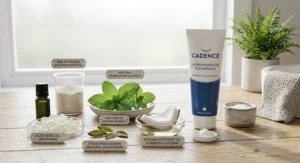
6. Boka Whitening Nano-Hydroxyapatite — clinically tested stain removal
Boka Whitening Nano-Hydroxyapatite stands apart from its sibling Sensitive formula by swapping the potassium nitrate for a high-cleaning silica system, which the brand states has been shown across two clinical studies to reduce surface stains from things like coffee and tea. On paper this means you are trading a bit of the desensitizing punch for stronger day-to-day stain control, while still keeping the nano-hydroxyapatite enamel-care base and staying peroxide-free and fluoride-free.
What most buyers overlook is that “clinically shown to reduce surface stains” is a narrower, more honest claim than blanket whitening promises; it is about polishing away what is sitting on the enamel surface rather than bleaching the tooth structure itself. That distinction matters if you already have sensitive teeth, since it avoids the sensitivity spike that aggressive whitening formulas can trigger. Reviewers frequently mention noticeably brighter teeth within a few weeks of daily use, alongside the same soothing, low-foaming brushing feel found across the Boka line.
Pros:
- ✅ Backed by two clinical studies on surface-stain reduction
- ✅ Peroxide-free approach avoids typical whitening sensitivity
- ✅ Maintains the fluoride-free nano-HAp enamel-care base
Cons:
- ❌ Less targeted desensitizing power than the Sensitive variant
- ❌ Same compact 4 oz tube size as other Boka options
You will generally find Boka Whitening Nano-Hydroxyapatite priced around C$18-C$24 CAD, making it one of the more accessible mid-range picks, particularly for coffee and tea drinkers.
7. RiseWell Original Mineral Toothpaste — simple, budget-friendly entry point
Rounding out the list, RiseWell Original Mineral Toothpaste is the standout budget option, built around a straightforward 10% micro-hydroxyapatite formula sourced from a mine in France, without the added nano-particle layer found in the brand’s PRO version. That simplicity is the point: it is a lower-cost, lower-commitment way to try hydroxyapatite toothpaste for the first time without paying premium pricing for a dual-particle system you may not need yet.
Based on the spec comparison with the rest of this list, this is honestly the sensible starting point for anyone whose sensitivity is mild to moderate and who has not tried hydroxyapatite before. Reviewers who use it describe a genuinely SLS-free, non-foaming brushing experience and note it feels gentle enough for the whole family, including kids’ versions the brand also sells separately. If, after a couple of months, you feel like you need more, upgrading to the PRO formula is a natural next step rather than a wasted purchase.
Pros:
- ✅ Most affordable hydroxyapatite option on this list
- ✅ SLS-free, vegan, and made in the USA
- ✅ Gentle enough as a family-friendly starter formula
Cons:
- ❌ Micro-HAp only, without the nano-particle penetration of PRO
- ❌ May be underpowered for more severe, chronic sensitivity
At roughly C$14-C$19 CAD, RiseWell Original Mineral Toothpaste is the easiest hydroxyapatite toothpaste under C$25 CAD to justify trying on a whim, with almost no financial risk if it turns out not to be a fit.
Practical Usage Guide: Getting the Most from Hydroxyapatite Toothpaste
Switching to a hydroxyapatite toothpaste is not just a straight swap; a few first-30-days habits make a real difference in how quickly you notice relief. First, brush for the full two minutes, not the rushed 45 seconds most of us actually manage, since hydroxyapatite needs contact time on the tooth surface to deposit into exposed tubules. Second, resist the urge to rinse aggressively with water right after brushing; several brands, including RiseWell PRO Mineral Toothpaste, specifically recommend spitting without a heavy water rinse so the mineral layer has a chance to bond rather than being washed away immediately.
Third, be patient with the timeline. Clinical research on nano-hydroxyapatite dentifrices for dentin hypersensitivity generally measures results over an 8-week window, not a few days, so if you switch from Boka Nano-Hydroxyapatite Toothpaste (Sensitive) and still feel twinges after four days, that is expected, not a sign of failure. A common first-30-days mistake is giving up too early or, worse, alternating with an old fluoride sensitivity paste out of impatience, which muddies your ability to judge whether the hydroxyapatite formula is actually working. Finally, store the tube with the cap on tightly; several of these formulas skip preservative-heavy stabilizers, so they are formulated for freshness within a normal usage window rather than sitting open on a humid bathroom counter for months.
✨ Don’t Miss These Exclusive Deals!
🔍 Take your sensitive-teeth routine to the next level with these carefully selected picks. Click on any highlighted product to check current pricing and availability on Amazon.ca. A small daily switch can mean a much more comfortable smile.
Real-World Scenarios: Who Should Buy Which Hydroxyapatite Toothpaste
Picture three different people standing in front of the same shelf. The first is a university student in Kingston who drinks iced coffee constantly, has mild sensitivity to cold drinks, and has a tight monthly budget; for her, RiseWell Original Mineral Toothpaste makes the most sense as a low-risk entry point, with room to upgrade to the PRO formula later if the mild micro-HAp concentration is not enough.
The second is a 45-year-old in Calgary whose gums have receded slightly with age, exposing root surfaces that flare up with anything below room temperature; someone in that position is a strong candidate for RiseWell PRO Mineral Toothpaste or Boka Nano-Hydroxyapatite Toothpaste (Sensitive), since both combine multiple mechanisms rather than relying on hydroxyapatite alone, and receded-gum sensitivity tends to respond better to a layered approach.
The third is a bride-to-be in Toronto planning her wedding in four months, who wants whiter teeth for photos but has always found peroxide whitening strips uncomfortable on her already-sensitive teeth. That is close to a textbook case for Apagard Premio or Boka Whitening Nano-Hydroxyapatite, both of which lean on gentler polishing mechanisms instead of bleach, though she should start using either well before the wedding date given the gradual timeline these formulas need to show visible results.
How to Choose Hydroxyapatite Toothpaste for Sensitive Teeth
Hydroxyapatite toothpaste for sensitive teeth is a fluoride-free dentifrice formulated with a synthetic version of the mineral naturally found in tooth enamel, designed to physically seal exposed dentin tubules and rebuild microscopic enamel defects rather than just numbing nerve signals. Here is a practical, step-by-step framework for narrowing down which one fits your situation.
- Identify your sensitivity trigger. Cold-only sensitivity often responds well to any hydroxyapatite formula, while touch or brushing sensitivity may benefit more from a dual-action option like Boka Nano-Hydroxyapatite Toothpaste (Sensitive) that adds potassium nitrate.
- Check the particle type. Nano-hydroxyapatite penetrates tubules more effectively than micro-hydroxyapatite alone, so severe cases lean toward nano or blended formulas such as RiseWell PRO Mineral Toothpaste.
- Decide if whitening matters. If stain removal is part of your goal, prioritize a formula built for it, like Boka Whitening Nano-Hydroxyapatite or Apagard Premio, rather than assuming any hydroxyapatite paste whitens equally.
- Review the full ingredient list, not just the marketing bullet points. As with Apagard M-Plus, some hydroxyapatite formulas still include SLS, which matters if you are also managing dry mouth or canker sores.
- Set your budget honestly. Products like RiseWell Original Mineral Toothpaste prove you do not need to spend premium dollars to start seeing results, especially for mild cases.
- Give it a full 8-week trial. Do not judge effectiveness inside the first two weeks; that timeline reflects how the published clinical research actually measures results.
- Confirm it is approved for the Canadian market. Look for products with clear ingredient disclosure and, where relevant, Natural Health Product compliance under Health Canada’s framework.
Hydroxyapatite Toothpaste vs Fluoride Toothpaste: The Real Difference
This comparison gets emotional online, but the evidence-based picture is more nuanced than either camp likes to admit. Fluoride has an enormous, decades-deep research base behind it; it gets incorporated directly into the enamel crystal structure, making it more resistant to acid, and it has been used in Canada since the 1940s as a core cavity-prevention strategy. Hydroxyapatite works differently, by depositing a mineral layer on top of and inside microscopic defects and tubules rather than chemically altering the crystal lattice the way fluoride does.
A 2025 systematic review comparing the two found no statistically significant difference in cavity-prevention outcomes between fluoride and hydroxyapatite toothpaste, though it was built from a relatively small pool of eligible studies, so the confidence level is lower than what fluoride research offers. What this means in practice for sensitivity specifically: hydroxyapatite’s tubule-plugging mechanism is arguably more directly relevant to the physical cause of sensitivity than fluoride’s cavity-prevention mechanism, which is part of why so many desensitizing toothpaste formulas now use hydroxyapatite as a headline ingredient rather than an afterthought. If cavity prevention is your top priority and you have no fluoride sensitivity, dentists generally still lean toward recommending fluoride first; if sensitivity and a fluoride-free lifestyle preference are driving your decision, hydroxyapatite is a legitimately evidence-supported alternative rather than a fringe substitute. You can read more about fluoride’s role directly from Health Canada’s oral health resources.
Dentin Tubule Occlusion: The Science Behind Sensitivity Relief
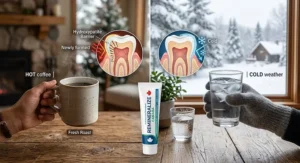
Dentin tubule occlusion is the actual mechanism doing the work every time a hydroxyapatite toothpaste calms your sensitive teeth, so it is worth understanding in plain terms. Underneath your enamel, dentin is riddled with microscopic channels called tubules that connect directly to nerve endings; when enamel wears thin or gums recede, those tubules become exposed, and temperature or pressure changes send a direct signal straight to the nerve, which is what produces that sharp zing.
An 8-week randomized controlled trial published in BDJ Open found that nano-hydroxyapatite toothpaste measurably reduced dentin hypersensitivity over the study period, with researchers noting that concentration mattered less than consistent, sustained use, since even 10% nano-HAp performed comparably to higher concentrations in occluding tubules effectively. Separate scanning electron microscopy studies have visually confirmed nano-hydroxyapatite particles physically lodging inside and across the openings of these tubules, essentially plugging the channel rather than just coating the surface. What most buyers overlook is that this is a mechanical, structural fix, not a temporary numbing effect, which is why products like RiseWell PRO Mineral Toothpaste that combine nano and micro particle sizes are formulated specifically to maximize how thoroughly those tubules get sealed. You can review the underlying clinical trial data yourself through this peer-reviewed study in BDJ Open.
Hydroxyapatite Toothpaste for Remineralization: What the Research Shows
Enamel remineralization is the process of redepositing lost minerals back onto and into the tooth surface, and it is the other half of what hydroxyapatite toothpaste is doing beyond sensitivity relief. Because synthetic hydroxyapatite is chemically almost identical to the mineral your enamel is already made of, it does not just sit on top of teeth the way some coatings do; research has shown it can integrate into microscopic enamel defects and early erosion sites, effectively patching weak spots before they progress into visible damage or cavities.
A review of adjunct ingredients used alongside hydroxyapatite in oral care products highlights how compounds like xylitol and zinc are frequently paired with the mineral specifically to boost its remineralizing and antibacterial effect, which explains why so many of the products on this list, including Davids Nano Hydroxyapatite Sensitive + Whitening and Boka Nano-Hydroxyapatite Toothpaste (Sensitive), lean heavily on xylitol in their formulas rather than treating it as filler. Here is what the spec sheet won’t tell you, but the research suggests: remineralization is a slow accumulation process, closer to how sunscreen works cumulatively over a season than how a bandage works instantly, so daily consistency matters more than any single brushing session. You can dig further into the supporting ingredient research through this peer-reviewed overview on PubMed Central.
Common Mistakes When Buying Desensitizing Toothpaste
The single biggest mistake shoppers make with desensitizing toothpaste, hydroxyapatite or otherwise, is switching products every two weeks because they are not seeing instant results. Nearly every legitimate desensitizing mechanism, whether it is potassium nitrate calming nerves or hydroxyapatite plugging tubules, needs sustained use to build its full effect, and constantly restarting the clock with a new tube resets that progress.
A second common pitfall is assuming higher hydroxyapatite percentage automatically means better results; as the tubule-occlusion research noted earlier shows, going from 10% to 15% nano-HAp did not produce a meaningfully different occlusion outcome in controlled studies, so chasing the highest number on the label is not necessarily the smartest use of your budget. A third mistake is ignoring the rest of the ingredient list in favour of the headline claim, missing details like SLS content in a formula such as Apagard M-Plus that might matter for your specific sensitivity triggers. Finally, many buyers skip reading how the product is meant to be used, brushing too briefly or rinsing too aggressively immediately afterward, which undercuts even a well-formulated product like RiseWell PRO Mineral Toothpaste before it gets a fair chance to work.
Best Hydroxyapatite Toothpaste Under $25 CAD
If budget is the deciding factor, several genuinely capable options on this list land comfortably under C$25 CAD, so you do not have to choose between affordability and real hydroxyapatite content. RiseWell Original Mineral Toothpaste is the clearest winner here, typically priced in the C$14-C$19 range while still delivering a legitimate 10% micro-hydroxyapatite formula.
Boka Whitening Nano-Hydroxyapatite and Boka Nano-Hydroxyapatite Toothpaste (Sensitive) both generally sit in the C$18-C$24 band, making them realistic under-$25 picks for anyone who wants nano-sized particles or an added desensitizing agent without stretching into premium territory. Davids Nano Hydroxyapatite Sensitive + Whitening and RiseWell PRO Mineral Toothpaste frequently price right around the C$25 threshold, so watch for promotions or multi-pack discounts if you want the dual-particle or clean-certified formulas without tipping over budget. The two Apagard imports are the exception here; because they ship from Japan, they consistently land above C$25 CAD, so budget-focused buyers are generally better served looking at the domestic brands on this list first.
✨ Ready to Stop Wincing at Cold Drinks?
🔍 Compare current prices on today’s picks and find the hydroxyapatite toothpaste that fits both your sensitivity level and your budget. Your smile — and your morning coffee — will thank you.
What to Expect: Real-World Performance in the First 30 Days
Translating the clinical research into a day-by-day experience helps set realistic expectations. In roughly the first one to two weeks, most people notice mainly a change in mouthfeel: a smoother, sometimes squeaky-clean sensation rather than dramatic sensitivity relief, since the mineral deposition process is still in its early stages. Reviewers of products like Boka Nano-Hydroxyapatite Toothpaste (Sensitive) frequently describe this early phase as “different, but not yet obviously better,” which lines up with what the tubule-occlusion research predicts.
By weeks three through six, aggregated review sentiment across several of these brands starts to shift, with more mentions of specific triggers, like ice water or cold air, becoming noticeably less sharp. This is roughly where the published 8-week clinical trial data shows measurable, statistically significant hypersensitivity reduction taking hold. By week eight and beyond, for products like RiseWell PRO Mineral Toothpaste that combine particle sizes, reviewers often report the improvement holding steady with continued use, though the research is clear that stopping use allows the effect to gradually fade, since occlusion is maintained through ongoing mineral deposition rather than a permanent, one-time seal.
Long-Term Cost & Maintenance
Running the numbers on total cost of ownership tells a more complete story than the sticker price alone. A budget option like RiseWell Original Mineral Toothpaste, at roughly C$14-C$19 for a 3.4 oz tube, costs meaningfully less per use than Apagard Premio at C$27-C$34 for a comparable-sized tube, but if the premium formula gets you comfortable relief faster and keeps you consistent with brushing habits, the cost-per-comfortable-day math can actually favour the pricier option for some buyers.
Most tubes in this category, used twice daily by one adult, last roughly six to eight weeks, which puts the annual cost of a mid-range formula like Davids Nano Hydroxyapatite Sensitive + Whitening somewhere in the C$140-C$190 CAD range if purchased individually, though multi-packs and subscription options from several of these brands can meaningfully reduce that figure. The maintenance consideration that is easy to miss is consistency cost, not dollar cost: since these formulas depend on sustained daily use for their tubule-occlusion and remineralization benefits to hold, a cheaper tube you actually finish and repurchase on schedule delivers better long-term value than a pricier one that sits half-used in a drawer after a rough first week.
Safety, Regulations & Health Canada Compliance
Hydroxyapatite toothpaste sold in Canada generally falls under Health Canada’s Natural Health Products framework, and as noted earlier, a fluoride-free nano-hydroxyapatite formula received Health Canada approval as an anti-cavity product back in 2015, giving the ingredient a regulatory track record beyond just marketing claims. That said, “Natural Health Product” status is not automatically identical to drug-level efficacy claims, so shoppers should treat product packaging claims with reasonable scrutiny rather than assuming government approval guarantees a specific outcome for their individual case.
From a safety standpoint, hydroxyapatite is generally considered biocompatible and safe if accidentally swallowed in small amounts, which is part of why several brands on this list, including RiseWell Original Mineral Toothpaste and RiseWell PRO Mineral Toothpaste, explicitly market themselves as safe-to-swallow for younger family members, though standard label warnings about supervised use for children under six still apply across the category. If you have a diagnosed dental condition, significant enamel erosion, or ongoing pain rather than mild sensitivity, the Canadian Dental Association and most practicing dentists still recommend a professional evaluation rather than relying solely on over-the-counter desensitizing toothpaste, hydroxyapatite-based or otherwise, since persistent pain can signal something a toothpaste switch will not resolve. For further guidance on general oral health standards in Canada, the Canadian Dental Association’s oral health resources are a solid, dentist-reviewed starting point.
FAQ
❓ Does hydroxyapatite toothpaste actually work for sensitive teeth?
❓ Is hydroxyapatite toothpaste better than fluoride toothpaste?
❓ How long does it take hydroxyapatite toothpaste to work?
❓ Is hydroxyapatite toothpaste safe for kids?
❓ What is the best hydroxyapatite toothpaste under $25 CAD?
Conclusion
Sensitive teeth do not have to mean permanently lukewarm coffee and careful ice-cube avoidance, and hydroxyapatite toothpaste for sensitive teeth has real, published research behind the tubule-occlusion mechanism that makes it work. Whether you start with the budget-friendly RiseWell Original Mineral Toothpaste, reach straight for the dual-particle power of RiseWell PRO Mineral Toothpaste, or lean into the decades-long Japanese pedigree of Apagard M-Plus, the seven products covered here represent genuinely different approaches rather than seven variations on the same tube.
The honest takeaway is that concentration alone is not the deciding factor; added desensitizers, particle size blending, and your own patience with an 8-week timeline matter just as much. Pick based on your actual trigger, your budget, and how quickly you realistically need results, and give whichever tube you choose a fair, consistent trial before judging it. Your teeth, and your next iced coffee, deserve the informed choice rather than a shelf-side guess.
Recommended for You
- Hydroxyapatite Toothpaste vs Fluoride Toothpaste: 2026 Guide
- Hydroxyapatite Toothpaste: 7 Best Picks for Stronger Enamel (2026)
- 7 Best Charcoal Toothpaste for Sensitive Teeth Picks (2026 Canada)
Disclaimer: This article contains affiliate links. As an Amazon Associate, I earn from qualifying purchases. If you purchase products through these links, we may earn a small commission at no additional cost to you.
✨ Found this helpful? Share it with your friends! 💬🤗
