In This Article
Stand in the oral care aisle for more than ninety seconds and you’ll start doubting everything you thought you knew about brushing your teeth. One tube promises “clinically proven” cavity protection. The one next to it swears off fluoride entirely and leans on words like “clean” and “plant-derived.” Somewhere in the middle, you’re just trying to figure out which one actually belongs in your bathroom cup.
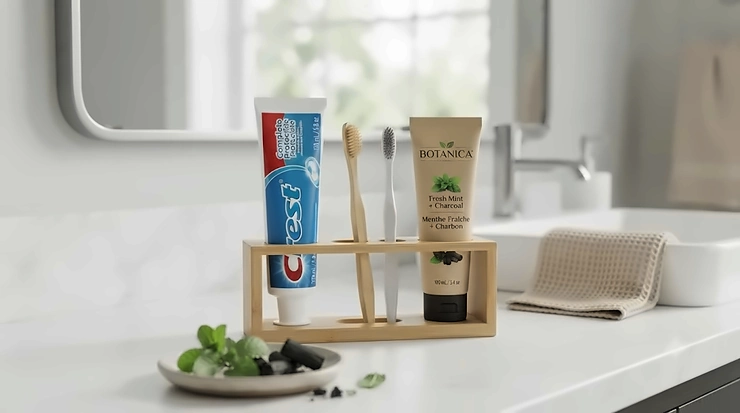
Here’s the short version: natural toothpaste vs regular toothpaste isn’t really a battle between good and evil — it’s a trade-off between different active ingredients, different abrasion profiles, and different philosophies about what “clean” means. Natural toothpaste typically skips fluoride, synthetic sweeteners, and sodium lauryl sulfate in favour of ingredients like hydrated silica, xylitol, or nano-hydroxyapatite. Regular toothpaste leans on decades of clinical fluoride research and, in most cases, carries dental-association recognition that natural formulas often lack.
Both camps have genuine strengths, and both have blind spots that marketing copy conveniently glosses over. This guide digs into real product specs, real aggregated review sentiment, and the regulatory landscape that actually governs what ends up on Canadian shelves — including how Health Canada’s fluoride guidance shapes what dentists recommend. We’ll compare seven real products spanning budget to premium, walk through the science behind sodium lauryl sulfate, unpack what “ADA-equivalent” actually means north of the border, and give you a practical framework for choosing between the two camps — whether you’re chasing a whiter smile, calmer gums, or just a toothpaste that doesn’t taste like a chemistry set.
Quick Comparison Table: Natural Toothpaste vs Regular Toothpaste
| Factor | Natural Toothpaste | Regular Toothpaste | Best For |
|---|---|---|---|
| Fluoride content | Usually absent (some exceptions) | Standard, ADA/CDA-recognized levels | Cavity-prone brushers → regular |
| Foaming agent | Typically SLS-free | Often contains sodium lauryl sulfate | Sensitive mouths → natural |
| Abrasivity (RDA) | Often lower, varies widely | Moderate, tightly regulated | Enamel-conscious → check both |
| Price range (CAD) | C$7-C$26 | C$4-C$10 | Budget shoppers → regular |
| Dental-association recognition | Rare, growing | Common (CDA Seal, ADA Seal) | Insurance/clinical trust → regular |
At a glance, the split comes down to trust versus intention. Crest Pro-Health and Colgate Total SF lean on decades of clinical trials and a Seal that’s genuinely hard to earn, while RiseWell Hydroxyapatite Toothpaste and David’s Natural Spearmint Whitening + Antiplaque bet on newer remineralizing science and a shorter ingredient list. Neither approach is automatically “better” — the right choice depends on your cavity risk, gum sensitivity, and how much weight you personally put on third-party validation versus ingredient philosophy.
💬 Just one click — help others make better buying decisions too!😊
Top 7 Natural and Regular Toothpaste Products: Expert Analysis
1. Tom’s of Maine Whitening & Antiplaque Toothpaste — the gateway natural pick
Tom’s of Maine Whitening & Antiplaque Toothpaste is usually the first “natural” tube people try, and there’s a reason for that: it doesn’t ask you to overhaul your whole routine to get there. The peppermint formula uses hydrated silica for gentle polishing and skips synthetic dyes, artificial sweeteners, and preservatives, while still delivering a foaming, familiar brushing feel. Most versions of this line are fluoride-free, which matters if cavity prevention through fluoride is a priority for your household — pair it with a fluoride mouth rinse if your dentist recommends one. Based on the ingredient comparison, this sits closer to “regular toothpaste with the harsh stuff removed” than to the more experimental hydroxyapatite formulas, which makes it a low-risk entry point for skeptics. Reviewers consistently report a noticeably milder, less foamy brushing experience compared to SLS-based pastes, with a smaller number noting the peppermint flavour is more subtle than they expected. It’s one of the more widely stocked natural options on Amazon.ca, which helps with consistent availability.
Pros:
- ✅ Widely available with consistent stock on Amazon.ca
- ✅ Free of SLS, artificial sweeteners, and synthetic dyes
- ✅ Familiar paste texture eases the transition from regular toothpaste
Cons:
- ❌ Most formulas lack fluoride for cavity protection
- ❌ Whitening effect is mild compared to peroxide-based pastes
Priced in the mid-C$7-C$10 range at the time of research, Tom’s of Maine Whitening & Antiplaque Toothpaste earns its keep as a reasonable value pick for anyone dipping a toe into natural oral care without wanting a total ingredient overhaul.
2. David’s Natural Spearmint Whitening + Antiplaque Toothpaste — premium fluoride-free polish
David’s Natural Spearmint Whitening + Antiplaque Toothpaste positions itself as the “clean beauty” end of the toothpaste spectrum, and the ingredient panel backs that up: no fluoride, no SLS, no artificial sweeteners, naturally sweetened instead with xylitol-style alternatives. The spearmint oil delivers a genuinely fresh finish without synthetic flavour compounds, and the hydrated silica handles surface-stain removal in a way that’s noticeably gentler than peroxide-heavy whitening pastes. What most buyers overlook about this brand is the packaging: it ships with a metal roller key to squeeze every last bit from the tube, a small but telling sign of the brand’s sustainability-first design philosophy. Aggregated reviewer sentiment is largely positive on texture and flavour, though a recurring theme in review threads is that the paste runs slightly thinner and more liquid than users expect from a “premium” formula, occasionally leading to product waste if the cap is left loose.
Pros:
- ✅ Fluoride-, sulfate-, and dye-free formula
- ✅ Genuinely effective at removing surface stains
- ✅ Sustainable packaging with a metal tube key
Cons:
- ❌ Runnier consistency than most paste-format competitors
- ❌ Premium pricing relative to fluoride-free alternatives
At around C$14-C$20 depending on tube size, David’s Natural Spearmint Whitening + Antiplaque Toothpaste sits firmly in the premium tier — a fair trade if ingredient transparency and sustainability matter more to you than cost-per-use.
3. RiseWell Hydroxyapatite Toothpaste — the remineralization specialist
RiseWell Hydroxyapatite Toothpaste represents the newer wave of natural formulations built around nano-hydroxyapatite, a mineral compound that makes up roughly 97% of natural tooth enamel. Instead of fluoride’s cavity-fighting mechanism, hydroxyapatite works by physically filling microscopic pits in enamel — a different approach with a smaller but growing body of clinical support behind it. The formula also includes xylitol and coconut oil, and it’s built without artificial colours, flavours, or preservatives. Based on the spec comparison against fluoride pastes, hydroxyapatite formulas tend to appeal most to parents wary of fluoride ingestion risk in young children and to adults managing enamel sensitivity, since the mineral itself is non-toxic if swallowed in small amounts. Reviewers frequently describe it as the “clean” choice, and it’s become a common recommendation among holistic dental practices, though independent long-term cavity-prevention data is still thinner than the multi-decade fluoride record.
Pros:
- ✅ Nano-hydroxyapatite remineralizes enamel without fluoride
- ✅ Non-toxic formula popular for family use
- ✅ No artificial colours, flavours, or preservatives
Cons:
- ❌ Less long-term clinical data than fluoride toothpaste
- ❌ Premium price point compared to drugstore basics
Expect to pay roughly C$18-C$24 for a standard tube, making RiseWell Hydroxyapatite Toothpaste one of the pricier picks on this list — justified for households actively avoiding fluoride, less so for pure budget shoppers.
4. Bite Toothpaste Bits — the zero-waste tablet format
Bite Toothpaste Bits ditches the tube entirely, delivering nano-hydroxyapatite toothpaste in chewable tablet form packed in a refillable glass jar. You bite down, the tablet turns into paste, and you brush as normal — a format built for the plastic-conscious and frequent flyers tired of liquid restrictions at security. What sets it apart isn’t just the delivery mechanism; it’s that Bite managed to fit a real hydroxyapatite-and-erythritol formula into a solid form without falling back on harsh fillers. Here’s what to weigh: the trade-off for zero-waste convenience is a thinner, less rich lather than a traditional paste, and heavier botanical or whitening agents simply don’t translate well into tablet form yet. Reviewers who travel frequently rate the format highly for TSA compliance and mess-free packing, while a recurring complaint is that a full brushing session sometimes requires two tablets rather than one.
Pros:
- ✅ Zero-waste, tube-free format in a refillable jar
- ✅ Travel-friendly and TSA liquid-restriction compliant
- ✅ Hydroxyapatite formula without harsh synthetic fillers
Cons:
- ❌ Thinner brushing experience than traditional paste
- ❌ Higher cost per use than tube-based alternatives
At approximately C$20-C$26 for roughly 62 tablets (about a month’s supply for one person), Bite Toothpaste Bits cost more per brush than any other product on this list — but for sustainability-focused buyers, the trade-off is often worth it.
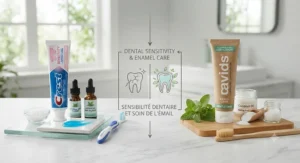
5. Crest Pro-Health Toothpaste — the clinical workhorse
Crest Pro-Health Toothpaste is the toothpaste most Canadian dentists have seen the most clinical data on, full stop. Built around stannous fluoride, it targets cavities, gingivitis, sensitivity, and enamel erosion in a single formula, and independent abrasivity testing consistently places several Pro-Health variants at the gentler end of the RDA (Relative Dentin Abrasivity) scale — some formulations scoring well under 50 on a scale where the ADA caps acceptable products at 250. That’s a meaningfully lower abrasion profile than many people assume from a “regular” toothpaste. The formula does contain sodium lauryl sulfate, which creates the thick foam many people associate with a “deep clean” feeling but which can aggravate canker-sore-prone mouths. Aggregated reviewer sentiment is overwhelmingly positive on sensitivity relief and gum-line freshness, with occasional complaints about the lingering aftertaste from stannous fluoride, sometimes described as slightly metallic.
Pros:
- ✅ Backed by extensive clinical fluoride research
- ✅ Multiple formulas score low on the RDA abrasivity scale
- ✅ Addresses cavities, gingivitis, and sensitivity together
Cons:
- ❌ Contains SLS, which can irritate sensitive mouths
- ❌ Some users report a metallic aftertaste
Typically found in the C$5-C$8 range, Crest Pro-Health Toothpaste delivers outsized clinical value for the price — arguably the strongest cost-per-benefit ratio on this entire list.
6. Colgate Total SF Toothpaste — the all-rounder with staying power
Colgate Total SF Toothpaste uses sodium fluoride to deliver a broad-spectrum formula aimed at plaque, gum health, enamel strength, and whitening in one tube — a genuine “does it all” positioning that most competitors only claim. What most buyers overlook about this formula is its stannous-adjacent antibacterial action, which independent abrasivity references peg at a moderate RDA in the low-100s — noticeably higher than Crest’s gentler variants but still comfortably under the ADA’s 250 safety ceiling. In practice, that translates to slightly more effective plaque and stain removal at the cost of being marginally less gentle on already-thin enamel. It also contains sodium lauryl sulfate, contributing to its signature foaming lather. Reviewer sentiment consistently praises the “clean mouth” feeling and gum-line freshness, while a recurring theme in feedback is that the whitening claims are modest rather than dramatic — a pattern common across nearly every fluoride whitening toothpaste on the market.
Pros:
- ✅ Broad-spectrum formula covers plaque, gums, and enamel
- ✅ Strong, foamy clean feeling from SLS-based lather
- ✅ Widely trusted, long-standing clinical track record
Cons:
- ❌ Moderate RDA abrasivity higher than gentler competitors
- ❌ Whitening results are subtle rather than dramatic
At around C$6-C$9, Colgate Total SF Toothpaste remains a dependable mid-range choice for anyone who wants one tube to handle several oral health priorities at once.
7. Arm & Hammer Complete Care Baking Soda Toothpaste — the budget baking-soda hybrid
Arm & Hammer Complete Care Baking Soda Toothpaste occupies an interesting middle ground: it’s technically a “regular” fluoride toothpaste, but it leans on baking soda as a co-active ingredient — the same neutralizing, mildly abrasive compound that shows up in plenty of natural formulas. The sodium fluoride handles cavity protection while sodium bicarbonate physically buffers acid attacks on enamel between meals, a mechanism that’s genuinely different from purely fluoride-based competitors. Ingredient panels confirm it still contains sodium lauryl sulfate and potassium nitrate for sensitivity relief. Based on the spec comparison, its RDA abrasivity tends to land in the moderate-to-higher range among mainstream toothpastes, which matters for anyone brushing aggressively or managing already-exposed dentin. Reviewer sentiment frequently highlights the distinctive salty-baking-soda taste as a love-it-or-hate-it feature, and families note it as one of the more wallet-friendly fluoride options on Amazon.ca.
Pros:
- ✅ Combines fluoride protection with baking soda buffering
- ✅ One of the most budget-friendly fluoride options
- ✅ Includes potassium nitrate for sensitivity relief
Cons:
- ❌ Baking soda taste and texture is polarizing
- ❌ Higher RDA abrasivity than gentler fluoride alternatives
Usually priced under C$7, Arm & Hammer Complete Care Baking Soda Toothpaste is the most budget-conscious pick on this list, and a genuinely clever hybrid for anyone curious about baking soda’s benefits without abandoning fluoride entirely.
Switching Toothpaste the Right Way: A 30-Day Practical Guide
Swapping toothpaste isn’t just a purchase decision — your mouth needs a genuine adjustment window, and most people quit too early because nobody warned them what “normal” looks like during the transition.
Week 1: Expect a texture shock. If you’re moving from an SLS-based paste like Colgate Total SF to a fluoride-free option like David’s Natural Spearmint Whitening + Antiplaque Toothpaste, the lack of thick foam will feel like you’re not actually cleaning anything. You are — foam is a cosmetic side effect of the detergent, not a measure of cleaning power. Brush for the full two minutes regardless of how “clean” it feels.
Week 2: Watch for temporary sensitivity. Switching away from a desensitizing formula like Sensodyne-style potassium nitrate pastes can cause a short-lived sensitivity bump as your teeth adjust. If you’re moving toward RiseWell Hydroxyapatite Toothpaste, give it 10-14 days before judging whether it’s managing sensitivity effectively — remineralization is a gradual process, not an instant fix.
Week 3: Reassess your flossing habits. Natural pastes without antibacterial agents rely more heavily on your mechanical technique. This is the ideal window to tighten up flossing consistency, since you’re leaning less on chemical plaque control.
Week 4: Check in on whitening progress. If whitening was your goal, this is roughly when hydrated-silica-based polishing (like in Tom’s of Maine Whitening & Antiplaque Toothpaste) starts showing visible surface-stain reduction. Peroxide-based whitening from regular toothpaste tends to show results slightly faster, often within two to three weeks.
Common first-month mistakes: switching cold-turkey without a backup fluoride mouth rinse if you’re cavity-prone, judging a new paste’s effectiveness after only a few days, and assuming a metallic or salty aftertaste (common with stannous fluoride or baking-soda formulas) signals a problem rather than a normal flavour profile.
Real-World Scenarios: Which Toothpaste Type Fits Your Life
The budget-conscious parent of two. If you’re managing a household of four brushing twice daily, cost-per-use matters as much as ingredients. Arm & Hammer Complete Care Baking Soda Toothpaste or Crest Pro-Health Toothpaste deliver clinically backed fluoride protection without the premium price tag of boutique natural brands — practical for a family working through several tubes a month.
The sensitive-mouth office worker who gets canker sores. Frequent mouth sores are often aggravated by SLS. Someone in this situation is generally better served by David’s Natural Spearmint Whitening + Antiplaque Toothpaste or Tom’s of Maine Whitening & Antiplaque Toothpaste, both SLS-free, paired with an alcohol-free rinse.
The frequent flyer chasing zero-waste habits. For someone who travels monthly and wants to skip liquid restrictions entirely, Bite Toothpaste Bits solves a genuinely practical problem that no traditional tube can — TSA-friendly, mess-free, and refillable.
The cavity-prone university student on a tight budget. High sugar intake, irregular brushing schedules, and a history of fillings point toward maximizing proven cavity protection. Colgate Total SF Toothpaste offers broad-spectrum fluoride coverage at a price that fits a student budget.
Natural Toothpaste for Specific Needs: Whitening and Gum Health
Natural toothpaste for whitening
Natural toothpaste for whitening works through mechanical polishing rather than chemical bleaching. Ingredients like hydrated silica in Tom’s of Maine Whitening & Antiplaque Toothpaste and David’s Natural Spearmint Whitening + Antiplaque Toothpaste gently buff surface stains from coffee, tea, and red wine without the peroxide used in regular whitening formulas. The honest takeaway: natural whitening toothpaste is genuinely effective against surface-level discolouration but does nothing for the deeper, intrinsic yellowing that comes with age or genetics — that requires professional or peroxide-based treatment. Reviewers consistently describe results as gradual and subtle rather than dramatic, typically becoming noticeable after three to four weeks of consistent use. If you want faster visible change, a peroxide-containing regular toothpaste will usually outperform a natural one on pure speed, though at the cost of slightly higher abrasivity for sensitive enamel.
Natural toothpaste for gum health
Gum health is arguably where natural formulas make their strongest case. Ingredients like xylitol (found in RiseWell Hydroxyapatite Toothpaste) inhibit the bacteria most responsible for gingivitis, while the absence of SLS reduces irritation along already-inflamed gum lines — a genuinely useful property for anyone managing sensitive or receding gums. What the spec sheet won’t tell you, but dental practitioners increasingly note, is that hydroxyapatite’s remineralizing action can help protect exposed root surfaces near the gum line, an area particularly vulnerable once gums recede. That said, natural formulas without antibacterial agents place more responsibility on your flossing technique, since they’re not chemically suppressing plaque bacteria the way antibacterial regular toothpaste does.
Natural Toothpaste vs Regular Toothpaste: The Real Differences
The core distinction between natural toothpaste vs regular toothpaste comes down to three ingredient categories: the active cavity-fighting agent, the foaming detergent, and the abrasive system.
Active ingredients. Regular toothpaste almost universally relies on fluoride — sodium fluoride, stannous fluoride, or sodium monofluorophosphate — because it has the deepest body of clinical evidence for reducing cavities. Natural toothpaste typically substitutes fluoride with nano-hydroxyapatite, xylitol, or simply drops an active anticavity ingredient altogether in favour of mechanical cleaning.
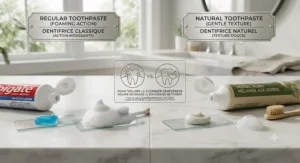
Sodium lauryl sulfate. This is the ingredient most people are actually asking about when they compare the two categories. Sodium lauryl sulfate is a detergent that creates foam and helps lift debris from tooth surfaces during brushing. It’s been extensively studied and is considered safe for general use, but it’s also a known irritant for people prone to canker sores or sensitive oral tissue. Most regular toothpastes — including Crest Pro-Health Toothpaste, Colgate Total SF Toothpaste, and Arm & Hammer Complete Care Baking Soda Toothpaste — contain it. Nearly every natural toothpaste on this list, including David’s Natural Spearmint Whitening + Antiplaque Toothpaste and RiseWell Hydroxyapatite Toothpaste, is formulated without it.
Abrasivity. Both categories vary wildly here, and this is where assumptions break down fastest. It’s tempting to assume “natural” automatically means “gentler,” but that’s not consistently true — some natural whitening formulas carry moderate RDA scores, while several Crest Pro-Health variants score remarkably low despite being a mainstream regular product. The Canadian Dental Association’s Seal program independently validates specific claims manufacturers make, which is one of the more reliable ways to cut through marketing noise on abrasivity and efficacy alike, though participation remains voluntary and many smaller natural brands haven’t gone through the process yet.
The honest verdict: regular toothpaste currently holds a substantial evidence advantage for cavity prevention, while natural toothpaste holds a genuine advantage for anyone whose mouth reacts poorly to SLS or synthetic additives. Neither claim cancels the other out.
How to Choose Between Natural and Regular Toothpaste
- Assess your cavity risk first. If you have a history of frequent cavities, fluoride’s clinical track record makes regular toothpaste the safer default choice.
- Check for SLS sensitivity. Recurring canker sores or a burning sensation after brushing is a strong signal to try an SLS-free natural formula.
- Match your whitening expectations to your timeline. Need fast results before an event? Regular peroxide-based whitening outpaces natural polishing. Playing the long game? Natural options work fine.
- Weigh gum sensitivity against antibacterial needs. Inflamed, receding gums often respond better to gentler natural formulas, while active gingivitis may need the antibacterial punch regular toothpaste provides.
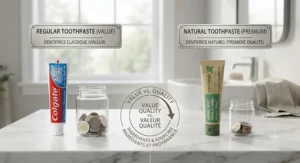
- Factor in your budget realistically. Natural premium tubes can run two to three times the price of drugstore regular toothpaste — worth it for some priorities, unnecessary for others.
- Look for third-party validation. A CDA Seal or ADA Seal of Acceptance means independent verification of specific claims, not just marketing language.
- Consider your household, not just yourself. A family with young children brushing under supervision has different fluoride considerations than a single adult managing sensitivity.
Common Mistakes When Switching Toothpaste
Buyers repeatedly stumble into the same handful of traps. First, judging a fluoride-free natural toothpaste as “not working” after a few days — remineralization and gum improvements are gradual processes, not overnight fixes. Second, assuming all natural toothpaste is automatically gentler on enamel; RDA testing shows this isn’t universally true. Third, ignoring flossing consistency while relying entirely on a new “better” toothpaste to do the heavy lifting — no paste, natural or regular, replaces mechanical plaque removal between teeth. Fourth, buying a premium natural tube for whitening when the underlying discolouration is intrinsic rather than surface-level, leading to disappointment that has nothing to do with the product’s quality. Fifth, overlooking children’s specific needs — Health Canada and the CDA both recommend a pea-sized amount of fluoridated toothpaste for kids aged three to six, a guideline that applies regardless of which brand philosophy a household prefers.
Safety, Regulations, and ADA-Equivalent Standards in Canada
Canadians often ask what the “ADA-equivalent standard” looks like locally, since the American Dental Association Seal is the name most people recognize. The Canadian equivalent is the CDA Seal, run by the Canadian Dental Association. Unlike a blanket “approval,” the CDA Seal validates specific claims a manufacturer wants to make — cavity protection, whitening, sensitivity relief — against independently reviewed scientific evidence, rather than certifying the product as a whole. That’s a meaningful nuance: a toothpaste can carry the Seal for one specific claim while other marketing language on the same box remains unverified.
Participation in both the CDA and ADA seal programs is voluntary, which explains why many reputable natural brands — including several on this list — don’t carry either seal despite using legitimate, safety-tested ingredients. Absence of a seal isn’t automatically a red flag; it often just reflects that smaller manufacturers haven’t pursued the (often costly) certification process yet.
On fluoride specifically, Health Canada’s official guidance recommends children under three have their teeth brushed without toothpaste unless a health professional advises otherwise, while children three to six should use a pea-sized amount under supervision. This regulatory context matters regardless of whether a household leans natural or regular, since fluoride dosage — not just its presence or absence — is the actual safety variable regulators track.
What to Expect: Real-World Performance
On paper, the specs suggest regular toothpaste should always outperform natural formulas on cavity prevention, and largely, the clinical evidence backs that up. But real-world performance is messier than a spec sheet. Someone brushing twice daily with RiseWell Hydroxyapatite Toothpaste and flossing consistently may see better outcomes than someone brushing inconsistently with Colgate Total SF Toothpaste. Technique and consistency routinely outweigh formula differences in everyday use. Where the gap becomes most visible is in acute situations: active gum inflammation typically responds faster to an antibacterial regular formula, while chronic SLS-triggered mouth irritation resolves faster once a natural, sulfate-free option is introduced. Whitening performance splits similarly — regular peroxide-based options show visible change faster, while natural mechanical polishing catches up over a longer timeline with less risk of sensitivity flare-ups along the way.
Long-Term Cost and Maintenance
Cost-per-use tells a more complete story than sticker price alone. A budget regular toothpaste like Arm & Hammer Complete Care Baking Soda Toothpaste, priced under C$7 for roughly a two-month supply for one adult, works out to well under C$0.15 per day. A premium natural option like Bite Toothpaste Bits, at roughly C$20-C$26 for about a month’s supply, can run closer to C$0.70-C$0.85 per day — a meaningful gap over a year. That said, total cost of ownership isn’t just the tube price. If SLS sensitivity is driving repeat dental visits for mouth sore management, or if fluorosis concerns are pushing a family toward pricier fluoride-free alternatives for young kids, the “cheaper” option on paper may not be cheaper in practice. The most cost-effective long-term strategy for most households is matching the formula to an actual documented need — sensitivity, whitening goals, cavity history — rather than defaulting to either camp out of habit.
Frequently Asked Questions
❓ Is natural toothpaste as effective as regular toothpaste?
❓ Does natural toothpaste whiten teeth?
❓ Is sodium lauryl sulfate bad for you?
❓ What is the ADA-equivalent standard in Canada?
❓ Can natural toothpaste help with gum health?
Conclusion
There’s no universal winner in the natural toothpaste vs regular toothpaste debate, and honestly, anyone promising you one is oversimplifying a genuinely nuanced choice. Regular options like Crest Pro-Health Toothpaste and Colgate Total SF Toothpaste bring decades of fluoride research and CDA-recognized claims to the table — hard to beat if cavity prevention is your top priority. Natural options like RiseWell Hydroxyapatite Toothpaste, David’s Natural Spearmint Whitening + Antiplaque Toothpaste, Tom’s of Maine Whitening & Antiplaque Toothpaste, and Bite Toothpaste Bits offer a genuinely gentler experience for sensitive mouths and a growing body of remineralization science, at a premium price. And Arm & Hammer Complete Care Baking Soda Toothpaste proves the line between the two camps isn’t always so sharp.
The real work isn’t picking a side — it’s matching the formula to your actual mouth: your cavity history, your sensitivity triggers, your whitening timeline, and your budget. Get that match right, and the “natural versus regular” question mostly answers itself.
✨ Don’t Miss These Exclusive Deals!
🔍 Ready to find your match? Click through to check current pricing and availability on any of the seven picks above, and give your smile the upgrade it’s been waiting for. 🦷✨
Recommended for You
- Best Natural Toothpaste in Canada 2026: 7 Picks That Actually Work
- Is Expensive Toothpaste Worth It? 7 Products Tested & Ranked (2026)
- How to Choose the Right Toothpaste: 7 Smart Picks (2026)
Disclaimer: This article contains affiliate links. As an Amazon Associate, I earn from qualifying purchases. If you purchase products through these links, we may earn a small commission at no additional cost to you.
✨ Found this helpful? Share it with your friends! 💬🤗
