
In This Article
Stand in the toothpaste aisle for more than ninety seconds and you’ll start questioning your life choices. Whitening, sensitivity, “clinical,” charcoal, gum health, tartar control, kid-flavoured bubblegum things that taste like a birthday party gone wrong — it’s a wall of tubes screaming for your attention, and almost none of them explain why you’d pick one over another. Learning how to choose the right toothpaste isn’t about finding the “best” tube in some abstract sense. It’s about matching a formula to what’s actually happening in your mouth, which, let’s be honest, most of us have never really stopped to assess.
This guide cuts through the marketing noise. We researched real products sold in Canada, dug into what’s actually in the tube, and weighed that against genuine aggregated review sentiment — no invented five-star raves here. You’ll get a straight comparison of seven toothpastes spanning budget to premium, a plain-language breakdown of the ingredients that matter, and a decision framework you can actually use next time you’re standing under those fluorescent drugstore lights. Whether you’re dealing with zingy cold-drink sensitivity, coffee-stained enamel, or gums that bleed when you floss (be honest — when’s the last time you flossed?), there’s a formula built for that specific problem, and we’re going to help you find it.
What Toothpaste Should I Buy for My Needs?
The short answer: the toothpaste you should buy is whichever one directly addresses your specific dental concern — sensitivity, gum health, whitening, cavity risk, or enamel wear — while still containing a Health Canada-recognized active ingredient like fluoride or stannous fluoride. There’s no single “best” toothpaste; the right one depends entirely on your mouth, not the flashiest packaging.
That distinction matters more than most shoppers realize. A whitening formula built around abrasive silica can be genuinely uncomfortable if your gums are already receding, while a gentle sensitivity paste might do almost nothing for someone whose real issue is stubborn coffee staining. Matching the formula to the actual problem — not the loudest marketing claim on the box — is the entire game.
Quick Comparison Table
| Toothpaste | Best For | Price Range (CAD) | Key Ingredient Focus |
|---|---|---|---|
| Colgate Cavity Protection Fluoride | Budget-conscious daily basics | Under C$5 | Sodium fluoride |
| Crest Pro-Health Clean Mint | All-around daily protection | C$6-C$9 | Stannous fluoride |
| Sensodyne Pronamel Gentle Whitening | Sensitivity plus mild whitening | C$8-C$12 | Potassium nitrate, fluoride |
| Parodontax for Bleeding Gums | Gum health and gingivitis concerns | C$9-C$13 | Sodium bicarbonate, fluoride |
| Arm & Hammer Advance White Extreme | Budget baking-soda whitening | C$3-C$6 | Baking soda |
| Tom’s of Maine Luminous White | Naturally-derived ingredient preference | C$7-C$10 | Naturally-sourced silica, fluoride |
| Marvis Whitening Mint | Premium daily-use experience | C$15-C$22 | Xylitol, fluoride |
Looking at this spread, the range isn’t just about price — it’s about what problem each formula is actually solving. Colgate Cavity Protection Fluoride and Arm & Hammer Advance White Extreme sit at the accessible end for anyone who just wants reliable daily protection without overthinking it, while Sensodyne Pronamel Gentle Whitening and Parodontax for Bleeding Gums are built for people managing a specific clinical complaint. Marvis Whitening Mint is the outlier here: you’re not paying extra for stronger science, you’re paying for a genuinely different sensory experience and imported formulation, which is a legitimate reason to buy it, just not a dental one.
💬 Just one click — help others make better buying decisions too!😊
Top 7 Toothpastes: Expert Analysis
1. Colgate Cavity Protection Fluoride Toothpaste — the reliable budget workhorse
There’s nothing flashy about Colgate Cavity Protection Fluoride Toothpaste, and that’s precisely the point. It’s a straightforward sodium fluoride formula built for one job: cavity prevention through daily plaque and bacteria removal. The fluoride concentration sits at the standard therapeutic level used in mainstream Canadian toothpastes, which in practice means it’s doing the same core cavity-fighting work as far pricier tubes, just without the whitening agents or sensitivity buffers layered on top.
Based on the spec comparison against premium competitors, the real difference isn’t efficacy against cavities — it’s the absence of secondary benefits like enamel-safe whitening or gum-specific soothing agents. This makes it a strong pick for anyone with no particular dental complaint who just wants proven basics at the lowest reasonable cost, especially for stocking a household with multiple bathrooms or growing kids’ bathroom cups.
Reviewers consistently report satisfaction with the clean feel and mild mint flavour, and it’s frequently cited as a dependable “no surprises” option in bulk multi-pack reviews. The main criticism that surfaces repeatedly is that it does little for anyone dealing with sensitivity or staining — which makes sense, since it was never designed to.
Pros:
- ✅ Reliable fluoride cavity protection at a low price point
- ✅ Mild flavour that suits sensitive palates and kids over age 6
- ✅ Widely available in bulk multi-packs across Canada
Cons:
- ❌ No dedicated whitening or sensitivity-relief ingredients
- ❌ Basic formula won’t address gum or enamel-specific concerns
At around C$4-C$6 for a standard tube (often less in multi-packs), Colgate Cavity Protection Fluoride Toothpaste delivers straightforward value for anyone without a specialized dental need — check current pricing on the listing since multi-pack deals shift often.
2. Crest Pro-Health Clean Mint Toothpaste — best all-around daily protection
Crest Pro-Health Clean Mint Toothpaste is built around stannous fluoride rather than the more common sodium fluoride, and that swap actually matters in practice. Stannous fluoride formulas tend to offer broader coverage — cavity prevention, plaque control, gum support, and mild sensitivity relief — bundled into a single paste, which is why dental brands increasingly favour it for “all-in-one” positioning.
What most buyers overlook here is the hydrated silica base, a gentle abrasive that lifts surface stains without the harsher polishing agents found in dedicated whitening tubes. For someone who wants one toothpaste that reasonably covers cavities, gums, and light staining without buying three separate specialty products, this is a genuinely efficient middle-ground pick — the kind of toothpaste you can hand to every person in a household with different needs and have it work reasonably well for all of them.
Aggregated reviewer sentiment on this line skews positive around its “sensitive teeth friendly” claim and the mild taste of the mint formulation, with several sources noting the recyclable carton as an added plus for environmentally-minded shoppers.
Pros:
- ✅ Stannous fluoride covers cavities, gums, and mild sensitivity
- ✅ Gentle stain removal without harsh whitening abrasives
- ✅ Works well as a single tube for varied household needs
Cons:
- ❌ Not a dedicated solution for serious whitening goals
- ❌ Stannous fluoride can cause mild surface staining in some users
Priced in the C$6-C$9 range depending on tube size, Crest Pro-Health Clean Mint Toothpaste earns its spot as the most versatile daily-driver on this list — prices may vary by retailer and pack size.
3. Sensodyne Pronamel Gentle Whitening — best for sensitivity plus gentle whitening
If cold drinks make you wince, Sensodyne Pronamel Gentle Whitening is the formula built specifically for that exact moment. It leans on potassium nitrate, an ingredient that works by calming the nerve signals inside exposed dentin tubules — the microscopic channels that transmit that sharp jolt when hot or cold hits a sensitive spot. Paired with a low-abrasion whitening system, it removes surface stains without the aggressive polishing that can worsen sensitivity over time.
Here’s what the spec sheet won’t tell you outright: most whitening toothpastes and sensitivity toothpastes are formulated as opposites, because effective whitening typically requires abrasion, and sensitivity relief requires the opposite. Pronamel’s whole value proposition is threading that needle, which is a genuinely harder formulation problem than it sounds. That’s exactly why it’s repeatedly flagged across dental sources as the go-to for people who have both concerns simultaneously rather than one or the other.
Sensodyne carries a strong reputation among dental professionals specifically for sensitivity relief, and this particular formulation is frequently highlighted as suited to buyers who don’t want to sacrifice a brighter smile while managing discomfort.
Pros:
- ✅ Potassium nitrate directly targets hot/cold sensitivity
- ✅ Low-abrasion whitening won’t aggravate exposed dentin
- ✅ Strong reputation among dental professionals for sensitivity
Cons:
- ❌ Whitening results are gradual, not dramatic, compared to dedicated whitening pastes
- ❌ Premium pricing relative to basic fluoride toothpastes
Expect to pay in the C$8-C$12 range for Sensodyne Pronamel Gentle Whitening, and given how narrow and specific its formulation goal is, that price reflects real functional value rather than marketing markup.
4. Parodontax Toothpaste for Bleeding Gums — best for gum health concerns
Bleeding gums when you floss aren’t normal, no matter how routine it feels. Parodontax Toothpaste for Bleeding Gums is formulated specifically around that early gingivitis signal, combining sodium bicarbonate — which helps neutralize the acidic environment plaque bacteria thrive in — with fluoride for standard cavity protection layered underneath the gum-focused benefit.
The honest analytical read here: this isn’t a whitening toothpaste, and it isn’t trying to be. Its distinctive, somewhat salty taste is a direct result of the bicarbonate concentration, and that flavour profile is the single most polarizing thing about the brand. But for anyone whose dentist has flagged early gum inflammation, prioritizing the ingredient that addresses the actual clinical issue over flavour preference is the right trade to make, at least for the weeks it takes to see gum health improve.
Aggregated review sentiment around this product is consistent on two fronts: genuine improvement in gum bleeding within a few weeks of twice-daily use, and near-universal comments about the taste taking real adjustment. Both patterns show up often enough across sources to treat them as reliable expectations rather than outliers.
Pros:
- ✅ Sodium bicarbonate formula targets gum inflammation directly
- ✅ Fluoride still included for baseline cavity protection
- ✅ Reviewers report noticeable gum improvement within weeks
Cons:
- ❌ Distinctive salty taste is a genuine adjustment for many users
- ❌ Not formulated for whitening or sensitivity relief
At C$9-C$13 per tube, Parodontax Toothpaste for Bleeding Gums is a targeted purchase — worth the price specifically if gum health, not whitening, is your priority right now.
5. Arm & Hammer Advance White Extreme Whitening — best budget baking-soda whitening
Baking soda has been a stain-fighting staple for generations, and Arm & Hammer Advance White Extreme Whitening builds its entire identity around that ingredient rather than the chemical whitening agents found in premium tubes. The mild alkaline abrasive action lifts surface staining from coffee, tea, and red wine through gentle mechanical polishing rather than bleaching chemistry.
What most buyers overlook about baking-soda formulas specifically is that they tend to feel noticeably different in the mouth — a slightly gritty, fizzy sensation on first use that some people love and others find genuinely off-putting. Based on the spec comparison against silica-based whitening pastes, baking soda is typically gentler on enamel over the long run despite feeling more abrasive in the moment, since it dissolves as it works rather than staying as a hard polishing particle.
Aggregated sentiment consistently points to this being one of the better value picks for surface-stain removal, with a 4.4-star rating showing up across Canadian retail listings and repeated mentions of visible results within the first couple of weeks of regular use.
Pros:
- ✅ Baking soda provides genuine, gentle surface-stain removal
- ✅ Among the lowest-priced whitening formulas on the market
- ✅ Consistently strong rating across Canadian retail listings
Cons:
- ❌ Gritty texture on first use isn’t for everyone
- ❌ Less effective on deep, set-in staining than professional treatments
Typically priced in the mid-C$3 to C$6 range, Arm & Hammer Advance White Extreme Whitening is arguably the best dollar-for-dollar whitening pick on this entire list.
6. Tom’s of Maine Luminous White — best for a naturally-derived ingredient list
For shoppers who read ingredient labels the way other people read restaurant reviews, Tom’s of Maine Luminous White is built to answer that scrutiny directly. It skips artificial dyes, synthetic flavours, and the preservative systems found in many mainstream tubes, relying instead on naturally-sourced hydrated silica for gentle whitening and naturally-derived flavouring for taste.
Here’s the honest analytical framing: “naturally-derived” doesn’t automatically mean “less effective,” but it also doesn’t mean “stronger.” What most buyers overlook about this category is that fluoride, when present, still does the actual cavity-fighting work regardless of how “natural” the rest of the formula is — so the real value proposition of this toothpaste is ingredient transparency and avoiding synthetic additives, not superior clinical performance over standard formulas.
Reviewers who prioritize clean-ingredient products consistently report satisfaction with the taste and texture, often specifically citing the absence of artificial sweeteners as the deciding factor over competing “natural” brands, though a smaller subset note the whitening effect is subtler than chemically-driven alternatives.
Pros:
- ✅ Free of artificial dyes, flavours, and synthetic preservatives
- ✅ Gentle, naturally-sourced whitening agents
- ✅ Strong appeal for ingredient-conscious households
Cons:
- ❌ Whitening effect is milder than chemical-abrasive competitors
- ❌ Some formulations in the line are fluoride-free — check the label carefully
At C$7-C$10 per tube, Tom’s of Maine Luminous White carries a modest premium over mainstream basics, one that’s easy to justify if ingredient sourcing genuinely matters to your buying decisions.
7. Marvis Whitening Mint Toothpaste — the premium daily-use import
Marvis Whitening Mint Toothpaste is the kind of product that gets recommended less for raw clinical superiority and more for the entire sensory experience — a distinctively strong, almost spa-like mint flavour, a compact and visually striking tube, and a texture noticeably different from mass-market North American formulas. It contains fluoride at standard protective levels alongside xylitol, which helps reduce the oral bacteria that feed on sugar and contribute to decay.
Based on the spec comparison, there’s an honest case to be made that you’re paying a real premium here for formulation nuance and imported branding rather than dramatically superior cavity or whitening performance compared to a well-formulated C$8 tube. That said, for someone who genuinely enjoys their oral care routine and treats it as a small daily ritual rather than a chore, the intensity and quality of the flavour experience is a legitimate reason to spend more — plenty of premium personal-care purchases work exactly the same way.
Aggregated retail sentiment repeatedly flags this as a favoured pick among users who specifically want an elevated, non-mainstream toothpaste experience, with the distinctive minty intensity showing up again and again as the single most-mentioned trait.
Pros:
- ✅ Distinctive, intense mint flavour experience
- ✅ Xylitol helps limit decay-causing oral bacteria
- ✅ Compact, well-designed tube that many find travel-friendly
Cons:
- ❌ Meaningfully pricier than domestic mainstream alternatives
- ❌ Intense flavour may be too strong for some users
Running roughly C$15-C$22 per tube, Marvis Whitening Mint Toothpaste sits firmly in premium territory — a worthwhile splurge for the experience, though not a functional necessity for most mouths.
Individual Oral Health Assessment: Know Your Mouth Before You Shop
Before you even glance at a toothpaste label, it helps to run a quick, honest individual oral health assessment — because the “best” toothpaste is only best in relation to what’s actually going on in your mouth. Ask yourself a few blunt questions: Does cold water make you flinch? Do your gums bleed when you floss (assuming you floss)? Are your teeth visibly duller or more yellow than they used to be? Has a dentist mentioned early enamel erosion or receding gums at your last checkup?
Each of those answers points toward a different ingredient priority. Sensitivity points to potassium nitrate or stannous fluoride. Bleeding gums point to sodium bicarbonate and antibacterial agents. Visible staining points to gentle abrasives like silica or baking soda. And if your dentist has flagged fluoride intake concerns — which is more common in households on well water, according to guidance from Health Canada on fluoride exposure — that’s worth factoring into how much fluoridated toothpaste your household is using daily on top of your water supply.
This self-assessment step is the one most people skip entirely, grabbing whatever’s on sale instead. But five honest minutes here saves you from buying a whitening toothpaste when what you actually needed was gum support, which happens far more often than you’d think.
Toothpaste Selection Criteria That Actually Matter
Strip away the marketing language, and real toothpaste selection criteria come down to a short, practical list. First: an active therapeutic ingredient appropriate to your need — fluoride for cavity prevention, potassium nitrate or stannous fluoride for sensitivity, sodium bicarbonate for gum concerns. Second: abrasiveness level, since a toothpaste too abrasive for your enamel can create the exact sensitivity problem you’re trying to avoid, especially with daily whitening use over months.
Third, and genuinely underrated: taste and texture compliance. A toothpaste with perfect ingredients does nothing for your teeth sitting unused in a drawer because you couldn’t stand the flavour. Fourth: verified regulatory approval, meaning a Drug Identification Number (DIN) or Natural Product Number (NPN) on Canadian packaging, confirming the product has cleared Health Canada review.
Price matters last, not first — a C$4 tube that gets used twice daily beats a C$20 tube abandoned after one try, every single time. What most buyers overlook is that the “premium” ingredient list on an expensive tube is worthless if it sits in the cabinet because the taste didn’t land.
How to Choose the Right Toothpaste in 7 Steps
- Identify your primary concern first. Sensitivity, gum bleeding, staining, or plain cavity prevention — pick one dominant issue rather than trying to solve everything at once.
- Check for fluoride unless you have a specific reason to avoid it. Fluoride remains the most clinically established cavity-prevention ingredient available in over-the-counter toothpaste.
- Match the active ingredient to the concern. Potassium nitrate or stannous fluoride for sensitivity, sodium bicarbonate for gums, gentle silica or baking soda for staining.
- Consider abrasiveness relative to your enamel condition. If a dentist has flagged enamel wear, skip aggressive whitening formulas regardless of how appealing the results look.
- Read aggregated review themes, not individual five-star claims. Look for recurring patterns — taste complaints, texture issues, results timelines — rather than isolated raves.
- Confirm Health Canada regulatory compliance. A DIN or NPN on the box means the formula has been reviewed, which matters more than brand recognition alone.
- Buy one tube before committing to a multi-pack. Even a well-reviewed formula can be wrong for your specific mouth; test before you stockpile.
✨ Ready to stop guessing in the toothpaste aisle? Compare the seven picks above and grab the one that actually matches your needs.
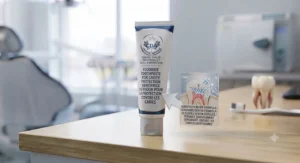
Matching Formulas to Dental Needs
Matching formulas to dental needs is really a process of elimination once you know your priority. If sensitivity is the dominant issue, Sensodyne Pronamel Gentle Whitening or a comparable potassium-nitrate formula should be the default, since desensitizing agents need consistent daily use over several weeks to build their full effect — switching toothpastes frequently actually undermines that process.
If gum health is the concern, formulas built around Parodontax Toothpaste for Bleeding Gums‘ bicarbonate approach directly target the bacterial environment linked to gingivitis, something a standard whitening toothpaste simply isn’t designed to do. The Canadian Dental Association’s position on fluoride use reinforces that fluoride should remain a baseline in nearly every formula regardless of which secondary benefit you’re prioritizing, since cavity prevention doesn’t take a back seat just because gums or sensitivity are the immediate concern.
For straightforward whitening without sensitivity complications, gentler mechanical options like Arm & Hammer Advance White Extreme Whitening typically outperform harsher chemical-bleach formulas on the comfort front, while still delivering visible stain reduction within a few weeks of consistent use.
Toothpaste Buying Guide: Fluoride vs. Fluoride-Free
| Factor | Fluoride Toothpaste | Fluoride-Free Toothpaste |
|---|---|---|
| Cavity prevention | Strong, clinically established | Relies on other agents (e.g., hydroxyapatite), less established |
| Best For | Most general users, children over 6 | Adults avoiding fluoride by personal choice or medical guidance |
| Regulatory status | Widely reviewed under Canadian NPN/DIN framework | Varies by ingredient, check labeling carefully |
| Taste/texture | Standard, widely tolerated | Varies significantly by brand |
The written comparison matters more than the table here: fluoride remains the ingredient with the deepest body of independent research behind it for cavity prevention, and most Canadian dental professionals default to recommending it unless there’s a specific medical reason not to. Fluoride-free alternatives aren’t inherently worse, but the evidence base behind newer ingredients like hydroxyapatite is comparatively thinner, meaning you’re trading a well-established track record for a personal preference around ingredient sourcing.
For most households, a fluoride formula like Crest Pro-Health Clean Mint Toothpaste remains the safer default, while fluoride-conscious buyers exploring naturally-derived options should double-check labeling on products like Tom’s of Maine Luminous White, since the brand sells both fluoride and fluoride-free variants under similar packaging.
💬 Not sure which side of this debate fits your family? Bookmark this table and revisit it before your next dental checkup.
Common Mistakes When Buying Toothpaste
The single most common mistake is buying based on the biggest word on the box — “Whitening,” “Clinical,” “Extreme” — without checking whether the active ingredient actually matches your dental need. A whitening claim on a toothpaste with no established stain-removal agent behind it is just marketing.
The second mistake is chasing whitening results too aggressively, switching to more abrasive formulas when results feel slow, which can quietly wear enamel and create the exact sensitivity problem the person was trying to avoid in the first place. Third, plenty of shoppers ignore the DIN/NPN number entirely, especially when ordering imported or lesser-known brands online — a step that takes ten seconds and confirms the product actually cleared Canadian regulatory review.
Finally, people frequently buy a single “do everything” toothpaste when their actual situation calls for a targeted formula plus a supporting product, like a fluoride mouthwash alongside a gum-focused toothpaste — one tube rarely needs to do every job alone.
What to Expect: Real-World Performance
Specs on a box rarely translate directly into lived experience, so here’s the honest, expectation-managed version. Sensitivity relief from potassium-nitrate formulas typically builds gradually — most sources suggest a full effect over two to four weeks of consistent twice-daily brushing, not overnight. Whitening toothpastes, whether baking-soda or silica-based, generally show visible surface-stain improvement within one to two weeks, but they lighten existing stains rather than bleaching teeth to a dramatically different shade.
Gum-focused formulas like bicarbonate-based pastes tend to show reduced bleeding within a similar two-to-three week window, assuming brushing technique and flossing habits are also solid — no toothpaste fully compensates for skipped flossing. What the spec sheet won’t tell you is that taste tolerance is often the real determinant of whether any of these results materialize at all, since a formula you dislike using consistently won’t outperform a milder one used reliably twice a day.
Practical Usage Guide: Getting More Out of Every Tube
Getting real value from any toothpaste starts with technique, not just formula choice. Brush for a full two minutes, twice daily — most people stop closer to 45 seconds, according to widely cited dental hygiene research, which meaningfully undercuts even the best formula’s effectiveness. Use a pea-sized amount; more toothpaste doesn’t mean more protection, it just means more foam and faster tube depletion.
For sensitivity formulas specifically, apply a thin layer directly onto sensitive areas after your regular brushing routine and leave it without rinsing immediately, since the desensitizing agents need direct contact time to work into exposed dentin. For whitening formulas, avoid combining aggressive brushing pressure with the abrasive agents already in the paste — let the ingredients do the polishing rather than scrubbing harder, which just accelerates enamel wear without improving results.
Store tubes with the cap on and away from direct heat, since some active ingredients, particularly stannous fluoride compounds, can lose potency when repeatedly exposed to warm, humid bathroom conditions. A common first-30-days mistake is switching formulas too early because results feel slow — most therapeutic toothpastes need three to four weeks of consistent use before their full effect is fairly judged.
Selecting Best Toothpaste for Your Teeth: Real-World Scenarios
Consider three genuinely different buyers. First, a university student on a tight budget who mostly just wants reliable cavity protection between infrequent dental visits — for them, Colgate Cavity Protection Fluoride Toothpaste or Arm & Hammer Advance White Extreme Whitening covers the basics without straining a student budget, and the whitening bonus on the latter is a nice extra rather than the main draw.
Second, a parent in their forties who’s started noticing sensitivity after a lifetime of coffee and now wants both relief and a brighter smile without spending a fortune — Sensodyne Pronamel Gentle Whitening is built almost exactly for this profile, addressing both concerns in one formula rather than requiring two separate tubes rotating through the bathroom cabinet.
Third, someone whose last dental checkup flagged early gum inflammation and who’s genuinely worried about it progressing — Parodontax Toothpaste for Bleeding Gums is the clear pick here, even accounting for the taste adjustment, because addressing gingivitis early is meaningfully easier than managing it once it’s more advanced. Selecting the best toothpaste for your teeth really is this specific once you match the product to the actual scenario rather than shopping generically.

Problem → Solution: Fixing Common Toothpaste Complaints
Problem: Teeth still feel sensitive despite using a sensitivity toothpaste. Solution: check that you’re using it consistently for the full three-to-four week build-up period, and confirm the formula contains potassium nitrate or stannous fluoride specifically, not just a “gentle” marketing label without an actual desensitizing agent.
Problem: Whitening toothpaste isn’t showing visible results. Solution: whitening pastes lift surface stains, not deep or intrinsic discoloration — if staining is deep-set, a dentist consultation about professional whitening may be the more realistic next step rather than switching toothpaste brands repeatedly.
Problem: Gums still bleed after switching to a gum-health formula. Solution: pair the toothpaste with consistent flossing and confirm brushing technique isn’t too aggressive, since bleeding gums often reflect a combination of plaque buildup and brushing habits that toothpaste alone can’t fully resolve.
Problem: New toothpaste tastes unbearable. Solution: give it a genuine one-week trial before switching, since taste tolerance often improves with exposure — but if it’s genuinely stopping you from brushing consistently, a milder formula within the same active-ingredient category is a reasonable swap.
Long-Term Cost & Maintenance
| Toothpaste | Approx. Cost per Month* | Best For |
|---|---|---|
| Colgate Cavity Protection Fluoride | Under C$5 | Lowest ongoing cost |
| Arm & Hammer Advance White Extreme | C$3-C$5 | Best whitening-per-dollar |
| Sensodyne Pronamel Gentle Whitening | C$8-C$10 | Best value for combined needs |
| Marvis Whitening Mint | C$15-C$18 | Highest cost, experience-driven |
*Estimated based on typical twice-daily use of a standard tube; prices may vary and should be confirmed at the time of purchase.
The real long-term cost story isn’t the sticker price — it’s how a mismatched toothpaste can lead to downstream dental costs. A cheap tube that doesn’t address active sensitivity or early gum inflammation can mean a more expensive dental visit down the line, while a well-matched C$10 tube used consistently is genuinely cost-effective preventive care. Total cost of ownership here should include the “cost” of a tube going unused because the taste or texture didn’t fit, since that’s money spent with zero benefit.
Safety, Regulations & Health Canada Compliance
Every toothpaste legally sold in Canada should carry either a Drug Identification Number (DIN) or a Natural Product Number (NPN), confirming it has passed Health Canada review. This matters more than it sounds: Health Canada has previously issued public warnings about imported toothpastes found to contain diethylene glycol, an industrial solvent that has no place in a toothpaste tube, underscoring why buying unauthorized imported products online carries real risk beyond just wasted money.
For households with young children, Health Canada guidance recommends supervised brushing with only a pea-sized (or smaller, for very young children) amount of fluoridated toothpaste, since children are more likely to swallow toothpaste and accumulate higher fluoride exposure than intended. If your household relies on well water rather than municipally fluoridated water, it’s worth factoring your water’s natural fluoride content into how you think about toothpaste fluoride levels, since total daily exposure comes from both sources combined, not toothpaste alone.

FAQ
❓ How often should I switch toothpaste?
❓ Is whitening toothpaste bad for enamel?
❓ Can I use sensitivity toothpaste every day?
❓ What toothpaste selection criteria matter most for kids?
❓ Do natural or fluoride-free toothpastes work as well as fluoride ones?
Conclusion
Choosing the right toothpaste really does come down to an honest, five-minute self-assessment before you ever pick up a tube. Figure out your actual dental priority — sensitivity, gums, staining, or plain prevention — match that to the ingredient built for the job, and confirm it’s carrying a legitimate Canadian regulatory number. From there, the seven options covered here span the realistic range most Canadian shoppers will encounter: Colgate Cavity Protection Fluoride Toothpaste and Arm & Hammer Advance White Extreme Whitening for tight budgets, Sensodyne Pronamel Gentle Whitening and Parodontax Toothpaste for Bleeding Gums for specific clinical concerns, Crest Pro-Health Clean Mint Toothpaste as the reliable all-rounder, and Tom’s of Maine Luminous White or Marvis Whitening Mint Toothpaste for shoppers prioritizing ingredient sourcing or a genuinely elevated daily experience.
None of these replace a dentist’s specific advice for your mouth, and if a dental professional has already flagged something specific, that guidance should override any general recommendation here. But for the everyday decision most of us make alone in a drugstore aisle, matching formula to actual need — rather than the loudest word on the box — is the difference between a tube that sits half-used in a drawer and one that’s genuinely doing its job every single morning and night.
Recommended for You
- Colgate vs Crest vs Sensodyne: 7 Top Picks Compared (2026)
- Total Care Toothpaste 2026: 7 Picks That Actually Deliver
- All-in-One Toothpaste: 7 Top Picks Compared for 2026
Disclaimer: This article contains affiliate links. As an Amazon Associate, I earn from qualifying purchases. If you purchase products through these links, we may earn a small commission at no additional cost to you.
✨ Found this helpful? Share it with your friends! 💬🤗
