In This Article
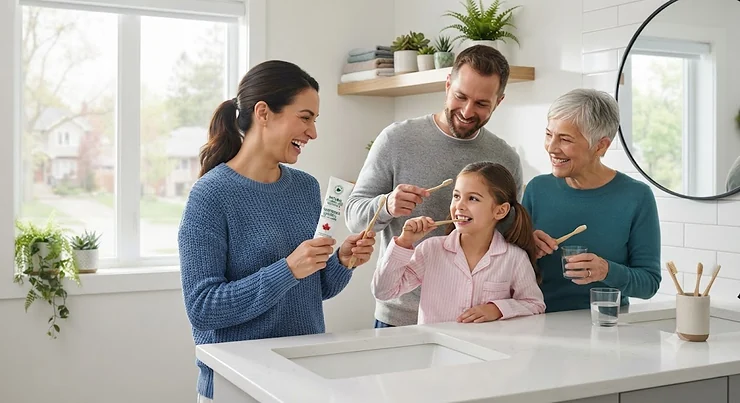
Stand in the oral care aisle of any Canadian pharmacy for more than thirty seconds and you’ll notice something: the “natural” shelf has quietly taken over half the real estate it used to share with the mainstream brands. That shift didn’t happen by accident. More Canadians are asking pointed questions about what, exactly, they’re rubbing onto their teeth twice a day — and fluoride-free toothpaste has become the answer for a lot of them. Not because fluoride is some villain lurking in your medicine cabinet, but because plenty of people want an alternative that still fights cavities without the ingredient list debates at the dinner table.
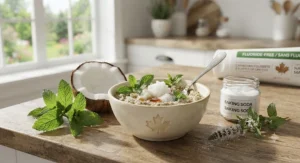
So, what is fluoride-free toothpaste, really? It’s toothpaste formulated without sodium fluoride or stannous fluoride, relying instead on ingredients like hydroxyapatite, xylitol, baking soda, or botanical extracts to clean teeth and support enamel health. Some formulas lean on decades-old Ayurvedic traditions; others are backed by newer biomimetic mineral science. Either way, the goal is the same as any toothpaste’s: fewer cavities, fresher breath, healthier gums — just via a different route.
This guide digs into the real products Canadians can actually order from Amazon.ca, weighs the honest pros and cons of each, and tackles the questions that come up constantly: does fluoride-free toothpaste actually work, is hydroxyapatite a legitimate remineralizing toothpaste alternative, and how worried should parents really be about fluorosis? For a plain-language primer on how fluoride itself is regulated here, the Canadian Dental Association’s fluoride FAQ is a solid starting point before you make any switch.
Quick Comparison Table
Before we get into the weeds, here’s the short version — the cheat sheet you’d want taped inside your bathroom cabinet.
| Product | Best For | Price Range (CAD) | Key Ingredient |
|---|---|---|---|
| RiseWell Hydroxyapatite Toothpaste | Enamel repair enthusiasts | C$15-C$20 | Micro-hydroxyapatite |
| Boka Ela Mint Nano-Hydroxyapatite Toothpaste | Multipack rotation/families | C$35-C$45 (3-pack) | Nano-hydroxyapatite |
| ATTITUDE Fluoride-Free Fresh Breath Toothpaste | Budget-conscious Canadian shoppers | C$6-C$9 | Plant & mineral complex |
| Tom’s of Maine Fluoride-Free Antiplaque & Whitening | All-round natural switch | C$8-C$12 | Zinc citrate + xylitol |
| hello Epic Whitening Activated Charcoal Toothpaste | Natural stain removal | C$7-C$10 | Activated charcoal + coconut oil |
| Himalaya Botanique Complete Care Whitening Toothpaste | Gum-health focus | C$7-C$11 | Neem and licorice botanicals |
| Auromere Ayurvedic Herbal Toothpaste | Traditional herbal budget pick | C$8-C$11 | Ayurvedic herb blend |
Looking at this lineup, the split is pretty clean: the two hydroxyapatite formulas from RiseWell and Boka sit at the premium end because they’re leaning on newer bioactive mineral science, while ATTITUDE and Auromere anchor the budget tier for anyone who wants fluoride-free without a premium price tag. The middle ground — Tom’s of Maine, hello, and Himalaya Botanique — is where most first-time switchers land, since these brands have been refining fluoride-free formulas for years and the trade-offs are well documented in aggregated reviews.
💬 Just one click — help others make better buying decisions too!😊
Top 7 Fluoride-Free Toothpaste Brands: Expert Analysis
1. RiseWell Hydroxyapatite Toothpaste — the hydroxyapatite pioneer for enamel repair
RiseWell built its entire brand around one bet: that hydroxyapatite, the mineral that already makes up roughly 97% of your tooth enamel, could do what fluoride does without the controversy. The formula uses micro-hydroxyapatite (HAp) alongside xylitol, with a PRO line that bumps the HAp concentration for people dealing with sensitivity or early enamel erosion. What that means in practice is a toothpaste that’s trying to physically redeposit mineral onto weak spots rather than simply hardening the surface layer the way fluoride does.
Based on the spec comparison with competitors, RiseWell’s standout is its flavorless variant — genuinely rare in this category and useful for anyone with taste sensitivities or texture aversions. Reviewers consistently report a gritty-but-not-unpleasant texture in the early tubes, and a noticeable reduction in cold sensitivity within a few weeks of regular use, though aggregated sentiment also flags that the results feel gradual rather than dramatic. That tracks with what dentists say about remineralization generally: it’s a slow rebuild, not an overnight fix.
Pros:
- ✅ Micro-hydroxyapatite formula backed by growing clinical interest
- ✅ Rare flavorless option for sensitive palates
- ✅ Vegan, SLS-free, and paraben-free ingredient list
Cons:
- ❌ Premium price point compared to conventional tubes
- ❌ Gradual results test patience for instant-fix seekers
At around C$15-C$20 per tube, RiseWell isn’t the cheapest fluoride-free toothpaste multipack Amazon.ca shoppers will find, but for anyone specifically chasing hydroxyapatite as a remineralizing toothpaste option, it’s one of the more established names to start with.
2. Boka Ela Mint Nano-Hydroxyapatite Toothpaste — best multipack for daily rotation
Boka takes the same hydroxyapatite alternative concept and pushes it further with nano-hydroxyapatite (n-HAp), which — thanks to its smaller particle size — is thought to integrate into microscopic enamel defects more readily than the micro-sized version. The Ela Mint 3-pack bundles three flavours (Ela Mint, Coco Ginger, Lemon Lavender), which conveniently solves the “I’m sick of mint” problem that derails a lot of toothpaste switches around week three.
What most buyers overlook about this brand is the low-foaming texture, which isn’t a gimmick — it’s a deliberate design choice so you can brush longer without the mouth-full-of-suds sensation that rushes people through their two minutes. Aggregated review sentiment points to strong marks for taste variety and gum comfort, with a recurring complaint that the tubes empty faster than expected given the paste’s thinner consistency.
Pros:
- ✅ Nano-hydroxyapatite formula with finer particle integration
- ✅ Three-flavour multipack keeps brushing routines interesting
- ✅ Free of sulfates, parabens, and artificial dyes
Cons:
- ❌ Thinner texture means tubes run out quicker
- ❌ Multipack cost adds up over the fluoride-free toothpaste multipack Amazon.ca listings
The 3-pack runs roughly C$35-C$45, which works out to a fair per-tube cost if you’re someone who rotates flavours anyway rather than buying three tubes of the same one.
3. ATTITUDE Fluoride-Free Fresh Breath Toothpaste — best Canadian-made budget pick
Here’s a nice bit of home-team pride: ATTITUDE is a Quebec-based company, and this peppermint formula is made in Canada with EWG Verified status — meaning an independent watchdog has reviewed the ingredient list against its own safety database. The plant- and mineral-based formula skips SLES entirely and leans on ingredients like hydrated silica for gentle cleaning.
On paper, this is the toothpaste for someone who wants fluoride-free without paying a premium for it. What the spec sheet won’t tell you, but reviewer patterns suggest, is that the cleaning sensation is noticeably milder than SLS-heavy conventional pastes — some people love that, others miss the “squeaky clean” foam entirely. It’s a genuinely different mouthfeel, and that’s worth knowing before you buy in bulk.
Pros:
- ✅ Made in Canada with EWG Verified ingredient transparency
- ✅ Budget-friendly among top fluoride-free toothpaste brands
- ✅ Vegan and sugar-free formulation
Cons:
- ❌ Milder foaming may feel underwhelming to some users
- ❌ Smaller 120 g tube means more frequent reorders
Priced around C$6-C$9, ATTITUDE is arguably the easiest entry point into fluoride-free toothpaste for anyone testing the waters before committing to a pricier hydroxyapatite formula.
4. Tom’s of Maine Fluoride-Free Antiplaque & Whitening Toothpaste — best all-round natural classic
Tom’s of Maine has been in this space since 1970, which counts for something when half the fluoride-free market is under five years old. The Antiplaque & Whitening formula swaps fluoride for zinc citrate (which targets tartar buildup) and xylitol (a sugar alcohol that research suggests bacteria struggle to ferment), plus naturally sourced silica for gentle whitening.
Here’s what most buyers overlook about legacy natural brands: longevity means a bigger aggregated review pool, and that pool consistently rates this formula well for everyday freshness while flagging that the whitening effect is subtle rather than dramatic — closer to surface polish than any bleaching-style result. Reviewers with sensitive gums report good tolerance, though a subset note the natural flavouring reads as “herbal” rather than classic minty.
Pros:
- ✅ Long manufacturing track record and Certified B Corp status
- ✅ Zinc citrate targets tartar without fluoride
- ✅ Gentle whitening via naturally sourced silica
Cons:
- ❌ Whitening effect is subtle, not dramatic
- ❌ Herbal flavour profile isn’t for everyone
At C$8-C$12, this is the toothpaste to hand a fluoride-skeptical family member who still wants the reassurance of an established, decades-old brand name.
5. hello Epic Whitening Activated Charcoal Toothpaste — best for natural whitening
Activated charcoal had its viral moment a few years back, and hello’s formula is one of the more refined survivors of that trend — pairing charcoal with coconut oil in an SLS-free base. The idea is mechanical: charcoal’s porous structure is thought to bind surface stains so they lift away during brushing, rather than chemically bleaching them.
Based on the spec comparison with whitening-specific competitors, this formula’s real advantage is texture — it’s noticeably smoother than the gritty first-generation charcoal pastes that turned a lot of people off the category entirely. Reviewers consistently note visible surface stain reduction within a couple of weeks, alongside a genuine warning that the black paste can be messy on white sinks and toothbrush bristles if you’re not careful with rinsing.
Pros:
- ✅ Smoother texture than typical charcoal formulas
- ✅ SLS-free with coconut oil for gentle cleaning
- ✅ Visible surface stain reduction reported by users
Cons:
- ❌ Black paste can stain sinks and cloth if not rinsed well
- ❌ Not a substitute for professional whitening on deeper stains
At roughly C$7-C$10, hello’s charcoal formula is a reasonable middle-ground pick for anyone whose main motivation for switching is cosmetic rather than purely health-driven.
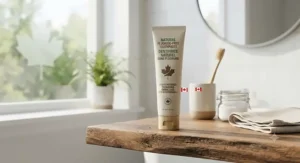
6. Himalaya Botanique Complete Care Whitening Toothpaste — best herbal formula for gum health
Himalaya Botanique draws on a long tradition of Ayurvedic herbal formulation, blending ingredients like neem and licorice — both studied for antibacterial and anti-inflammatory properties — into an SLS-free, carrageenan-free, gluten-free paste. It’s positioned less as a whitening powerhouse and more as an all-around gum-health formula that happens to include mild whitening agents.
What the ingredient list won’t spell out directly is why neem shows up so often in natural oral care: aggregated review sentiment and independent write-ups point to a bitter-herbal aftertaste that some users genuinely enjoy as a “working” sensation, while others find it an acquired taste worth pushing through for the reported gum-comfort benefits. This is a toothpaste built around long-term maintenance rather than a quick cosmetic fix.
Pros:
- ✅ Neem and licorice botanicals target gum health
- ✅ Free of SLS, carrageenan, and gluten
- ✅ Vegan formulation with a loyal repeat-buyer base
Cons:
- ❌ Herbal aftertaste is an acquired taste
- ❌ Whitening claims are modest compared to charcoal or peroxide options
Priced around C$7-C$11, this is a smart pick for anyone whose priority is gum maintenance over a dramatic whitening result.
7. Auromere Ayurvedic Herbal Toothpaste — best traditional Ayurvedic budget option
Auromere’s mint formula leans fully into traditional Ayurvedic herbal medicine, built around a blend of botanical extracts rather than any single hero ingredient. It’s cruelty-free and carries NATRUE natural certification, which requires third-party verification of ingredient sourcing — a meaningful stamp in a category where “natural” gets thrown around loosely.
Here’s the honest trade-off: this formula includes alcohol, which independent reviewers and holistic dental sources flag as a potential contributor to dry mouth (xerostomia) with heavy use — worth noting if you already deal with dry mouth from medication or age. Reviewers consistently praise the traditional herbal taste as authentic rather than “natural toothpaste trying to taste like mint,” and value pricing that undercuts most of this list.
Pros:
- ✅ NATRUE-certified natural ingredient sourcing
- ✅ Authentic traditional Ayurvedic herbal formula
- ✅ Among the most budget-friendly options here
Cons:
- ❌ Alcohol content may contribute to dry mouth with heavy use
- ❌ Smaller North American review pool than mainstream brands
At C$8-C$11, Auromere rounds out this list as the pick for anyone who wants traditional herbal formulation over the newer mineral-science approach — just keep the dry-mouth trade-off in mind.
Practical Usage Guide: Switching to Fluoride-Free Toothpaste
Switching toothpaste isn’t complicated, but doing it badly is a great way to convince yourself the whole category doesn’t work. Start by using your new fluoride-free toothpaste for the full recommended two minutes, twice daily — hydroxyapatite formulas especially need contact time to deposit mineral onto the tooth surface, so rushing the job undercuts the entire point of switching.
A common first-30-days mistake is judging the paste too early. Give it three to four weeks before deciding whether sensitivity has improved or whitening has kicked in; remineralization is a gradual process, not a marketing claim you should expect to see by day three. Store tubes at room temperature away from direct sunlight, since some botanical and herbal formulas can separate or lose potency in heat.
One optimization trick that doesn’t make it onto any Amazon listing: brush before breakfast rather than after, especially with acidic foods like citrus or coffee in the morning routine. This gives remineralizing ingredients contact time on enamel before acid exposure, rather than immediately after — a small sequencing change that several hydroxyapatite advocates recommend for maximizing effect.
Real-World Scenarios: Who Should Buy What
Picture three different people standing in front of this list, each with a different reason for being here.
The first is a parent of a six-year-old, nervous after reading about fluorosis concerns online, looking for something gentle enough for daily supervised brushing. For that household, ATTITUDE or hello‘s milder formulas make sense as an accessible switch, paired with continued dental checkups to monitor cavity risk without fluoride’s backup.
The second is someone in their thirties dealing with early enamel sensitivity from years of coffee and citrus, hunting for a genuine hydroxyapatite alternative with some science behind it. That’s exactly the use case RiseWell or Boka were built for — the higher price reflects the more targeted remineralizing toothpaste chemistry, and it’s worth it if sensitivity is the actual pain point.
The third is a budget-conscious household of four going through toothpaste fast, wanting variety without reordering constantly. A multipack from Boka or a value tube of Auromere solves that logistics problem directly — buy in bulk, rotate flavours, and avoid the awkward mid-week “we’re out of toothpaste” scramble.
Buyer’s Decision Framework
If you’re still torn, here’s a simple way to sort yourself into a lane. If your top priority is proven remineralization science, choose a hydroxyapatite formula like RiseWell or Boka, because the mineral-deposition mechanism has the most recent clinical research behind it. If your top priority is price and accessibility, choose ATTITUDE or Auromere, because both keep cost per tube low without abandoning fluoride-free credentials. If your top priority is a gentle, established, whole-family-safe option, choose Tom’s of Maine or Himalaya Botanique, because both have long track records with sensitive users. And if cosmetic whitening is genuinely your main driver, choose hello‘s activated charcoal formula, because it’s purpose-built for surface stain removal rather than general oral maintenance.
How to Choose Fluoride-Free Toothpaste
Choosing the right fluoride-free toothpaste comes down to a handful of concrete criteria rather than brand loyalty alone.
- Identify your primary concern. Sensitivity, whitening, gum health, and general maintenance call for different active ingredients — hydroxyapatite for sensitivity, charcoal for stains, botanicals for gums.
- Check the abrasivity level. Whitening formulas with higher Relative Dentin Abrasivity can wear enamel over time if overused; gentler daily-use formulas protect enamel better long-term.
- Review the full ingredient list, not just the front label. “Natural” isn’t a regulated term — look for third-party verification like EWG or NATRUE certification instead.
- Factor in taste tolerance. Herbal and Ayurvedic formulas have a genuinely different flavour profile than mint-forward conventional pastes, and taste aversion is the number one reason people abandon a switch.
- Weigh multipack economics. A fluoride-free toothpaste multipack Amazon.ca deal often works out cheaper per gram than single tubes, provided you’ll actually use every flavour included.
- Consider your dentist’s input on cavity risk. Fluoride-free isn’t automatically right for everyone, particularly those with a high cavity history who may need targeted remineralization support.
- Confirm return policy and shelf life. Natural formulas without synthetic preservatives sometimes have shorter shelf lives, so check manufacture dates on multipacks especially.
Common Mistakes When Buying Fluoride-Free Toothpaste
The most frequent mistake is assuming every fluoride-free option works the same way. Hydroxyapatite, charcoal, and herbal botanicals operate through entirely different mechanisms, and buying based on “fluoride-free” alone without matching the active ingredient to your actual concern is how people end up disappointed within a month.
A second common error is switching cold-turkey for a high-cavity-risk household without consulting a dentist first. Fluoride-free formulas can be a great fit for many people, but anyone with active decay or a strong cavity history should treat the switch as a conversation with their dental provider, not a solo decision made from a listicle.
The third mistake is judging results too quickly and returning to fluoride within a week or two. As covered in the usage guide above, remineralization is gradual — expecting overnight results sets an unfair bar that no toothpaste, fluoride or otherwise, can clear.
Fluoride-Free vs Traditional Fluoride Toothpaste
| Factor | Fluoride-Free Toothpaste | Traditional Fluoride Toothpaste |
|---|---|---|
| Mechanism | Mineral deposition (hydroxyapatite) or mechanical/herbal action | Forms fluorapatite layer, hardens enamel surface |
| Fluorosis risk | None | Low but present in young children if overused |
| Cavity protection evidence | Growing clinical support, especially for hydroxyapatite | Decades of strong clinical evidence |
| Taste/texture | Wider variation (herbal, charcoal, mineral) | Consistent, familiar mint-forward foam |
| Price (CAD) | C$6-C$45 depending on brand/pack | Typically C$3-C$8 per tube |
The honest read here is that fluoride has a much longer research track record simply because it’s been the default for generations, but hydroxyapatite formulas like RiseWell and Boka are closing that evidence gap faster than most people realize. For households without elevated cavity risk, either category can support solid oral health — the difference is mechanism and personal preference, not one being objectively “better” across the board.

Fluorosis Concerns: What the Research Really Shows
Fluorosis concerns are the single biggest reason Canadians search out fluoride-free toothpaste in the first place, so it’s worth being precise about what the evidence actually says. Dental fluorosis is a cosmetic change in tooth appearance — typically faint white flecking — caused by excess fluoride ingestion during early childhood tooth development, not adulthood. According to the Canadian Dental Association, national survey data found dental fluorosis wasn’t a concern for the large majority of Canadian children, and in its mildest form it’s a purely cosmetic issue rather than a health risk.
That said, the guidance for young children remains specific for a reason: Health Canada and the Canadian Dental Association both recommend only a rice-grain-sized amount of fluoridated toothpaste for children under three, moving to a pea-sized amount from three to six, precisely because swallowing rather than spitting is the real risk driver. A Health Canada technical guideline document breaks down exactly how toothpaste ingestion factors into overall childhood fluoride exposure alongside water and food sources.
For parents genuinely worried about cumulative exposure, fluoride-free toothpaste sidesteps the fluorosis question entirely — there’s simply nothing to overconsume. The trade-off is trusting an alternative mechanism to do the cavity-prevention work instead, which is exactly why ingredient choice (hydroxyapatite versus purely cosmetic formulas) matters so much in this category.
Hydroxyapatite Alternative: The Science Behind Remineralizing Toothpaste
Hydroxyapatite isn’t some fringe ingredient dreamed up by a wellness influencer — it’s the actual mineral your enamel is made of, and using it in toothpaste is closer to “patching a pothole with the same asphalt” than introducing something foreign. Research published through the National Institutes of Health’s PMC archive found that biomimetic hydroxyapatite toothpaste demonstrated enamel remineralization and repair properties comparable to fluoride formulas in both lab and clinical testing, while sidestepping fluorosis risk entirely.
Here’s what most buyers overlook about how this actually works: hydroxyapatite particles — especially the nano-sized versions used in formulas like Boka‘s — are small enough to settle into microscopic pores and cracks in weakened enamel, effectively filling in the damage rather than just coating the surface. Fluoride, by contrast, primarily reacts with existing enamel to form a harder outer layer called fluorapatite. Both approaches genuinely work; they just work differently, which is why dentists increasingly present hydroxyapatite as a legitimate remineralizing toothpaste option rather than a fringe alternative.
The honest caveat: hydroxyapatite research, while promising, doesn’t yet match the multi-decade body of evidence behind fluoride. If you have a high cavity history, that evidence gap is worth discussing with your dentist rather than assuming hydroxyapatite is automatically equivalent for your specific risk level.
✨ Don’t Miss These Exclusive Deals!
🔍 Ready to upgrade your oral care routine? Compare current pricing on these top fluoride-free toothpaste brands and find the formula that matches your specific needs. A small switch today could mean a healthier smile for years to come!
Long-Term Cost & Maintenance
Sticker shock is real with hydroxyapatite formulas — a single tube of RiseWell at C$15-C$20 looks steep next to a C$4 drugstore fluoride tube. But cost-per-use tells a fairer story. Concentrated formulas often require less product per brushing than foamier conventional pastes, stretching a tube closer to two months of daily use for a single person rather than the four to six weeks typical of standard toothpaste.
Multipacks shift the math further in your favour. A Boka 3-pack at C$35-C$45 works out to roughly C$12-C$15 per tube — comparable to buying single tubes, but with the built-in variety that keeps a household actually finishing the product instead of letting half-used tubes languish in a drawer. That’s the real value case behind fluoride-free toothpaste multipack Amazon.ca listings: not a discount exactly, but reduced waste and better routine adherence.
Long-term, the maintenance math also has to include dental visit frequency. Fluoride-free users without elevated cavity risk who maintain consistent brushing and regular checkups generally don’t see increased cavity rates in aggregated dental practice reporting — the total cost of ownership comes down to your existing oral health baseline more than the toothpaste brand itself.
FAQ
❓ Is fluoride-free toothpaste as effective as fluoride toothpaste?
❓ What is the best fluoride-free toothpaste for sensitive teeth?
❓ Can fluoride-free toothpaste cause cavities?
❓ Is hydroxyapatite toothpaste safe for kids?
❓ Where can I buy fluoride-free toothpaste in Canada?
Conclusion
Fluoride-free toothpaste isn’t a single product category so much as a handful of different philosophies wearing the same label — hydroxyapatite chasing biomimetic mineral repair, activated charcoal chasing surface polish, Ayurvedic botanicals chasing centuries-old herbal tradition. What ties them together is a simple premise: cavity prevention and enamel health don’t have to run through fluoride specifically, provided you match the formula to your actual concern rather than grabbing whatever’s labelled “natural” on the shelf.
Whether that means RiseWell‘s flavourless hydroxyapatite formula for a sensitivity-focused adult, ATTITUDE‘s budget-friendly Canadian-made tube for a first-time switcher, or a Boka multipack for a busy household that wants variety without the reorder hassle, the right pick genuinely comes down to your priorities — sensitivity, cost, taste, or cosmetic whitening. None of these seven brands is universally “best”; each earns its spot on this list for a specific kind of buyer.
✨ Ready to Make the Switch?
🦷 Browse current prices and availability on Amazon.ca for the fluoride-free toothpaste that fits your routine best. Your future self — and your enamel — will thank you!
Recommended for You
- Natural Toothpaste for Sensitive Teeth: 7 Picks That Work (2026)
- Natural Toothpaste vs Regular Toothpaste: 7 Picks Compared (2026)
- Best Natural Toothpaste in Canada 2026: 7 Picks That Actually Work
Disclaimer: This article contains affiliate links. As an Amazon Associate, I earn from qualifying purchases. If you purchase products through these links, we may earn a small commission at no additional cost to you.
✨ Found this helpful? Share it with your friends! 💬🤗
