In This Article
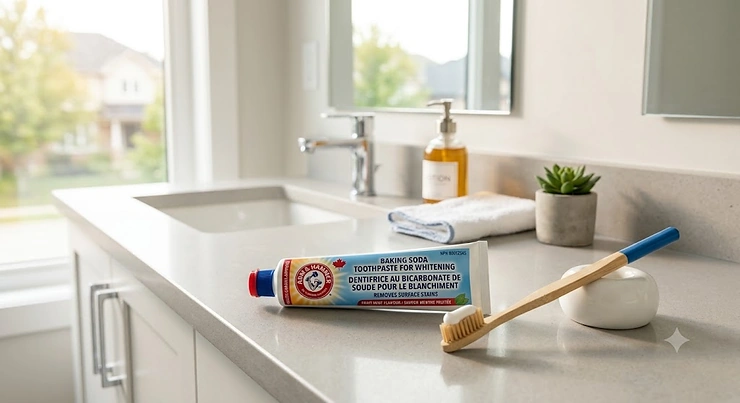
Somewhere between your grandmother’s box of Arm & Hammer under the sink and the glossy whitening pens lining the pharmacy checkout, baking soda toothpaste for whitening quietly became one of the most talked-about categories in Canadian oral care. It is not flashy. It does not promise Hollywood veneers in three days. What it does promise — and, according to the dental research, mostly delivers — is a gentler way to chip away at coffee stains, wine stains, and the general dinginess that builds up on enamel over a few decades of living.
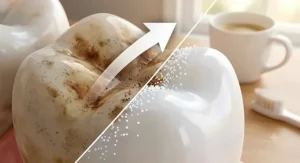
So what is baking soda toothpaste for whitening, exactly? In plain terms, it is toothpaste formulated with sodium bicarbonate as its primary cleaning agent, sometimes paired with hydrogen peroxide, that uses gentle mechanical action to lift surface stains rather than chemically bleach the tooth from within. It is a cosmetic-tier whitening approach, not a dental procedure, and understanding that distinction early will save you from disappointment later.
This guide digs into seven real products sold to Canadian shoppers, breaks down what the specs actually mean for your morning brush, and — because Amazon listings never tell you this part — explains where baking soda toothpaste for whitening genuinely shines and where it quietly falls short. According to the Canadian Dental Association, whitening claims on any toothpaste are treated as cosmetic rather than therapeutic, which means results vary from one mouth to the next — but that variability doesn’t mean the category isn’t worth your consideration. Let’s get into it.
Quick Comparison Table
Before the deep dives, here’s the fast version for anyone standing in a drugstore aisle with three minutes to decide.
| Product | Price Range (CAD) | Baking Soda Role | Best For |
|---|---|---|---|
| Arm & Hammer Advance White | around C$6-C$9 | Baking soda + peroxide | Everyday whitening on a budget |
| Arm & Hammer Peroxicare | around C$7-C$10 | High-concentration baking soda | Gum health plus gentle polish |
| Colgate Baking Soda & Peroxide | C$5-C$8 range | Baking soda + peroxide | Widely available mid-range pick |
| Crest Cavity & Tartar Whitening | C$6-C$9 range | Baking soda + peroxide | Tartar-prone brushers |
| Tom’s of Maine Antiplaque & Whitening | C$8-C$12 range | Naturally sourced sodium bicarbonate | Fluoride-free, natural-leaning buyers |
| Red Seal Baking Soda Herbal & Mineral | C$10-C$14 range | Baking soda as core abrasive | Sensitive, ingredient-conscious users |
| DTDR Intensive Stain Removal | under C$10 | High baking soda content | Budget stain-fighters, coffee/tea drinkers |
Reading across this table, the pattern is pretty clear: the mainstream drugstore names (Arm & Hammer, Colgate, Crest) sit in a tight mid-budget band and layer peroxide on top of baking soda for extra whitening punch, while the natural-leaning options (Tom’s of Maine, Red Seal) cost more per tube but skip fluoride-adjacent additives some shoppers want to avoid. DTDR is the wildcard — a lesser-known import brand that leans hard into stain removal at a genuinely low price point, which makes it worth a closer look later in this article rather than an automatic pass.
💬 Just one click — help others make better buying decisions too!😊
Top 7 Baking Soda Toothpastes for Whitening: Expert Analysis
Here’s the full rundown, budget to premium, based on published ingredient lists, dental abrasivity research, and aggregated review sentiment from real Amazon listings.
1. Arm & Hammer Advance White Baking Soda & Peroxide Toothpaste, Extreme Whitening — best all-around budget pick
The standout here is the combo formula: baking soda handles the physical stain-lifting while a peroxide component works on setting surface discolouration loose at a chemical level, a one-two punch that’s rare at this price. The 4.3 oz tube uses what the brand calls Stain Defense Technology, which in practice means the paste is formulated to keep freshly lifted stain particles from immediately re-settling on enamel between brushings — a small but meaningful difference from a toothpaste that only cleans in the moment. Based on the spec comparison with plain-fluoride competitors, this is one of the few sub-C$10 tubes that pairs an established whitening mechanism with a recognizable, long-running brand, which matters if you’re wary of newer names. Reviewers consistently report a noticeable brightening within two to three weeks of twice-daily use, alongside occasional mentions of a slightly salty aftertaste that fades with repeated use — a known trait of baking soda formulas rather than a flaw unique to this tube.
Pros:
- ✅ Peroxide plus baking soda gives a stronger stain-lift than baking soda alone
- ✅ Long-standing brand with consistent manufacturing quality
- ✅ Noticeably affordable relative to whitening-specific competitors
Cons:
- ❌ Salty, mineral aftertaste some users need time to adjust to
- ❌ Peroxide content means it’s not ideal for very sensitive teeth
Priced around C$6-C$9, this is a sensible entry point if you’ve never tried a baking soda formula and want to see what the fuss is about without committing to a premium natural tube.
2. Arm & Hammer Peroxicare Toothpaste, Clean Mint — best for gum health alongside gentle polishing
What stands out with Arm & Hammer Peroxicare is its abrasivity profile — independent dental research measured its Relative Dentin Abrasivity around 35, built on a formula that’s roughly 50 to 65 percent baking soda by weight, among the gentlest scores of any mainstream toothpaste tested. In practice, that low number means less mechanical wear on tooth structure per brushing stroke compared with higher-RDA whitening pastes, even though it’s still doing real cleaning work. Based on that spec comparison, this is arguably the toothpaste to reach for if your priority is inflamed or receding gums rather than aggressive whitening, since the formula was engineered with gum health as the lead benefit and whitening as a secondary perk. What most buyers overlook about this model is that “gentle” doesn’t mean “ineffective” — the JADA-published abrasivity research on baking soda dentifrices notes that low-abrasive formulas can still outperform higher-abrasive ones on stain removal over time. Aggregated reviews describe reduced gum bleeding within a couple of weeks, with a smaller but real subset of users noting the mint flavour reads as mild compared to more intense whitening pastes.
Pros:
- ✅ Among the lowest-abrasivity formulas independently measured in dental research
- ✅ Strong reputation specifically for reducing gum bleeding and inflammation
- ✅ Gentle enough for daily long-term use without enamel concern
Cons:
- ❌ Whitening effect is slower and subtler than peroxide-forward rivals
- ❌ Mild flavour profile may feel underwhelming to some brushers
Expect a price around C$7-C$10 for a single tube, with better per-tube value on the four-pack option if you’re buying for a household.
3. Colgate Baking Soda & Peroxide Toothpaste, Brisk Mint — best for easy availability across Canada
The advantage this tube leans on is oxygen-bubble action — the baking soda and peroxide combination is designed to fizz slightly on contact with saliva, which manufacturers say helps loosen debris from tight spaces between brushing strokes. That fizzing sensation is mostly a texture cue rather than a measurable cleaning boost on its own, but paired with the actual abrasive and bleaching components, it does correlate with the “extra clean” feeling reviewers frequently mention. Here’s what to weigh: Colgate distribution means this tube is sitting on nearly every pharmacy and grocery shelf in the country, which is genuinely useful if you don’t want to wait on shipping or hunt down a niche brand. Reviewers consistently note visible stain reduction on coffee and red wine within about three to four weeks, alongside a cooling aftertaste that’s less polarizing than some competitors’ saltier finish. The trade-off is that this formula, like most peroxide-baking soda hybrids, is not the gentlest option for anyone already dealing with sensitive teeth or receding gums.
Pros:
- ✅ Available almost everywhere, no need to rely solely on online ordering
- ✅ Balanced mint flavour with less of the “salty” baking soda edge
- ✅ Strong brand-trust track record for cavity protection alongside whitening
Cons:
- ❌ Peroxide content can trigger sensitivity in already-sensitive mouths
- ❌ Whitening claims are, per Health Canada’s cosmetic classification, surface-level only
Look for it in the C$5-C$8 range, often cheaper again in the twin-pack format.
4. Crest Cavity & Tartar Protection Toothpaste, Whitening Baking Soda & Peroxide — best for tartar-prone brushers
The differentiator on this tube is the dual-purpose formulation — it’s marketed first as a tartar-control toothpaste and second as a whitening one, which flips the usual priority order of most products on this list. Practically, that means the abrasive and anti-tartar agents are balanced to interrupt calculus formation along the gumline, with the baking soda and peroxide doing secondary stain-removal work on top. Based on the spec sheet, if you already struggle with visible tartar buildup near your molars, this ordering of priorities may serve you better long-term than a toothpaste built purely for cosmetic brightness. What the spec sheet won’t tell you, but reviewers note, is that the tartar-control benefit shows up faster (often within two weeks) than the whitening benefit, which tends to take closer to a month of consistent use to become visually obvious in photos. Sensitivity complaints are less frequent in aggregated reviews than with some peroxide-heavy competitors, though a handful of users flag the flavour as more medicinal than minty.
Pros:
- ✅ Formulated primarily to slow tartar buildup, whitening is a genuine bonus
- ✅ Widely stocked and reasonably priced for a dual-benefit formula
- ✅ Reports of reduced sensitivity relative to stronger peroxide competitors
Cons:
- ❌ Whitening results take noticeably longer to become visible than tartar benefits
- ❌ Some reviewers describe the flavour as more clinical than fresh
Pricing typically lands in the C$6-C$9 range depending on tube size and retailer promotions.
5. Tom’s of Maine Antiplaque and Whitening Toothpaste, Peppermint — best fluoride-free natural pick
The standout with Tom’s of Maine is ingredient transparency — every component on the tube is disclosed and sourced against the company’s own naturally-derived standard, with sodium bicarbonate doing the whitening and antiplaque work instead of synthetic bleaching agents. What that means in practice is a milder, slower path to brightness that leans on mechanical stain removal alone rather than a peroxide assist, which tends to appeal to buyers actively trying to reduce their exposure to synthetic actives in personal care products. Based on the spec comparison with the peroxide-forward products above, expect this one to take longer to show a visible difference — often five to six weeks rather than three — but with a correspondingly gentler experience for anyone with reactive gums. Reviewers consistently describe the peppermint flavour as noticeably cleaner-tasting than mainstream competitors, with a smaller number noting the fluoride-free formula means it’s not a suitable sole toothpaste for households with higher cavity risk.
Pros:
- ✅ Fully disclosed, naturally sourced ingredient list appeals to clean-label shoppers
- ✅ Gentle enough for daily use without a peroxide-driven sensitivity risk
- ✅ Strong reputation for fresh, non-artificial flavour
Cons:
- ❌ Fluoride-free formula means it shouldn’t be a household’s only cavity defence
- ❌ Whitening timeline is noticeably slower than peroxide-blended alternatives
Budget C$8-C$12 for a tube, reflecting the natural-brand premium over mainstream drugstore pricing.

6. Red Seal Fluoride Free Toothpaste – Baking Soda Herbal & Mineral Formula — best for sensitive, ingredient-conscious brushers
This tube’s edge is its certification stack — NATRUE-certified as genuinely natural, SLS-free, paraben-free, and formulated around a herbal-and-mineral base with baking soda as the primary abrasive rather than an additive afterthought. Practically speaking, dropping sodium lauryl sulfate (a common foaming agent linked to irritation in some users) alongside the gentle RDA profile of baking soda produces one of the mildest whitening experiences on this list, which is exactly the appeal for anyone whose gums react badly to stronger commercial formulas. Here’s what to weigh: this is priced at the top of our lineup, and that premium buys certification and ingredient purity more than it buys whitening speed — reviewers consistently note it as excellent for dry mouth and sensitivity relief first, with visible whitening as a slower secondary benefit. A common thread in aggregated review sentiment is appreciation for the herbal aftertaste, which reads as more botanical than minty and takes some newcomers a brushing or two to adjust to.
Pros:
- ✅ NATRUE-certified natural formula with SLS and paraben-free ingredients
- ✅ Particularly well-regarded for dry mouth and gum sensitivity relief
- ✅ Vegan and cruelty-free credentials matter to ethically-minded buyers
Cons:
- ❌ Premium price relative to mainstream whitening formulas
- ❌ Herbal flavour profile is a genuine adjustment for mint-only brushers
Expect to pay in the C$10-C$14 range, occasionally more depending on import shipping costs.
7. DTDR Baking Soda Toothpaste, Natural Fluoride-Free, Intensive Stain Removal — best lesser-known budget alternative
The hook with this one is aggressive stain targeting at a genuinely low price — DTDR markets its formula specifically toward coffee, tea, and smoking-related discolouration, with a higher relative concentration of baking soda than most mainstream competitors use in their standard lines. Practically, this means the paste is formulated to penetrate enamel crevices more assertively than a general-purpose whitening toothpaste, targeting deep-set surface stains rather than the light daily buildup most people are dealing with. Based on the spec comparison, this is a smart pick if your stains are specifically diet- or habit-driven (heavy coffee, dark tea, or tobacco use) rather than general dullness, since that’s the exact use case the formula was built around. If you cannot verify a large volume of Canadian-specific reviews for a smaller import brand like this one, that’s worth noting honestly rather than overselling — the review pool is real but noticeably thinner than the major brands above, so treat early results as directional rather than definitive.
Pros:
- ✅ Formulated specifically for stubborn coffee, tea, and smoking stains
- ✅ Genuinely budget-friendly, often the cheapest tube on this list
- ✅ Fluoride-free formula appeals to natural-leaning households
Cons:
- ❌ Smaller, less-established brand with a thinner Canadian review history
- ❌ Fluoride-free formula again means it isn’t a full cavity-protection solution
Typically priced under C$10, making it an easy low-commitment way to test whether an intensive baking soda formula works for your specific stains.
How to Use Baking Soda Toothpaste for the Best Whitening Results
Buying the right tube is only half the job — technique changes outcomes more than most people expect. Start by brushing for a full two minutes, twice daily, angling the brush at roughly 45 degrees toward the gumline where baking soda’s mechanical action does its best stain-lifting work. Resist the urge to scrub harder for faster results; because baking soda already sits at a low abrasivity level, extra pressure mostly stresses your gums rather than accelerating whitening. In the first thirty days, the most common mistake is inconsistency — switching back to an old fluoride paste after a week because “nothing’s happening yet,” when most of these formulas genuinely need three to six weeks of steady use before a visible difference shows up in photos. A simple maintenance habit worth adopting: rinse your toothbrush thoroughly and let it air-dry between uses, since a damp brush head can dull the texture of any paste, baking soda formulas included, faster than expected. If you’re pairing this with a whitening mouthwash or occasional professional cleaning, space the baking soda brushing session away from acidic foods or drinks by at least thirty minutes, since brushing too soon after acidic exposure can briefly soften enamel and make it more vulnerable to any abrasive action, however mild.
Who Should (and Shouldn’t) Reach for Baking Soda Toothpaste
Picture three different Canadians standing in the same drugstore aisle. First, there’s a university student in Halifax who drinks two coffees a day and wants a noticeable but affordable improvement before job interview season — a budget peroxide-and-baking-soda hybrid like Arm & Hammer Advance White or Colgate Baking Soda & Peroxide fits that timeline and price point well. Second, picture a parent in Calgary managing mild gum sensitivity after a rough dental year, prioritizing comfort over speed — Arm & Hammer Peroxicare or Red Seal‘s herbal formula are better matches, since both lean on baking soda’s naturally low abrasivity rather than a peroxide push. Third, there’s a retiree in Kelowna who’s spent a decade avoiding synthetic foaming agents after a bad reaction to SLS, now hunting for a fluoride-free, ingredient-transparent option — that’s almost exactly the buyer Tom’s of Maine and Red Seal were built for. None of these three needs the same tube, and that’s really the point: “best baking soda toothpaste” isn’t a single answer, it’s a match between your specific stain source, sensitivity level, and patience for results.
Common Whitening Problems, Solved
A few recurring frustrations show up across almost every review thread for this category, so let’s tackle them directly. Problem one: “I’ve used it for a week and see nothing.” Solution: extend to at least three weeks before judging results — baking soda whitening works cumulatively, not instantly, unlike peroxide strips. Problem two: “My teeth feel more sensitive since switching.” Solution: if you’re using a peroxide-blended tube like Colgate or Crest, alternate with a plain fluoride paste every other brushing, or switch entirely to a lower-abrasivity option like Arm & Hammer Peroxicare. Problem three: “The salty taste is off-putting.” Solution: this fades with repeated use for most people, but if it doesn’t, a natural herbal-flavoured option like Red Seal sidesteps the issue entirely. Problem four: “I have deep stains from years of red wine and coffee.” Solution: a stain-targeted formula like DTDR or a peroxide-forward option is a better match than a gentle natural paste, since deeper staining needs more active lifting power. Problem five: “I’m not sure this is safe for daily long-term use.” Solution: per the dental abrasivity research published in the Journal of the American Dental Association, baking soda dentifrices carry some of the lowest relative dentin abrasivity scores of any common toothpaste abrasive, which supports daily long-term use for most healthy mouths.
Baking Soda Toothpaste vs Regular Toothpaste
The core difference between baking soda toothpaste vs regular toothpaste comes down to the abrasive system doing the cleaning. Regular toothpaste typically relies on hydrated silica or calcium carbonate as its primary abrasive, both of which sit at a noticeably higher relative dentin abrasivity than sodium bicarbonate, meaning more mechanical friction per brushstroke. In practice, that translates to regular toothpaste often feeling “grittier” and, over years of use, contributing to slightly more measurable enamel wear at the gumline compared with a baking soda formula used with the same brushing pressure. On the flip side, baking soda toothpaste vs regular toothpaste isn’t a clean win in every category — plenty of regular toothpastes pack in higher fluoride concentrations, specialized desensitizing agents, or enamel-repair technologies that most baking soda-forward formulas skip entirely. Based on the spec comparison, the honest takeaway is that baking soda wins on gentleness and natural stain-lifting, while a well-formulated regular whitening toothpaste (think Colgate or Crest‘s fluoride-forward lines) may edge ahead on cavity protection and enamel-strengthening claims. For most Canadians without high cavity risk, alternating between the two, or choosing a hybrid like the Arm & Hammer or Colgate baking-soda-and-peroxide formulas above, offers a reasonable middle ground.

How to Choose a Baking Soda Toothpaste for Whitening
Narrowing seven good options down to one tube gets easier with a short checklist. First, identify your primary stain source — coffee and tea respond well to intensive formulas like DTDR, while general dullness responds fine to a milder option. Second, assess your sensitivity level honestly; if your gums or teeth already react to temperature or pressure, skip the peroxide-blended tubes and lean toward Arm & Hammer Peroxicare or Red Seal. Third, decide whether fluoride is a non-negotiable for you — households with higher cavity risk should generally stick with a fluoride-containing formula like Colgate or Crest rather than a fluoride-free natural option. Fourth, set realistic timeline expectations; if you need visible results within two weeks for an event, a peroxide-forward pick beats a purely natural one. Fifth, factor in flavour tolerance, since the “salty” baking soda aftertaste that some newcomers dislike is a real adjustment period, not a manufacturing flaw. Sixth, check your budget band against our comparison table above rather than assuming price correlates directly with whitening power — some of the cheapest tubes here perform admirably. Seventh, and often skipped, confirm the product carries a Canadian Dental Association Seal of Recognition if that independent verification matters to your decision.
Common Mistakes When Buying Baking Soda Toothpaste for Whitening
The single biggest mistake buyers make is judging a tube purely by marketing language rather than checking whether baking soda is actually a primary ingredient or just a trace additive buried deep in the ingredient list. A second common error is assuming “whitening” and “bleaching” mean the same thing — as the Canadian Dental Association notes, most whitening toothpastes work on surface stains only and aren’t a substitute for professional bleaching if your discolouration runs deeper than the enamel surface. Third, buyers frequently underestimate how much brushing technique affects outcomes, blaming a perfectly good toothpaste for their own inconsistent routine. Fourth, plenty of shoppers overlook fluoride content entirely, not realizing some natural baking soda formulas skip it — fine for low cavity-risk brushers, potentially problematic for others. Fifth, and this one’s sneaky, some buyers stock up on a six-pack before confirming they actually like the flavour and texture, which wastes money if the salty aftertaste turns out to be a dealbreaker for their household.
Baking Soda Toothpaste for Bad Breath
Baking soda toothpaste for bad breath earns its reputation honestly — sodium bicarbonate is a natural acid neutralizer, and much of the odour associated with bad breath comes from acidic byproducts of bacterial activity in the mouth. By raising the pH slightly during brushing, baking soda toothpaste for bad breath doesn’t just mask odour with mint flavouring the way some conventional pastes do; it actively works against one of the chemical conditions that produces it in the first place. That said, honest framing matters here: baking soda toothpaste for bad breath works best against odour caused by mild bacterial buildup and acidic byproducts, not against breath issues stemming from digestive conditions, chronic dry mouth, or underlying dental infections, which need a dentist’s attention rather than a toothpaste swap. Among the seven products above, Arm & Hammer Peroxicare and Red Seal are particularly well-suited to this use case, since both prioritize the gum-health and pH-balancing side of baking soda’s chemistry over pure whitening speed. Reviewers commonly report noticeably fresher breath within days, well before any visible whitening change shows up — a useful reminder that these two benefits run on different timelines.
Mild Abrasive Polishing: What RDA Numbers Actually Mean
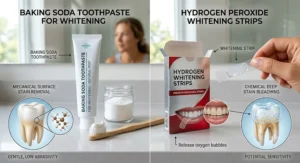
Every toothpaste on a shelf carries a Relative Dentin Abrasivity, or RDA, score, even though almost none of them print it on the box. Mild abrasive polishing is the mechanism baking soda relies on to lift surface stains, and its low RDA — measured around 35 for a formula like Arm & Hammer Peroxicare — sits well under the FDA’s recommended ceiling of 200 and the American Dental Association’s 250 limit. What that number actually means in practice is straightforward: mild abrasive polishing removes stain particles by physically dislodging them from the enamel surface using a gentle scrubbing motion, rather than dissolving them chemically the way peroxide bleaching does. The trade-off dentists point out is that mild abrasive polishing alone, without a peroxide or chemical assist, tends to work more slowly on set-in stains than on freshly formed ones — which is exactly why coffee and tea drinkers often see faster results with the peroxide-blended tubes on our list. Reviewers consistently underestimate how much gentler baking soda’s mild abrasive polishing action actually is compared with higher-RDA whitening competitors, many of which market themselves as “gentle” while scoring several times higher on independent lab tests.
Surface Stain Lifting: What Baking Soda Can and Can’t Whiten
It’s worth being precise about what surface stain lifting can realistically accomplish, because expectations shape satisfaction more than almost any other factor in this category. Surface stain lifting works well against extrinsic discolouration — the kind sitting on top of your enamel from coffee, tea, red wine, berries, or tobacco — because that staining is essentially external residue that mechanical action and mild chemical assistance can physically dislodge. What surface stain lifting cannot touch is intrinsic discolouration, meaning stains embedded inside the tooth structure itself from factors like ageing, certain medications, or old fillings; those require professional bleaching or dental intervention rather than any toothpaste, baking soda or otherwise. Based on the spec comparison across our seven products, the ones best suited to aggressive surface stain lifting are the peroxide-blended formulas (Colgate, Crest, Arm & Hammer Advance White) and the intensively-marketed DTDR, while the gentler natural options prioritize long-term comfort over speed. A realistic timeline for meaningful surface stain lifting sits between three and six weeks of consistent twice-daily brushing — anyone promising results faster than that with a toothpaste alone is likely overselling the science.
Natural Whitening Alternatives Worth Comparing
Baking soda toothpaste isn’t the only natural whitening alternatives category worth a look, though it remains one of the better-supported ones by actual dental research. Activated charcoal toothpaste is probably the most talked-about competitor among natural whitening alternatives right now, but it carries a real caveat: several charcoal formulas test at meaningfully higher RDA levels than baking soda, meaning the trendy black paste can actually be harder on enamel despite its “natural” branding. Oil pulling, another popular option among natural whitening alternatives, has thin clinical evidence behind its whitening claims specifically, even though it may offer some general oral hygiene benefit. Hydrogen peroxide rinses used on their own, without a baking soda or toothpaste base, sit in a different category entirely — more chemically active, and worth discussing with a dentist before regular use given Health Canada’s specific guidance on peroxide-based whitening products. Weighed against these natural whitening alternatives, baking soda toothpaste holds up well precisely because it’s the most extensively studied of the group, with decades of published abrasivity and effectiveness research behind it rather than trend-driven marketing claims.
Long-Term Cost & Regulatory Considerations
A single tube of baking soda toothpaste for whitening isn’t a major purchase, but the long-term cost picture matters if you’re comparing this approach against professional whitening. A household using one of the mid-range options above (Colgate, Crest, or Arm & Hammer) at roughly one tube per person per month lands in a modest, predictable monthly spend — nothing close to the cost of a single in-office whitening session, though also considerably slower in results. On the regulatory side, it’s worth knowing that in Canada, toothpastes making purely cosmetic whitening claims without therapeutic ingredients are typically classified under the Cosmetic Regulations rather than as a drug or natural health product, while fluoride-containing formulas fall under a separate natural health product framework with its own oversight. That distinction explains why some of the natural, fluoride-free tubes on this list (Tom’s of Maine, Red Seal, DTDR) are positioned and labelled slightly differently than the mainstream fluoride-containing options — it’s a regulatory classification issue, not a quality signal either way. For anyone budgeting long-term oral care spending, a reasonable approach is starting with a mid-range hybrid tube, tracking your own results over six to eight weeks, then deciding whether to trade up to a premium natural formula or down to the most affordable option that still delivers the stain reduction you’re after.
✨ Ready to see the difference for yourself? Check current pricing on any of these seven picks and start your whitening routine tonight! 🪥✨

Frequently Asked Questions
❓ Does baking soda toothpaste actually whiten teeth?
❓ Is baking soda toothpaste safe to use every day?
❓ How long does it take to see whitening results?
❓ Can baking soda toothpaste damage my enamel?
❓ Should I choose baking soda toothpaste with or without fluoride?
Conclusion
Seven tubes, three price tiers, and one honest conclusion: baking soda toothpaste for whitening earns its long-running reputation because the science behind it is genuinely solid, not because a marketing team dressed up an old kitchen ingredient in a new box. If speed matters most, a peroxide-blended formula like Arm & Hammer Advance White or Colgate Baking Soda & Peroxide gives you the fastest realistic timeline. If gum comfort and gentleness matter more than speed, Arm & Hammer Peroxicare and Red Seal are built for exactly that. And if ingredient transparency and a fluoride-free approach top your list, Tom’s of Maine and DTDR both deliver on that promise at very different price points. None of these seven will replace a professional whitening treatment for deep, intrinsic discolouration — but for the everyday coffee-and-tea staining most of us are actually dealing with, this category remains one of the most evidence-backed, budget-friendly tools available on Amazon.ca right now.
✨ Ready to pick your tube and start brushing toward a brighter smile? Check today’s pricing on your favourite from this list and get started tonight! 🦷✨
Recommended for You
- 7 Best Nano Hydroxyapatite Toothpaste Picks for Canada
- Baking Soda Toothpaste: 7 Top Picks for Canadians in 2026
- Nano Hydroxyapatite Toothpaste for Kids: 7 Safe Picks (2026)
Disclaimer: This article contains affiliate links. As an Amazon Associate, I earn from qualifying purchases. If you purchase products through these links, we may earn a small commission at no additional cost to you.
✨ Found this helpful? Share it with your friends! 💬🤗
