In This Article
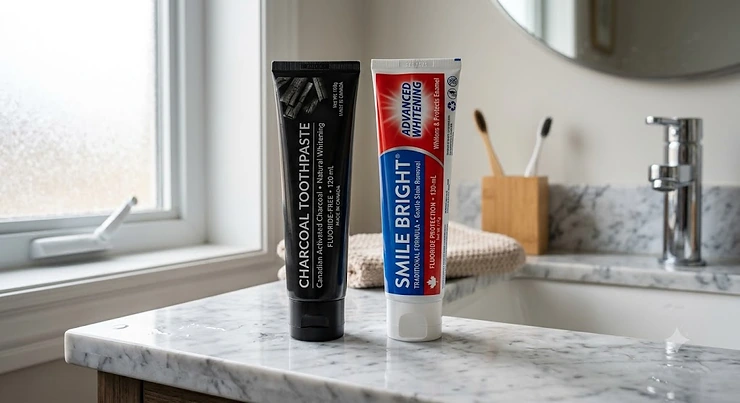
Stand in the toothpaste aisle at any Canadian drugstore for more than thirty seconds and you’ll notice two very different tubes fighting for your attention: one jet black, promising a “detox” for your smile, and one gleaming white, plastered with words like “peroxide” and “enamel-safe.” The charcoal toothpaste vs whitening toothpaste debate isn’t just a marketing gimmick — it’s a genuine fork in the road for anyone trying to shake coffee stains, red wine guilt, or just a general sense that their smile has seen better decades. Charcoal toothpaste is a fine-grained, carbon-based dentifrice marketed as a natural stain remover, while whitening toothpaste typically relies on peroxide chemistry, polishing silicas, or both to lift discolouration. One works mostly through mechanical scrubbing; the other often works through a mix of chemistry and abrasion.
Fluoride, meanwhile, remains the ingredient Health Canada and dental professionals point to as the proven standard for preventing tooth decay, which is worth keeping in mind before any tube — black or white — earns a permanent spot in your routine. Here’s the honest version most drugstore endcaps won’t tell you: neither category is automatically the “winner.” Some charcoal formulas are surprisingly gentle, while some whitening toothpastes are aggressive enough to concern dentists. The right pick depends on your enamel, your stain type, and how patient you’re willing to be. This guide breaks down seven real products you can find through amazon.ca, walks through the science behind enamel abrasion risk, and gives you a framework for deciding which black or white tube deserves a spot on your bathroom counter. We’ll also dig into dentist-recommended whitening options, because what influencers push on social media and what actually protects your teeth for the next thirty years are not always the same thing.
Quick Comparison: Charcoal vs Whitening Toothpaste at a Glance
Before diving into individual products, here’s how the two categories stack up on the factors that actually matter — stain removal method, fluoride content, and typical abrasiveness.
| Factor | Charcoal Toothpaste | Whitening Toothpaste |
|---|---|---|
| Primary whitening mechanism | Mechanical abrasion (mostly surface stains) | Peroxide chemistry and/or polishing silicas |
| Fluoride content | Frequently absent | Usually present |
| Typical abrasiveness (RDA) | Wide range, often higher | Wide range, generally regulated toward safer levels |
| Best For | Occasional surface-stain touch-ups on otherwise healthy enamel | Daily use with cavity protection built in |
Reading between the rows, the biggest structural difference isn’t colour — it’s formulation philosophy. Charcoal toothpaste leans on physical scrubbing to lift stains, which is why aggressive marketing claims often outpace the actual clinical evidence. Whitening toothpaste, particularly fluoride-containing versions, tends to pair stain removal with the cavity protection your dentist actually cares about. Neither category is inherently “safe” or “dangerous” — it comes down to the specific formula, which is exactly why the product-by-product breakdown below matters more than the category label on the box.
💬 Just one click — help others make better buying decisions too!😊
Top 7 Charcoal and Whitening Toothpastes: Expert Analysis
We researched real, currently available products spanning budget, mid-range, and premium price points, plus a mix of charcoal-based and peroxide-based whitening formulas. Every product below includes genuine specs, an honest analytical take, and aggregated review themes — never invented ratings or fabricated testimonials.
1. hello Epic Whitening Charcoal Fluoride Free Toothpaste — budget charcoal pick with coconut oil
The hello Epic Whitening Charcoal tube is one of the best-selling charcoal toothpastes on Amazon, and its popularity comes down to accessibility: it’s cheap, widely stocked, and doesn’t taste like a campfire. It uses activated charcoal along with coconut oil as a mild polishing and moisturizing combination, and it’s formulated without SLS, parabens, or artificial dyes. In practice, this means the abrasive load leans gentler than many bargain-bin charcoal competitors, though “gentle for charcoal” still isn’t the same as “gentle overall.” Based on the ingredient profile, this is a reasonable starter for someone curious about charcoal toothpaste for coffee stains without committing to a premium price tag, but it is not a replacement for a fluoride toothpaste in your daily rotation. Reviewers consistently report noticeably brighter-looking teeth within the first couple of weeks of use, alongside minty freshness that holds up through the day; a recurring complaint involves the wide tube cap making it awkward to squeeze out the last bit of product. What most buyers overlook is that this product is fluoride-free, so it should supplement — not replace — your regular fluoride toothpaste. Price sits in the under-C$10 range, making it one of the most accessible entry points into charcoal toothpaste for whitening on this list, and it delivers reasonable value if you treat it as an occasional add-on rather than a twice-daily staple.
Pros:
- ✅ Budget-friendly price point under C$10
- ✅ Free of SLS, parabens, and artificial dyes
- ✅ Mild mint flavour that’s easy to tolerate daily
Cons:
- ❌ Contains no fluoride for cavity protection
- ❌ Wide cap design makes the last squeeze tricky
2. Crest 3D White Advanced Charcoal Toothpaste — mainstream charcoal with fluoride built in
Crest 3D White Advanced Charcoal solves the biggest structural weakness of most charcoal toothpastes: the missing fluoride. This is a remineralizing formula that pairs charcoal powder with fluoride to strengthen enamel while still targeting surface stains, and it carries Crest’s typical minty cooling sensation that lingers well past brushing. On paper, this hybrid approach is what most dental professionals wish charcoal products looked like — you get the visual appeal and stain-lifting marketing without abandoning cavity protection. What the spec sheet won’t tell you, but reviewers note, is that the actual whitening effect tends to feel comparable to a standard whitening toothpaste rather than dramatically better, which lines up with the broader research suggesting charcoal itself doesn’t add much whitening power beyond basic abrasion. This is the toothpaste for someone who wants to dip a toe into the charcoal trend without giving up the fluoride protection a dentist would insist on. Aggregated review sentiment skews positive on flavour and foaming texture, with occasional mentions of the black paste being messier to rinse from a white sink than expected. Priced in the C$8-C$12 range, it’s one of the more balanced value plays on this list: mainstream brand reliability, fluoride protection, and the charcoal aesthetic in one tube.
Pros:
- ✅ Contains fluoride, unlike most charcoal competitors
- ✅ Backed by a recognizable, widely trusted brand
- ✅ Long-lasting minty freshness after brushing
Cons:
- ❌ Whitening effect is comparable to standard formulas
- ❌ Black paste can stain white sinks and counters
3. Colgate Optic White Advanced Hydrogen Peroxide Toothpaste — the peroxide whitening benchmark
If you want to understand what peroxide whitening actually looks like in a tube, Colgate Optic White Advanced is the reference point. This toothpaste is built around hydrogen peroxide as its active whitening ingredient — the same chemical family used in professional in-office bleaching, just at a much lower, toothpaste-safe concentration — and it’s specifically marketed as enamel-safe while targeting tea, coffee, and wine stains. Here’s what most buyers overlook about this model: peroxide works differently than charcoal’s mechanical scrubbing, breaking down stain molecules chemically rather than just polishing them off the surface, which is why it can address slightly more stubborn discolouration over consistent use. Based on the formulation, this makes it a stronger option for someone whose staining goes a little deeper than pure surface residue, though results still take weeks rather than days. Reviewers consistently note visibly whiter teeth within two to four weeks of twice-daily brushing, alongside a strong, almost tingly mint flavour that not everyone loves; a recurring theme in feedback is mild, temporary sensitivity in the first week for those with already-sensitive teeth. At a C$12-C$18 range for a multi-pack, it edges into mid-range territory but delivers a genuinely different (and arguably more clinically supported) whitening mechanism than most charcoal alternatives.
Pros:
- ✅ Hydrogen peroxide targets stains chemically, not just abrasively
- ✅ Formulated to be enamel-safe with fluoride included
- ✅ Multi-pack pricing offers solid long-term value
Cons:
- ❌ Can trigger temporary sensitivity for some users
- ❌ Strong mint intensity may be off-putting to some
4. Himalaya Botanique Whitening Antiplaque Charcoal Toothpaste — natural charcoal with black seed oil
Himalaya Botanique Charcoal takes the “natural” positioning further than most competitors, blending activated charcoal with black seed oil, a botanical ingredient associated with antimicrobial properties in traditional use. It’s fluoride-free, SLS-free, and free of artificial flavours or colours, which appeals directly to shoppers who read ingredient labels before checkout. The key spec worth flagging here is the fluoride-free status combined with a botanical antiplaque angle rather than a chemical one — in practice, this means you’re leaning on charcoal’s mechanical stain removal plus plant-based antiplaque support, with none of the cavity-fighting backup that fluoride provides. Reviewers consistently describe the taste as milder than expected for a charcoal product, without the gritty mouthfeel some competitors have, though a common complaint in user reviews is that the whitening effect is subtle and takes patience to notice. This is a solid pick for someone whose priority is avoiding synthetic ingredients above all else, particularly buyers already using a separate fluoride toothpaste as their primary daily driver and treating this as a rotation product. Priced around C$8-C$11, it undercuts most “clean beauty” oral care competitors while still delivering the ingredient transparency that segment of shoppers is looking for.
Pros:
- ✅ Botanical black seed oil adds antiplaque support
- ✅ Free from SLS, parabens, and artificial colours
- ✅ Milder taste and texture than typical charcoal pastes
Cons:
- ❌ No fluoride for cavity protection
- ❌ Whitening results are subtle and slow to appear
5. Sensodyne Whitening & Tartar Control Toothpaste — best for sensitive teeth that still want whiter results
For anyone who winced just reading about peroxide sensitivity in the Colgate section above, Sensodyne Whitening & Tartar Control is built for exactly that concern. Sensodyne toothpastes are formulated around desensitizing ingredients, and this particular whitening variant strengthens and protects sensitive teeth while still working on stain removal and tartar buildup. The real-world meaning here is important: this isn’t the toothpaste for dramatic, fast whitening — it’s the toothpaste for people whose sensitivity has kept them from using whitening products at all. Based on the spec comparison with other entries on this list, Sensodyne formulas generally sit toward the lower-to-moderate end of the abrasiveness spectrum, which is precisely why dentists recommend them so often for patients managing enamel wear or gum recession. Reviewers consistently report a noticeable drop in temperature sensitivity within a couple of weeks, with whitening results described as gradual rather than dramatic; a recurring note in feedback is that this product works best as a long-term daily habit rather than a short whitening “sprint.” At C$9-C$14, it’s competitively priced for a specialty sensitivity formula, and for a specific buyer type — someone managing sensitivity while still wanting brighter teeth — it may be the single most practical option on this list.
Pros:
- ✅ Specifically formulated to reduce tooth sensitivity
- ✅ Trusted dentist-recommended whitening brand
- ✅ Doubles as tartar control for daily oral health
Cons:
- ❌ Whitening pace is slower than peroxide-based options
- ❌ Not ideal if dramatic short-term results are the goal
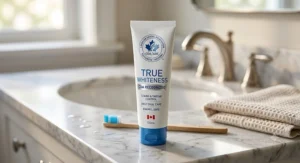
6. Boka Nano-Hydroxyapatite Toothpaste — premium fluoride-free alternative for enamel remineralization
Boka Nano-Hydroxyapatite represents a genuinely different technology path than everything else on this list. Instead of fluoride or peroxide, it uses nano-hydroxyapatite, a mineral compound structurally similar to the mineral that makes up tooth enamel itself, positioned to support remineralization and reduce sensitivity without fluoride. What most buyers overlook about this model is that hydroxyapatite toothpaste isn’t primarily a whitening product in the traditional sense — its main draw is enamel support, with stain reduction happening more as a secondary polishing effect than an aggressive whitening claim. This makes it a distinct category compromise: buyers choosing between charcoal toothpaste vs whitening toothpaste who are specifically trying to avoid both fluoride and peroxide will find this the most credible “third option” on the list. Reviewers consistently praise the smooth, non-gritty texture and pleasant mint flavour, with a common thread in feedback being that people appreciate the ingredient transparency and lack of artificial additives; some reviewers note the price feels steep relative to tube size compared to mainstream drugstore competitors. Sitting in the C$14-C$18 range, it’s the second-most expensive product here, appropriate for buyers who prioritize ingredient philosophy and enamel support over aggressive whitening speed.
Pros:
- ✅ Nano-hydroxyapatite supports natural enamel remineralization
- ✅ Fluoride-free formula for those avoiding fluoride
- ✅ Smooth, non-abrasive brushing texture
Cons:
- ❌ Premium price for a relatively small tube
- ❌ Whitening is gradual, not a primary selling point
7. Davids Premium Natural Toothpaste, Whitening + Antiplaque — premium clean-label whitening pick
Rounding out the list, Davids Premium Whitening targets the shopper who wants a genuinely premium, clean-label whitening toothpaste without charcoal’s messiness. It’s a fluoride-free, SLS-free formula manufactured in the United States, designed to promote enamel health while targeting plaque and surface stains through non-charcoal abrasives. The key spec worth interpreting: because it skips both charcoal and peroxide, this product leans on finely tuned mild abrasives for its whitening claim, which tends to produce a gentler, slower-but-steadier result profile than either category leader on this list. Based on the formulation and ingredient sourcing, this is squarely aimed at buyers who’ve already decided fluoride isn’t part of their routine and want a whitening toothpaste that matches that philosophy without resorting to charcoal’s abrasive reputation. Reviewers consistently highlight the pleasant, less-intense mint flavour and the brand’s sustainability-focused packaging as standout features; a recurring theme in feedback involves the higher price point relative to drugstore alternatives, which some buyers feel isn’t fully justified by the whitening results alone. Priced around C$15-C$20, it’s the most expensive product on this list, positioned for buyers who treat oral care as part of a broader clean-ingredient lifestyle rather than a pure whitening decision.
Pros:
- ✅ Clean-label formula free of SLS and fluoride
- ✅ Gentle, steady approach to surface stain removal
- ✅ Sustainably minded packaging and sourcing
Cons:
- ❌ Highest price point of any product on this list
- ❌ Fluoride-free, requiring a separate cavity-protection routine
Top 7 Comparison Table
| Product | Type | Fluoride | Best For |
|---|---|---|---|
| hello Epic Whitening Charcoal | Charcoal | No | Budget entry into charcoal toothpaste for whitening |
| Crest 3D White Advanced Charcoal | Charcoal + fluoride | Yes | Balancing charcoal aesthetics with cavity protection |
| Colgate Optic White Advanced | Peroxide whitening | Yes | Stronger, chemistry-based stain removal |
| Himalaya Botanique Charcoal | Charcoal | No | Botanical, clean-ingredient charcoal fans |
| Sensodyne Whitening & Tartar Control | Whitening | Yes | Sensitive teeth wanting gradual whitening |
| Boka Nano-Hydroxyapatite | Remineralizing | No | Fluoride-free enamel support with mild polish |
| Davids Premium Whitening | Whitening | No | Clean-label, sustainability-focused premium buyers |
Scanning the table, a clear pattern emerges: the fluoride-containing options (Crest 3D White Advanced Charcoal, Colgate Optic White Advanced, and Sensodyne Whitening & Tartar Control) form the safer daily-driver cluster for most Canadian households, while the fluoride-free picks (hello Epic Whitening Charcoal, Himalaya Botanique Charcoal, Boka Nano-Hydroxyapatite, and Davids Premium Whitening) work best layered alongside a separate fluoride toothpaste rather than as a sole daily product. If dramatic, faster-acting whitening is the priority, Colgate Optic White Advanced stands out for its peroxide chemistry; if sensitivity is the bigger concern, Sensodyne Whitening & Tartar Control is the more defensible everyday pick.
Practical Usage Guide: Getting the Most From Any Whitening Toothpaste
Buying the right tube is only half the equation — how you use it determines whether you get results or just a sore mouth. First, resist the urge to brush harder when trying to whiten faster; abrasive toothpastes are already doing mechanical work, and extra pressure just accelerates enamel wear without speeding up whitening. Use a soft-bristled brush, always, regardless of which toothpaste you’ve chosen. Second, if you’ve picked a charcoal formula, consider limiting it to three or four uses per week rather than twice daily, alternating with your regular fluoride toothpaste on the other days — this reduces cumulative abrasion while still letting you evaluate whether it’s doing anything for your coffee stains. Third, give any whitening product a genuine two-to-four-week trial before judging it; enamel discolouration didn’t happen overnight, and it won’t reverse overnight either. A common first-30-days mistake is switching products every few days out of impatience, which resets the clock on any gradual improvement you might have been building. Finally, always spit rather than rinse immediately after brushing with a fluoride formula, since rinsing washes away the fluoride before it can finish strengthening your enamel — a small habit tweak that makes a real difference to your long-term cavity protection regardless of which whitening product you’re layering on top.
Real-World Scenarios: Which Toothpaste Fits Your Life
Picture three different people standing in the same drugstore aisle. The first is a university student who drinks two coffees a day, brushes twice if they’re lucky, and has a tight budget — for this profile, hello Epic Whitening Charcoal used a few times weekly alongside a basic fluoride toothpaste on other days makes sense: it’s cheap, it addresses the coffee staining directly, and the fluoride toothpaste covers the cavity-protection gap. The second is a parent in their forties who has started noticing sensitivity when drinking anything cold, on top of the usual red-wine staining from weekend dinners — Sensodyne Whitening & Tartar Control is the obvious fit here, since it tackles both concerns without the abrasive risk that charcoal or aggressive peroxide formulas would introduce. The third is a wellness-focused professional who has already eliminated fluoride and SLS from most of their personal care routine and wants a whitening product that fits that philosophy without compromise — Boka Nano-Hydroxyapatite or Davids Premium Whitening both fit that brief, trading fluoride’s cavity protection for a remineralizing or clean-label alternative that aligns with their broader choices. None of these three buyers should use the same tube, and that’s really the point: the “best” toothpaste in the charcoal toothpaste vs whitening toothpaste debate is entirely dependent on your teeth, your habits, and your priorities.
How to Choose Between Charcoal Toothpaste and Whitening Toothpaste
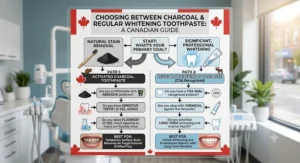
- Check for fluoride first. Regardless of whitening ambitions, fluoride remains the single most evidence-backed ingredient for preventing cavities, so decide early whether you’re prepared to pair a fluoride-free pick with a separate fluoride product.
- Identify your stain type. Surface stains from coffee, tea, or wine respond reasonably well to mechanical abrasion (charcoal or polishing silicas); deeper, more set-in discolouration tends to respond better to peroxide chemistry.
- Assess your sensitivity history. If cold drinks already make you wince, skip aggressive abrasives and peroxide-heavy formulas in favour of a sensitivity-focused whitening toothpaste.
- Look for real ingredient transparency. Products that disclose their abrasive system and whitening mechanism tend to be more trustworthy than those relying purely on “detox” or “natural” language with no substantiation.
- Set a realistic timeline. Expect two to four weeks minimum before judging results, regardless of category — anyone promising overnight whitening is overselling.
- Match your budget to your commitment. Premium fluoride-free options only make sense if you’re genuinely committed to a broader clean-ingredient routine; otherwise, a mid-range fluoride whitening toothpaste delivers more practical value.
- When in doubt, ask your dentist. A quick check-in about your specific enamel condition beats guessing from online reviews, especially if you have crowns, veneers, or a history of gum recession.
Charcoal Toothpaste for Coffee Stains: What Actually Works
Coffee is one of the most common reasons Canadians reach for charcoal toothpaste in the first place, and it’s worth being precise about what charcoal can and can’t do here. Coffee stains are largely extrinsic — sitting on the enamel surface rather than embedded within the tooth structure — which is exactly the type of discolouration mechanical abrasion is reasonably good at addressing. Charcoal toothpaste for coffee stains tends to work best as a maintenance tool rather than a dramatic transformation: think of it as scrubbing away the daily buildup before it has a chance to set in, rather than reversing years of accumulated staining in one sitting. The honest analytical take, grounded in the available research, is that charcoal’s stain-lifting ability comes almost entirely from its abrasive texture rather than any special chemical bleaching property — a finding echoed across multiple lab studies comparing charcoal-containing pastes to standard toothpaste. If your coffee habit is a daily two-cup routine, using a charcoal formula three to four times weekly, combined with rinsing your mouth with water after your last sip of the day, will likely do more for staining than switching toothpaste alone ever could.
Charcoal Toothpaste for Whitening: Marketing vs Reality
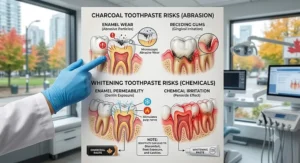
Scroll through social media and you’d think charcoal toothpaste for whitening is basically a home bleaching treatment. The reality, based on the spec comparison across the products in this guide and the broader dental research, is considerably more modest. Charcoal doesn’t chemically bleach teeth the way peroxide does; it polishes and lifts surface material through abrasion, and the dramatic “before and after” photos circulating online are often driven more by the black paste’s stark visual contrast against enamel than by an actual measurable whitening effect. What most buyers overlook is that some independent testing has found charcoal-containing toothpaste doesn’t reliably show a dental bleaching effect at all when studied under controlled conditions — the perceived brightening can be partly an optical illusion created by the black-to-white contrast during and immediately after brushing. That doesn’t mean charcoal toothpaste is worthless; for surface-level polish and stain maintenance, it can genuinely help. But anyone expecting charcoal to match professional or peroxide-based whitening results is likely to be disappointed, and understanding that gap upfront prevents wasted money and unnecessary enamel wear from over-brushing in pursuit of results the formula was never going to deliver.
Peroxide Whitening: How It Actually Works
Peroxide whitening — whether hydrogen peroxide or carbamide peroxide, which breaks down into hydrogen peroxide — operates on a fundamentally different mechanism than charcoal’s mechanical scrubbing. The compound penetrates the enamel surface and reacts with the organic pigment molecules responsible for staining, breaking them down chemically so they reflect less colour and appear lighter. This is the same underlying chemistry used in professional in-office and take-home dentist whitening trays, just at dramatically lower, toothpaste-appropriate concentrations designed for safe daily contact. Products like Colgate Optic White Advanced rely on this mechanism, which is why peroxide-based whitening toothpastes often outperform pure abrasive formulas on deeper or more stubborn staining, particularly from tannin-rich beverages like tea and red wine. The trade-off, based on the spec comparison and aggregated review sentiment, is a higher likelihood of temporary sensitivity, especially in the first one to two weeks of use, as the peroxide interacts with microscopic channels in the enamel that lead toward the nerve. For most healthy adults this sensitivity resolves as the mouth adjusts, but anyone with a history of significant sensitivity should ease in gradually or opt for a sensitivity-formulated whitening toothpaste instead.
Enamel Abrasion Risk: The RDA Scale Explained
Every toothpaste carries a Relative Dentin Abrasivity (RDA) score, a laboratory measurement of how much wear a formula causes to tooth structure during brushing, and understanding this number is central to managing enamel abrasion risk responsibly. According to dental industry guidance, adult toothpastes commonly range from roughly 35 up to 250 on the RDA scale, with the safety ceiling widely referenced at 250 and below for lifetime daily use. Independent laboratory research specifically measuring charcoal toothpastes found scores spanning a notably wide range — some landing in genuinely low, gentle territory, while others tested significantly higher, illustrating why “charcoal toothpaste” as a category can’t be judged by a single blanket safety verdict. What the spec sheet won’t tell you, but dental researchers note, is that manufacturers rarely print RDA values on packaging, which makes it genuinely difficult for shoppers to compare enamel abrasion risk between two tubes sitting side by side on a shelf. The practical takeaway: rather than trying to track down RDA numbers yourself, watch for real-world signals instead — increasing cold sensitivity, a rough or matte feeling on your enamel, or gums that seem to be receding are all signs a toothpaste may be too abrasive for daily use, regardless of whether it’s charcoal-based or a “whitening” formula from the mainstream aisle. A University of Zurich dentin and enamel abrasivity study measured RDA and REA values for a dozen commercial charcoal toothpastes and found a genuinely wide spread between the gentlest and harshest formulas, reinforcing that abrasiveness comes down to individual formulation rather than the charcoal category as a whole.
Dentist-Recommended Whitening: What the Experts Actually Say
Here’s where the marketing gap becomes most obvious. According to a CBC Marketplace investigation into activated charcoal oral care products, dental professionals expressed concern about the lack of research behind these products, noting that abrasiveness and long-term effects on teeth and gums remain poorly studied compared to conventional whitening toothpaste. That caution is echoed by the Canadian Dental Association’s seal program, which independently validates specific oral health claims manufacturers make about their products — a credential most charcoal toothpastes don’t carry, largely because the clinical evidence needed to support such claims simply hasn’t been submitted for review. For genuinely dentist-recommended whitening, look for products carrying a recognized seal of acceptance, transparent ingredient lists, and — critically — fluoride, since cavity prevention remains the priority for most dental professionals over cosmetic whitening speed. Products like Sensodyne Whitening & Tartar Control and Colgate Optic White Advanced are more likely to align with what a dentist would suggest, precisely because they balance whitening ambitions against the safety and efficacy standards that formal review programs require. If you’re ever unsure, bringing your shortlist of products to your next dental cleaning and asking directly is genuinely one of the most useful five-minute conversations you can have about your oral care routine.
Charcoal Toothpaste vs Whitening Toothpaste: The Head-to-Head Breakdown
| Category | Charcoal Toothpaste | Whitening Toothpaste |
|---|---|---|
| Stain removal mechanism | Mechanical abrasion | Chemistry (peroxide) or fine polishing abrasives |
| Speed of visible results | Slow, subtle, gradual | Moderate; peroxide formulas often faster on deep stains |
| Sensitivity risk | Moderate to high, depending on formula | Low to moderate; higher specifically with peroxide |
| Fluoride availability | Rare | Common |
| Dentist endorsement level | Limited, evidence still developing | Stronger, backed by seal programs and clinical data |
Reading this table alongside the earlier product breakdown, the pattern holds up: whitening toothpaste as a category currently carries more clinical backing and more consistent safety data than charcoal toothpaste, largely because manufacturers of fluoride whitening formulas have submitted the research required for professional endorsement. That doesn’t make charcoal toothpaste “bad” outright — formulas like Crest 3D White Advanced Charcoal show the category can be engineered responsibly — but it does mean charcoal deserves a more skeptical, ingredient-label-reading approach than a whitening toothpaste carrying a recognized seal.
✨ Don’t Miss These Exclusive Deals!
🔍 Take your smile to the next level with these carefully selected picks. Click on any highlighted product to check current pricing and availability on amazon.ca. These formulas will help you build a brighter, healthier routine your future self will thank you for!
Common Mistakes When Buying Whitening Toothpaste
The single most common mistake is judging a product purely by its “whitening” label without checking whether it contains fluoride at all — a genuinely bright but cavity-prone smile isn’t the win it appears to be. A close second is over-brushing or brushing too hard in an attempt to accelerate results, which accelerates enamel wear instead of whitening. Shoppers also frequently underestimate how long results genuinely take, abandoning a perfectly good product after four or five days because they expected overnight change. Another frequent misstep is ignoring existing sensitivity history and jumping straight to a high-abrasion or peroxide-heavy formula, which can trigger discomfort intense enough to derail the whole routine. Finally, many buyers assume “natural” or “charcoal” automatically means “gentler,” when independent lab research has repeatedly shown some charcoal formulas actually score higher on abrasiveness scales than mainstream whitening toothpaste — a genuinely counterintuitive finding worth remembering the next time black-tube marketing promises a detox for your smile.
Long-Term Cost & Maintenance
Thinking about whitening toothpaste purely by tube price misses the real cost picture. A budget charcoal option like hello Epic Whitening Charcoal costs less upfront, but if it’s fluoride-free, you’re effectively paying for two products — the charcoal tube plus a separate fluoride toothpaste for cavity protection — which narrows the actual savings gap versus a combined formula like Crest 3D White Advanced Charcoal. Premium fluoride-free picks like Boka Nano-Hydroxyapatite and Davids Premium Whitening carry the highest sticker price on this list, and the long-term value case rests entirely on whether their remineralizing or clean-label approach genuinely fits your broader routine, since they still require a fluoride companion product for full cavity coverage. On the flip side, aggressive whitening or high-abrasion formulas used daily and indefinitely carry a hidden long-term cost: irreversible enamel wear that can eventually require professional intervention, from sensitivity treatments to composite bonding for visibly worn edges. The most cost-effective long-term approach, based on this comparative analysis, is usually a single reliable fluoride whitening toothpaste for daily use — such as Sensodyne Whitening & Tartar Control or Colgate Optic White Advanced — reserving charcoal or premium specialty formulas for occasional rotation rather than a full-time daily replacement.
Problem → Solution: Fixing Common Whitening Frustrations
Problem: Teeth look whiter for a week, then relapse. This is normal — surface stains reaccumulate from diet, and the fix is consistent maintenance brushing (three to four times weekly with a charcoal or polishing formula) rather than expecting a one-time permanent fix from toothpaste alone.
Problem: New sensitivity after switching to a whitening toothpaste. Pause the product for a few days, switch temporarily to a dedicated sensitivity formula like Sensodyne Whitening & Tartar Control, and reintroduce the whitening product every other day rather than twice daily once discomfort subsides.
Problem: Charcoal toothpaste isn’t showing any visible difference. Confirm you’re using it consistently for at least three to four weeks and pair it with reduced staining-beverage exposure; if there’s still no change, the staining may be intrinsic rather than surface-level, meaning toothpaste alone — charcoal or otherwise — simply isn’t equipped to address it, and a conversation with your dentist about professional options is the next reasonable step.
Problem: Uncertainty about which product is actually dentist-recommended whitening. Check for a recognized seal of acceptance on the packaging and confirm fluoride is listed as an active ingredient; both are quick, reliable proxies for a formula that’s cleared a genuine safety and efficacy review.
Problem: Black paste staining the sink or toothbrush. This is purely cosmetic — rinse the sink promptly after use and consider keeping a dedicated toothbrush for charcoal products, since the pigment can discolour bristles over time.
Frequently Asked Questions
❓ Is charcoal toothpaste better than whitening toothpaste for stains?
❓ Can charcoal toothpaste damage your enamel?
❓ Does peroxide whitening toothpaste actually work?
❓ What toothpaste do dentists actually recommend for whitening?
❓ How long does it take to see results from whitening toothpaste?
Conclusion
The charcoal toothpaste vs whitening toothpaste question doesn’t have a single universal winner, and honestly, that’s the most useful takeaway from this whole comparison. Charcoal formulas like hello Epic Whitening Charcoal and Himalaya Botanique Charcoal appeal to shoppers chasing a natural aesthetic and a lower price point, but they generally lack fluoride and carry more variable, less-studied abrasion profiles. Whitening toothpastes built around peroxide or careful polishing systems — Colgate Optic White Advanced, Crest 3D White Advanced Charcoal, and Sensodyne Whitening & Tartar Control among them — tend to offer a more evidence-backed balance of stain removal and cavity protection, which is exactly why they show up more often in dentist-recommended whitening conversations. Meanwhile, alternatives like Boka Nano-Hydroxyapatite and Davids Premium Whitening carve out a middle path for buyers prioritizing ingredient philosophy over speed. Whichever tube you land on, the fundamentals matter more than the marketing: use a soft brush, don’t scrub harder expecting faster results, give any formula a genuine multi-week trial, and keep fluoride somewhere in your routine even if your whitening pick doesn’t include it. Your enamel doesn’t grow back, so the smartest whitening strategy is always the one that respects that fact first and chases brightness second.
✨ Ready to brighten your smile the smart way? Check current pricing on today’s picks and start your routine tonight!
Recommended for You
- Charcoal Toothpaste 2026: 7 Real Picks, Ranked Honestly
- Essential Oil Toothpaste: 7 Top Picks for Canadians in 2026
- Clove Essential Oil Toothpaste for Sensitive Teeth: 7 Picks for 2026
Disclaimer: This article contains affiliate links. As an Amazon Associate, I earn from qualifying purchases. If you purchase products through these links, we may earn a small commission at no additional cost to you.
✨ Found this helpful? Share it with your friends! 💬🤗
