In This Article
Somewhere between the influencer videos and the bathroom mirror, charcoal toothpaste turned a normal Tuesday errand into a research project. You went in for toothpaste. You came out wondering whether a black paste can really make your teeth whiter, or whether you just bought a very trendy way to scrub your enamel thin. Fair question. Charcoal toothpaste is everywhere on Canadian shelves and on amazon.ca right now, riding the same wave of “natural” oral care that’s pulled baking soda, activated coconut shells, and bamboo everything into your bathroom cabinet.
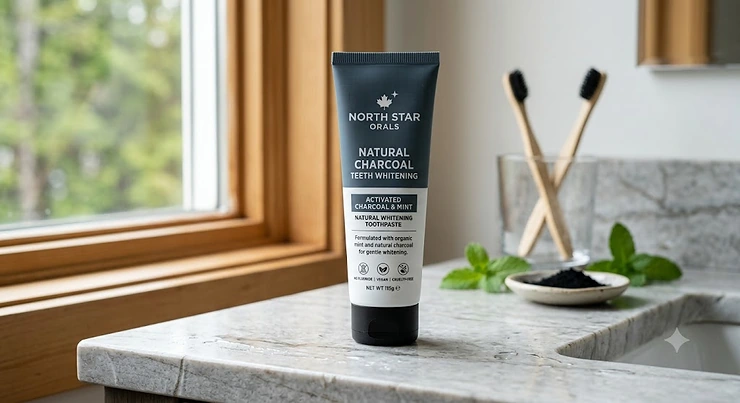
Here’s the honest version, not the marketing one: charcoal toothpaste works mostly through mechanical scrubbing, not chemistry, and how well it works — and how safely — depends enormously on which product you actually buy. Some formulas are gentle enough for daily use. Others are gritty enough to make a dental hygienist wince. This guide walks through seven real, currently available charcoal toothpastes, unpacks the abrasivity (RDA) science behind the black paste, and gives you a framework for choosing one that won’t cost you enamel you can’t get back.
We’ll cover the top charcoal toothpaste brands worth knowing, what to expect from a charcoal toothpaste multipack on Amazon.ca, how activated charcoal actually behaves in your mouth, and where surface stain removal stops being magic and starts being just… sandpaper. No fabricated reviews, no invented lab results — just real specs, real aggregated review sentiment, and straight analysis.
What Is Charcoal Toothpaste?
Charcoal toothpaste is a dentifrice formulated with activated charcoal — carbon that’s been heat-treated to create a porous, highly absorbent surface — combined with standard toothpaste ingredients like humectants, flavouring, and sometimes fluoride. It whitens primarily through gentle-to-aggressive mechanical abrasion that lifts surface stains from coffee, tea, wine, and tobacco, rather than through any chemical bleaching reaction.
That’s the textbook definition, but it undersells the controversy. Dentists have spent the better part of a decade arguing about whether the abrasion is “gentle” or “aggressive” depending on the formula, and that argument is exactly what this article is going to help you navigate.
Quick Comparison Table: Charcoal Toothpaste at a Glance
| Product | Type | Fluoride | Price Range (CAD) | Best For |
|---|---|---|---|---|
| Colgate Total Whitening + Charcoal | Mass-market paste | Yes | Under C$10 | Budget daily driver |
| Arm & Hammer Whitening + Activated Charcoal | Baking soda + charcoal | No | C$10–C$15 (multipack) | Gentle stain control |
| Tom’s of Maine Activated Charcoal Whitening | Natural, fluoride-added | Yes | C$15–C$20 (3-pack) | Natural buyers who still want fluoride |
| hello Epic Whitening Activated Charcoal | Vegan, SLS-free | No | C$12–C$18 | Sensitive-palate, vegan households |
| Himalaya Botanique Whitening Charcoal | Herbal/Ayurvedic | No | C$8–C$12 | Herbal-leaning buyers |
| Burt’s Bees Charcoal with Fluoride | Natural, fluoride-added | Yes | C$15–C$20 (3-pack) | Natural buyers wanting cavity protection |
| Davids Premium Charcoal + Peppermint | Premium, USP-grade | No | C$20–C$28 | Buyers prioritizing fine-particle safety |
Reading this table side by side, the split is really between fluoride-inclusive formulas — Colgate Total Whitening + Charcoal, Tom’s of Maine Activated Charcoal Whitening, and Burt’s Bees Charcoal with Fluoride — and the fluoride-free “natural” camp everyone else falls into. If cavity protection is non-negotiable for you (and for most Canadians, it should be), that first group narrows your shortlist fast. Price doesn’t track neatly with quality here either; Himalaya Botanique Whitening Charcoal sits at the low end but earns its spot through ingredient transparency, not corner-cutting.
💬 Just one click — help others make better buying decisions too!😊
Top 7 Charcoal Toothpaste Products: Expert Analysis
Every product below is real, currently sold, and cross-checked for availability. Prices are approximate ranges — always check the current price on the product page before buying, since Amazon pricing shifts constantly.
1. Colgate Total Whitening + Charcoal — best budget all-rounder with fluoride
The standout here is simple: you get charcoal’s stain-lifting reputation without giving up the cavity protection that dentists actually care about.
This is a mass-market gel toothpaste built around bamboo charcoal, wintergreen mint flavouring, and — critically — a fluoride base that most “natural” charcoal competitors skip entirely. Colgate’s Total line is also formulated to address plaque, gum health, and tooth sensitivity in a single tube rather than isolating whitening as the only job. That combination matters in practice: charcoal alone lifts extrinsic stains, but fluoride is what actually strengthens enamel and fights decay, so pairing them covers two very different jobs a single toothpaste rarely does well at once.
Based on the spec comparison, this is the toothpaste for someone who wants to try charcoal without restructuring their entire oral care routine around a fluoride-free lifestyle. Reviewers consistently note the flavour is milder than expected for a “charcoal” product, and several mention the black colour rinses cleanly without staining the sink — a small but real complaint category for darker-pigmented pastes.
Pros:
- ✅ Includes fluoride alongside charcoal whitening
- ✅ Familiar mass-market brand with wide availability
- ✅ Multi-benefit formula covers gums and sensitivity too
Cons:
- ❌ Whitening effect is subtler than fluoride-free rivals
- ❌ Contains SLS, which some sensitive users avoid
Priced under C$10 for a standard tube, Colgate Total Whitening + Charcoal is the easiest “just try it” entry point on this list, and the value case is straightforward given the fluoride inclusion.
2. Arm & Hammer Whitening + Activated Charcoal — gentlest baking-soda base
What stands out immediately is the baking soda foundation, which changes the entire abrasion profile compared with silica-heavy competitors.
Arm & Hammer built this formula around its long-standing baking soda expertise, then layered activated charcoal on top rather than making charcoal the primary abrasive. Baking soda is a well-studied, comparatively low-abrasion cleaning agent, so pairing it with charcoal theoretically produces a gentler overall scrub than charcoal-forward formulas — though it’s fluoride-free, which is the trade-off for that gentleness.
What most buyers overlook about this model is that “100% natural baking soda” marketing doesn’t automatically mean low-impact; the charcoal component still contributes grit, and daily aggressive brushing can offset the gentler base. Reviewers frequently mention a slightly gritty texture during the first few uses that smooths out with the toothbrush motion, and a noticeable — if temporary — freshness boost tied to the baking soda rather than the charcoal itself.
Pros:
- ✅ Low-abrasion baking soda base softens the charcoal grit
- ✅ Noticeable breath-freshening effect reported by users
- ✅ Widely stocked, easy to find on amazon.ca
Cons:
- ❌ No fluoride included in this formula
- ❌ Salty aftertaste bothers some first-time users
In the C$10–C$15 range for a multipack, this is a reasonable pick for someone who wants a gentler on-ramp into charcoal without full commitment to a specialty natural brand.
3. Tom’s of Maine Activated Charcoal Whitening — rare charcoal-plus-fluoride combo from a natural brand
The standout feature is right there in the ingredient list: this is one of the few “natural” charcoal toothpastes that doesn’t force you to choose between charcoal and fluoride.
Tom’s of Maine markets itself heavily on naturally sourced ingredients, and this activated charcoal formula follows that playbook while still including fluoride for cavity protection — a combination the brand specifically calls out as differentiating in a crowded natural-toothpaste aisle. The peppermint flavouring is a genuine mint rather than a masking agent, which matters because charcoal’s earthy taste is a common complaint across the category.
Here’s what to weigh: Tom’s positions this as “gently” removing surface stains, and the spec sheet backs that framing up better than more aggressive competitors, though “gentle” whitening also means slower, less dramatic results than harsher formulas. Reviewers consistently report satisfaction with the mint flavour specifically, alongside a smaller but recurring theme of the paste feeling less foamy than conventional toothpaste — a texture difference tied to its natural surfactant choices rather than a quality issue.
Pros:
- ✅ Combines activated charcoal with fluoride protection
- ✅ Genuinely minty flavour masks the earthy charcoal taste
- ✅ Naturally sourced ingredient profile appeals to label-readers
Cons:
- ❌ Less foamy lather than conventional toothpaste
- ❌ Whitening results are gradual, not dramatic
Sold mainly in three-packs in the C$15–C$20 range, this is a strong pick for buyers who’ve been avoiding charcoal specifically because most natural options drop fluoride.
4. hello Epic Whitening Activated Charcoal — vegan, SLS-free, and built for sensitive users
The hook here is the ingredient exclusion list, which is unusually long and specific for a mainstream-adjacent brand.
This fluoride-free formula is built around coconut oil and activated charcoal, and it’s explicitly free of peroxide, artificial sweeteners, artificial flavours, dyes, preservatives, SLS, parabens, and titanium dioxide. That’s a meaningfully longer exclusion list than most competitors on this page, and it targets a specific buyer: someone with SLS sensitivity, a vegan lifestyle requirement, or simply label anxiety about additive-heavy formulas.
What the spec sheet won’t tell you, but user reports suggest, is that SLS-free formulas often feel less “foamy” and satisfying mid-brush than SLS-containing pastes, even though the actual cleaning mechanism is unaffected by lather volume. Reviewers consistently highlight the mint flavour as fresh without being overpowering, and several mention it’s their go-to gift or travel toothpaste specifically because it’s leaping-bunny certified and vegan, which broadens its appeal beyond strict charcoal enthusiasts.
Pros:
- ✅ Free of SLS, parabens, dyes, and artificial sweeteners
- ✅ Vegan formula, leaping bunny cruelty-free certified
- ✅ Coconut oil base softens the charcoal’s dry texture
Cons:
- ❌ No fluoride in the formula
- ❌ Less foamy lather may feel underwhelming at first
Typically priced C$12–C$18 depending on pack size, hello Epic Whitening Activated Charcoal is the pick for households already avoiding SLS or shopping vegan-first.
5. Himalaya Botanique Whitening Charcoal — herbal Ayurvedic formula with black seed oil
What sets this apart from the pack is the ingredient pairing: bamboo charcoal alongside black seed oil, an Ayurvedic staple rarely seen in North American toothpaste aisles.
Himalaya built its Botanique line around traditional herbal formulations rather than the “clean beauty” minimalism most Western natural brands lean on. The bamboo charcoal handles the mechanical whitening job, while black seed oil and other botanical extracts are positioned as supporting overall oral wellness rather than whitening specifically. It’s fluoride-free, consistent with the brand’s herbal-first philosophy across its product line.
Based on the spec comparison, this toothpaste is best understood as occupying a different lane entirely from mass-market charcoal pastes — it’s marketed toward people already invested in Ayurvedic or herbal wellness routines rather than someone shopping purely for a whitening hack. Reviewers consistently mention the flavour profile reads as more herbal and less “minty-fresh” than Western competitors, which some buyers love and others find takes adjustment.
Pros:
- ✅ Unique black seed oil and herbal ingredient blend
- ✅ Lower price point than most natural competitors
- ✅ Fluoride-free formula fits herbal wellness routines
Cons:
- ❌ Herbal flavour profile isn’t for everyone
- ❌ No fluoride for cavity protection
At C$8–C$12 for a single tube, this is one of the more affordable natural options on the list, making it an easy low-commitment trial.
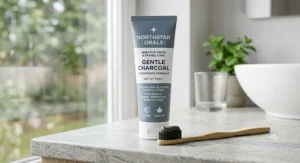
6. Burt’s Bees Charcoal with Fluoride — naturally sourced with cavity protection built in
The standout advantage is right in the name: Burt’s Bees pairs its natural-ingredient reputation with fluoride, avoiding the false choice so many charcoal buyers get stuck with.
This Mountain Mint formula blends natural charcoal with fluoride for anti-cavity protection, positioning it alongside Tom’s of Maine as one of the few natural-leaning brands unwilling to sacrifice decay prevention for a charcoal marketing angle. Burt’s Bees leans on its broader natural-personal-care brand equity here, and the formulation reflects that — naturally derived flavouring, no artificial sweeteners, and a mint that reviewers describe as crisp rather than harsh.
Here’s what to weigh: choosing a fluoride-inclusive natural brand like this one means you’re not trading cavity protection for a “natural” label, which is exactly the trap several fluoride-free competitors on this list fall into. Reviewers consistently note the mountain mint flavour as a genuine highlight, alongside a smaller but recurring mention that the paste’s texture is smoother and less gritty than expected from a charcoal product.
Pros:
- ✅ Fluoride included despite natural ingredient focus
- ✅ Smoother texture than typical charcoal formulas
- ✅ Recognizable, trusted natural personal care brand
Cons:
- ❌ Sold mainly in multipacks, higher upfront cost
- ❌ Mint flavour intensity may be strong for some
Typically found in three-packs in the C$15–C$20 range, Burt’s Bees Charcoal with Fluoride earns its spot for buyers who want “natural” and “cavity protection” in the same tube without compromise.
7. Davids Premium Charcoal + Peppermint — premium USP-grade charcoal in a recyclable metal tube
The differentiator here isn’t the charcoal itself so much as its particle grade — this is USP (pharmaceutical-grade) coconut charcoal, ground to an ultra-fine powder specifically to reduce abrasive risk.
Davids positions this as a direct answer to the biggest criticism levelled at charcoal toothpaste: coarse, gritty particles that scratch enamel. The brand’s own formulation notes explain that the paste appears grey rather than jet black precisely because the charcoal concentration and particle size are tuned for gentleness over dramatic visual effect — a genuinely useful signal, since the darkest-looking charcoal pastes are often the ones dental professionals flag as more abrasive. The tube itself is a recyclable metal design with FSC-certified packaging, aimed at buyers who care about plastic waste as much as oral care.
What most buyers overlook about this model is that fine particle size doesn’t eliminate abrasivity entirely — it reduces the risk relative to coarse-ground competitors, but daily heavy-handed brushing with any charcoal product still carries some mechanical wear. Reviewers consistently describe the texture as smooth rather than gritty, and several specifically call out that it doesn’t feel like “brushing with sand,” a comparison that comes up often enough in charcoal toothpaste reviews generally to be worth naming.
Pros:
- ✅ Ultra-fine USP-grade charcoal reduces enamel scratching
- ✅ Recyclable metal tube with sustainable packaging
- ✅ Smooth texture reported across user reviews
Cons:
- ❌ No fluoride included in the formula
- ❌ Premium pricing compared to mass-market options
At C$20–C$28 per tube, this sits at the top of the price range on this list, but the value case rests on genuinely differentiated formulation rather than premium branding alone.
Practical Usage Guide: How to Use Charcoal Toothpaste Safely
Buying the right tube is only half the equation — how you use it determines whether you get gentle stain removal or a slow-motion enamel problem.
Start by treating charcoal toothpaste as a supplement to your regular fluoride toothpaste rather than a full replacement, especially if the product you chose is fluoride-free. A common first-30-days mistake is brushing harder because the paste “feels like it should scrub,” which defeats the purpose of choosing a gentler formula in the first place — let the bristles do the work, not your wrist. Use a soft-bristled brush, brush for the standard two minutes, and avoid pairing charcoal toothpaste with an already-abrasive electric brush head on high intensity.
Most dental commentary around charcoal recommends limiting use to two or three times per week rather than every single brushing, alternating with a standard fluoride toothpaste on the days in between. This isn’t arbitrary caution — it’s a direct response to abrasion concerns, and it lets you get the occasional stain-lifting benefit without cumulative enamel wear. If you notice increased tooth sensitivity, gum irritation, or a rougher feel on your teeth after a few weeks, that’s your signal to scale back frequency immediately, not push through it.
Real-World Scenarios: Who Actually Should Try Charcoal Toothpaste
If you’re a daily coffee drinker with otherwise healthy enamel and no history of sensitivity, charcoal toothpaste used two to three times weekly alongside a fluoride toothpaste is a reasonable experiment — the surface staining coffee causes is exactly the category charcoal handles best, and moderate use keeps abrasion risk manageable.
If you’re someone with thin or already-sensitive enamel, receding gums, or a dentist-flagged history of erosion, charcoal toothpaste is a poor match regardless of which brand you pick — the mechanical abrasion that lifts stains is the same mechanism that accelerates wear on compromised enamel, and no amount of “gentle formula” marketing changes that underlying physics. A low-RDA, ADA-recognized whitening toothpaste is the safer route here.
If you’re a natural-ingredients household already using SLS-free, fluoride-free personal care products across the board, a product like hello Epic Whitening Activated Charcoal or Himalaya Botanique Whitening Charcoal fits your existing routine logically — just be honest with yourself about supplementing fluoride exposure elsewhere, whether through drinking water, a fluoride mouth rinse, or periodic dentist treatments, since none of the fluoride-free options on this list contribute to cavity prevention on their own.
Charcoal Toothpaste vs Traditional Whitening Toothpaste
| Factor | Charcoal Toothpaste | Traditional Whitening Toothpaste |
|---|---|---|
| Whitening mechanism | Mechanical abrasion | Peroxide/chemical or silica-based abrasion |
| Typical RDA range | Roughly 24–166 depending on formula | Roughly 19–111 depending on formula |
| Fluoride availability | Rare, brand-dependent | Common, widely available |
| ADA/CDA recognition | No product currently recognized | Many products carry CDA Seal |
| Best For | Occasional extrinsic stain touch-ups | Daily whitening with therapeutic backing |
The RDA ranges above come from lab testing across multiple products in each category, and the overlap is the real story: charcoal isn’t automatically more abrasive than every whitening toothpaste, but its upper range runs meaningfully higher, and manufacturers rarely publish RDA values on packaging, so you’re often buying blind. Traditional peroxide-based whitening pastes can actually land at the gentler end of the scale precisely because the chemical does more of the whitening work than physical scrubbing does. If daily whitening with dental-body backing matters to you, a CDA-recognized peroxide formula is the more predictable choice; charcoal remains better suited to occasional, deliberate use.
How to Choose Charcoal Toothpaste
Picking the right tube comes down to seven checkable factors, in roughly this order of importance:
- Fluoride inclusion — Decide upfront whether cavity protection needs to come from the toothpaste itself, or whether you’re covering that base elsewhere.
- Particle grade — Ultra-fine, USP-grade charcoal (like the kind used in premium formulas) generally means lower abrasion risk than coarse-ground charcoal.
- Existing sensitivity — If you already experience tooth sensitivity, treat that as a near-automatic disqualifier for daily charcoal use.
- Ingredient exclusions — If SLS, parabens, or artificial dyes are dealbreakers for you, check the label rather than assuming “charcoal” implies “clean.”
- Multipack economics — Compare per-tube cost across multipack sizes rather than judging sticker price alone.
- Flavour tolerance — Charcoal’s earthy undertone varies wildly by brand; mint-forward formulas mask it better than herbal ones.
- Frequency plan — Decide before you buy whether this is a daily toothpaste or an occasional stain-lifting supplement, since that decision should drive which formula you pick.
Understanding Abrasivity (RDA): What the Science Actually Says
Relative Dentin Abrasivity, or RDA, is the standardized lab measurement dentistry uses to gauge how much a toothpaste wears down dentin during brushing. The Canadian Dental Association evaluates toothpaste formulas against safety and efficacy criteria before granting its Seal of Recognition, and as of this writing, no activated charcoal toothpaste has received that recognition in Canada.
That absence isn’t necessarily a condemnation of every charcoal product — it partly reflects how few charcoal formulas have submitted the clinical evidence CDA review requires. But it does mean buyers are, in practice, flying without the usual quality signal. Independent lab testing summarized across multiple sources shows charcoal toothpaste RDA values ranging roughly from the mid-20s up to the mid-160s, a spread nearly as wide as conventional toothpaste. A systematic review of in vitro studies examining activated-charcoal-based toothpaste concluded the category shows a lower whitening effect than chemical alternatives while carrying higher abrasive potential in most of the studies reviewed.
The FDA’s conservative benchmark sits at 200 RDA, the ADA’s ceiling for its Seal program is 250, and several Canadian dental resources point toward keeping daily-use toothpaste closer to 100 RDA or below for genuinely low-risk brushing. Translate that into a buying rule: without a published RDA on the label, treat any charcoal toothpaste as an unknown quantity and default to limited, non-daily use until you have reason to trust the specific formula.
Common Mistakes When Buying Charcoal Toothpaste
The single biggest mistake is assuming darker paste equals stronger whitening. Several manufacturers, including the makers of Davids Premium Charcoal + Peppermint, specifically formulate lighter-coloured pastes because a genuinely jet-black paste often signals higher charcoal concentration and coarser particle size — the opposite of what a cautious buyer wants.
The second common mistake is buying a fluoride-free formula without a plan for cavity protection elsewhere, then wondering months later why a routine dental visit flagged new decay risk. The third is judging a multipack purely on sticker price without calculating per-tube cost, which can make a premium single-tube option like Davids Premium Charcoal + Peppermint look far more expensive than it actually is per use. And the fourth, more subtle mistake is ignoring aggregated review sentiment about gum irritation or increased sensitivity — those complaints, even scattered across a handful of reviews, are worth taking seriously before committing to daily use.
Problem → Solution: Fixing Common Charcoal Toothpaste Complaints
Problem: Increased tooth sensitivity after switching to charcoal. Solution — drop to two or three uses weekly, alternate with a sensitivity-formulated fluoride toothpaste, and give your enamel a rest period; sensitivity that doesn’t improve within two weeks warrants a dentist visit rather than continued use.
Problem: Charcoal residue lodging between teeth or restorations. Solution — floss immediately after brushing with charcoal formulas, since the larger particle size compared with conventional toothpaste makes buildup around fillings or crowns more likely, particularly with coarser-ground products.
Problem: Earthy or “dirt-like” flavour discouraging consistent use. Solution — prioritize mint-forward formulas like Tom’s of Maine Activated Charcoal Whitening or Burt’s Bees Charcoal with Fluoride, both of which reviewers consistently praise for masking charcoal’s natural taste more effectively than herbal-leaning alternatives.
Problem: Uncertainty about actual abrasivity since RDA isn’t printed on packaging. Solution — favour brands that explicitly discuss particle grade and formulation intent, like the USP-grade approach behind Davids Premium Charcoal + Peppermint, and treat any product silent on the topic with extra caution.
Problem: Fluoride-free routine leaving cavity protection gaps. Solution — pair a fluoride-free charcoal product with a separate fluoride rinse, or simply choose one of the fluoride-inclusive options on this list, such as Colgate Total Whitening + Charcoal or Burt’s Bees Charcoal with Fluoride.
Buyer’s Decision Framework
If cavity protection is your top priority, choose a fluoride-inclusive formula — Colgate Total Whitening + Charcoal, Tom’s of Maine Activated Charcoal Whitening, or Burt’s Bees Charcoal with Fluoride — because none of the fluoride-free options on this list contribute meaningfully to decay prevention.
If enamel safety is your top priority, choose the finest-particle formula available, since particle grade correlates more directly with abrasion risk than charcoal concentration alone; Davids Premium Charcoal + Peppermint is explicitly formulated around this principle.
If budget is your top priority, choose the lowest-cost-per-tube option that still meets your fluoride requirement — Colgate Total Whitening + Charcoal for fluoride users, or Himalaya Botanique Whitening Charcoal for fluoride-free budget shoppers.
If ingredient minimalism is your top priority, choose a formula with the longest exclusion list — hello Epic Whitening Activated Charcoal currently leads this list on SLS, dye, and preservative exclusions.
Top Charcoal Toothpaste Brands in Canada: What Sets Them Apart
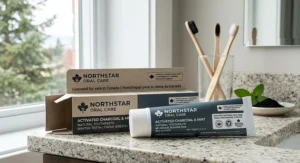
Not every charcoal toothpaste brand is playing the same game. Mass-market names like Colgate and Arm & Hammer treat charcoal as one ingredient bolted onto an established, well-studied formula — the advantage is consistency and, in Colgate’s case, fluoride inclusion most natural competitors skip. Natural-focused brands like Tom’s of Maine and Burt’s Bees occupy a middle lane, chasing “clean” ingredient credentials while still including fluoride, which arguably makes them the smartest natural-aisle picks on this entire list.
Then there’s the specialty tier — Himalaya’s Ayurvedic-rooted formulation and Davids’ pharmaceutical-grade, sustainability-focused approach — where the brand story is inseparable from the product itself. What most buyers overlook when brand-shopping is that “top brand” status often reflects marketing reach and shelf presence rather than superior RDA performance or clinical backing; a smaller specialty brand with transparent particle-grade information can genuinely outperform a household name on the safety metrics that matter most.
Charcoal Toothpaste Multipack on Amazon.ca: Worth Buying in Bulk?
Multipacks dominate the charcoal toothpaste category on amazon.ca, and the math usually favours them — Tom’s of Maine Activated Charcoal Whitening and Burt’s Bees Charcoal with Fluoride are both sold predominantly as three-packs, which typically brings the per-tube cost down noticeably compared with buying single tubes repeatedly.
The catch is commitment risk. If you’re trying charcoal toothpaste for the first time and aren’t certain the flavour, texture, or your own sensitivity response will work out, a multipack locks you into three tubes of a product you might use twice weekly at most. Here’s what to weigh: for fluoride-inclusive brands you already know you tolerate, or for households sharing one toothpaste across multiple people, a multipack is straightforwardly better value. For a first-time trial of a fluoride-free or specialty formula, a single tube — even at a slightly higher per-use cost — is the more sensible starting point.
Surface Stain Removal: What Charcoal Can and Can’t Do
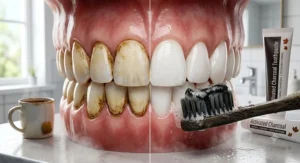
Surface stain removal is genuinely charcoal’s strongest, most defensible claim, and it’s worth separating from the whitening hype entirely. Extrinsic stains — the yellowish or brownish film left by coffee, tea, red wine, and tobacco — sit on the enamel surface and respond reasonably well to mechanical abrasion, which is exactly what charcoal toothpaste delivers.
What charcoal cannot do, despite what plenty of before-and-after social posts imply, is touch intrinsic staining — discolouration that originates inside the tooth structure from genetics, medication history, or aging. No amount of surface scrubbing reaches that layer; only professional peroxide-based bleaching does, and dental commentary on this point is remarkably consistent across every source reviewed for this article. If your goal is genuinely whiter teeth rather than just cleaner-looking surface enamel, understand which category your discolouration falls into before spending money on any charcoal product, premium or otherwise.
✨ Don’t Miss These Exclusive Deals!
🔍 Take your oral care routine to the next level with these carefully selected charcoal toothpaste options. Click through to check current pricing and availability on amazon.ca. A little research now means a smarter, safer choice for your smile.
Features That Actually Matter (And Those That Don’t)
Particle grade and fluoride inclusion matter enormously; flashy claims like “detoxifies” or “purifies” your mouth matter close to zero, since no source reviewed here — including CBC’s Marketplace investigation into activated charcoal oral care claims — found credible evidence supporting detox-style marketing language for toothpaste. That investigation specifically found the Canadian Dental Association had not approved any activated charcoal oral care product at the time of its reporting, a status that, based on available CDA seal listings, remains true today.
Colour intensity, by contrast, is a feature to actively distrust rather than chase — the blackest pastes on shelves are frequently the most concentrated and coarsest, not the most effective. Packaging sustainability, like the recyclable metal tube behind Davids Premium Charcoal + Peppermint, is a genuinely nice-to-have but shouldn’t outrank fluoride content or particle grade in your decision-making if cavity protection matters to your household.
Safety, Regulations & Compliance Guide
In Canada, toothpaste is regulated as either a cosmetic or a natural health product depending on its formulation and claims, and Health Canada maintains an ingredients database for oral health products that consumers can consult when researching active ingredients like fluoride or botanical additives. Fluoride-containing toothpaste sold in Canada must meet specific labelling and concentration requirements, which is one more reason fluoride-inclusive charcoal options carry an extra layer of regulatory oversight that fluoride-free “natural” formulas simply don’t.
The Canadian Dental Association’s position, consistent with the American Dental Association’s 2017 literature review, is that current evidence is insufficient to substantiate either the safety or efficacy claims routinely made by charcoal dentifrice marketing. That’s not a ban — charcoal toothpaste remains legally sold across Canada — but it is a meaningful gap for anyone assuming “available on amazon.ca” equals “dentist-endorsed.”
Long-Term Cost & Maintenance
Run the numbers over a year and the picture shifts. A budget tube like Colgate Total Whitening + Charcoal, used daily, costs less per year than a premium option like Davids Premium Charcoal + Peppermint used at the same frequency — but if you’re following the recommended two-to-three-times-weekly charcoal usage pattern and alternating with a standard fluoride toothpaste the rest of the week, that premium tube stretches much further than its price tag suggests, since you’re only burning through it a fraction as fast.
Factor in the real long-term cost too: enamel wear from over-aggressive daily use isn’t reversible, and dental treatment for resulting sensitivity or erosion dwarfs anything you’d save on toothpaste. Viewed that way, spending slightly more on a finer-particle, lower-risk formula and using it sparingly is the more defensible long-term financial decision, not just the safer one.
Frequently Asked Questions
❓ Is charcoal toothpaste bad for your teeth?
❓ Does charcoal toothpaste really whiten teeth?
❓ Can I use charcoal toothpaste every day?
❓ Is charcoal toothpaste approved by the Canadian Dental Association?
❓ Which charcoal toothpaste is safest for sensitive teeth?
Conclusion
Charcoal toothpaste isn’t a scam, exactly — it’s a mechanical stain remover wearing marketing language borrowed from skincare’s “detox” era. Used thoughtfully, in moderation, and paired with a fluoride source somewhere in your routine, products like Tom’s of Maine Activated Charcoal Whitening or Davids Premium Charcoal + Peppermint can genuinely brighten surface staining without wrecking your enamel. Used daily, aggressively, and without regard to particle grade or RDA, the same category of product becomes exactly what dentists have spent years warning about.
The seven options covered here span the realistic range Canadian shoppers actually encounter on amazon.ca — from Colgate Total Whitening + Charcoal‘s fluoride-backed familiarity to Himalaya Botanique Whitening Charcoal‘s herbal budget appeal to Davids Premium Charcoal + Peppermint‘s pharmaceutical-grade caution. None of them carries a CDA Seal, and none of them replaces a genuinely low-RDA, fluoride-forward daily toothpaste. Treat charcoal as the occasional supplement it actually is, not the whitening miracle the algorithm keeps promising you, and you’ll get the upside without the enamel regret.
Recommended for You
- Essential Oil Toothpaste: 7 Top Picks for Canadians in 2026
- Clove Essential Oil Toothpaste for Sensitive Teeth: 7 Picks for 2026
- Tea Tree Oil Toothpaste: 7 Best Picks for Healthier Gums (2026)
Disclaimer: This article contains affiliate links. As an Amazon Associate, I earn from qualifying purchases. If you purchase products through these links, we may earn a small commission at no additional cost to you.
✨ Found this helpful? Share it with your friends! 💬🤗
