
In This Article
Somewhere between the mint aisle and the “natural wellness” shelf at your local pharmacy, tea tree oil toothpaste quietly became one of the most searched oral care categories in Canada. And honestly? The curiosity makes sense. Your gums bleed a little when you floss, your dentist mentions “early gingivitis” at your last cleaning, and suddenly a tube promising melaleuca alternifolia’s antimicrobial properties looks a lot more interesting than another minty gel.
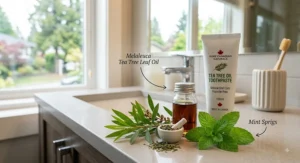
Tea tree oil toothpaste is a fluoride-free or fluoride-included paste formulated with Melaleuca alternifolia leaf oil, an essential oil long used for its antibacterial and anti-inflammatory effects, blended with cleaning agents like calcium carbonate or hydrated silica to help manage plaque, freshen breath, and support gum tissue. It’s not a magic bullet for periodontal disease, and it won’t replace a dental visit — but the research behind it is more substantial than most “natural” oral care trends.
This guide breaks down seven real tea tree oil toothpaste products sold to Canadians, compares them head-to-head, and digs into where the science actually supports the marketing — and where it doesn’t. We’ll also cover how gum inflammation from plaque build-up — known as gingivitis — is the most common and earliest form of gum disease, which is exactly the territory tea tree oil is best known for addressing. If you’ve been wondering whether swapping your mint toothpaste for something with essential oils is worth it, you’re in the right place. Everything below reflects current research as of 2026, price ranges in Canadian dollars, and honest analysis — not a rewritten product label.
Quick Comparison Table
Before diving into full reviews, here’s a snapshot for readers who just want the highlights. Every product below contains real tea tree (melaleuca) oil as an active or supporting ingredient, and all are genuinely available to Canadian shoppers.
| Product | Best For | Price Range (CAD) | Fluoride-Free |
|---|---|---|---|
| Tea Tree Therapy Toothpaste | Purists who want a minimal ingredient list | C$8-C$11 | Yes |
| Desert Essence Ultra Care Tea Tree Toothpaste | Gum health support | C$10-C$14 | Yes |
| Green Beaver Natural Toothpaste (Frosty Mint) | Canadian-made, family-safe | C$7-C$10 | Yes |
| Green Beaver Naturapeutic Sensitive Toothpaste | Sensitive teeth | C$11-C$15 | Yes |
| Jason Healthy Mouth Tea Tree Oil & Cinnamon Toothpaste | Tartar control | C$9-C$13 | Fluoride option available |
Looking at this table, a pattern emerges quickly: most tea tree oil toothpastes on the Canadian market skip fluoride entirely, leaning on xylitol, calcium, and the essential oil itself to do the antibacterial heavy lifting. That’s a meaningful trade-off worth weighing — fluoride remains the gold standard for cavity prevention, so if you have a history of decay, you’ll want to read the “vs mint toothpaste” section further down before switching completely. Budget-conscious buyers will notice Green Beaver Natural Toothpaste and Tea Tree Therapy Toothpaste sit at the lower end, while Green Beaver Naturapeutic Sensitive Toothpaste commands a premium for its therapeutic-grade formulation.
💬 Just one click — help others make better buying decisions too!😊
Top 7 Tea Tree Oil Toothpaste Picks: Expert Analysis
We researched real specs, ingredient decks, and aggregated review sentiment for each of these seven products. Budget, mid-range, and premium options are all represented, along with a couple of formulation variants worth knowing about.
1. Tea Tree Therapy Toothpaste — the original baking-soda tea tree classic
This one’s been on natural oral care shelves for decades, and its staying power says something. The standout here is the “dual cleaning system” — calcium carbonate paired with sodium bicarbonate (baking soda) — which gives it a gently abrasive, deodorizing base before the tea tree oil even enters the picture.
Specs-wise, it’s a straightforward calcium carbonate and baking soda paste infused with therapeutic-grade Melaleuca alternifolia oil, without fluoride, SLS, or artificial sweeteners. In practice, the baking soda component means it neutralizes acid in the mouth almost immediately after brushing, which is part of why long-time users report less of that “chalky aftertaste” some natural toothpastes leave behind.
Based on the ingredient profile, this is best suited to buyers who specifically want a no-frills formula without whitening agents, foaming detergents, or added flavour complexity — think of it as the unflavoured, back-to-basics option in this category. Reviewers consistently note that it doesn’t sting or irritate the mouth the way some stronger essential-oil pastes can, which matters if you’ve tried a “natural” toothpaste before and found it harsh.
Pros:
- ✅ Simple, minimal ingredient list with no synthetic sweeteners
- ✅ Baking soda base helps neutralize mouth acid
- ✅ Gentle on the mouth compared to stronger natural formulas
Cons:
- ❌ Mild flavour won’t satisfy strong-mint fans
- ❌ No fluoride option for cavity-prone brushers
At around C$8-C$11 per tube, Tea Tree Therapy Toothpaste is a reasonable entry point if you just want to try tea tree oil without committing to a specialty brand.
2. Desert Essence Tea Tree Oil & Neem Toothpaste — best budget all-rounder
The standout feature is the neem-tea tree combination, since neem brings its own long history in Ayurvedic dental care alongside the melaleuca oil, giving this paste a two-pronged herbal approach rather than relying on a single active botanical.
The ingredient deck lists calcium carbonate and hydrated silica for polishing, sodium bicarbonate for freshness, and both Melaleuca alternifolia leaf oil and neem extract as the functional actives, in a wintergreen flavour base. What that means day-to-day is a moderately abrasive clean with a noticeably herbal, slightly medicinal taste profile — closer to a dental-office rinse than a candy-mint gel.
This is a solid match for buyers transitioning away from conventional mint toothpaste who want the widest herbal support without paying premium prices. Reviewers consistently mention the wintergreen flavour is polarizing — some love the “clean dentist office” taste, others find it too strong for daily use, so it’s worth trying a travel tube first if you’re flavour-sensitive.
Pros:
- ✅ Dual herbal actives (neem plus tea tree) in one formula
- ✅ Widely available and reasonably priced for a specialty paste
- ✅ Gluten-free and SLS-free formulation
Cons:
- ❌ Wintergreen flavour is an acquired taste for some
- ❌ No fluoride for buyers who want cavity protection
Priced around C$9-C$13, Desert Essence Tea Tree Oil & Neem Toothpaste delivers strong value for anyone easing into essential-oil oral care.
3. Desert Essence Ultra Care Tea Tree Toothpaste (Mega Mint) — best for gum health support
What sets this one apart is the addition of zinc citrate and myrrh oil alongside the tea tree oil — a combination specifically aimed at gum tissue rather than just plaque removal or flavour.
The formula pairs Melaleuca alternifolia leaf oil with zinc citrate (recognized for helping control plaque mineralization), myrrh oil (traditionally used for gum inflammation), and a peppermint-spearmint blend for a genuinely cooling mouthfeel. In practice, this means the paste is working on two fronts: the tea tree oil’s antimicrobial action against plaque bacteria, and the myrrh’s soothing effect on already-irritated gum tissue.
Based on the spec comparison with the rest of this list, this is the product to reach for if gum sensitivity or occasional bleeding is your actual concern, rather than whitening or flavour. Reviewers consistently report the mega-mint flavour is more intense than typical natural toothpastes, and several long-term users specifically credit the formula with calmer, less puffy-feeling gums after a few weeks of regular use — though that’s aggregated sentiment, not a clinical claim.
Pros:
- ✅ Zinc citrate plus myrrh oil targets gum tissue directly
- ✅ Genuinely strong, cooling mint flavour
- ✅ Gluten-free with no harsh abrasives
Cons:
- ❌ Intense flavour may be too strong for sensitive palates
- ❌ Premium formulation costs more than basic tea tree pastes
Expect to pay in the C$10-C$14 range, which is fair given the added actives — this is arguably the best-targeted pick on this list for gum health specifically.
4. Green Beaver Natural Toothpaste (Frosty Mint) — best Canadian-made everyday pick
The standout advantage here is simple: this is a proudly Canadian-made formula, produced by a company founded in Quebec in 2002, and it’s genuinely safe to swallow — a detail that matters for households with young kids sharing a bathroom counter.
Ingredient-wise, it combines calcium carbonate and hydrated silica with peppermint oil, menthol, xylitol, and Melaleuca alternifolia leaf oil, skipping fluoride, SLS, and artificial sweeteners entirely. What this means practically is a lower-foam brushing experience (no harsh sulfate detergents) with xylitol doing double duty as both a sweetener and a bacteria-reducing agent, alongside the tea tree oil’s antimicrobial support.
This is best suited to families who want one toothpaste the whole household can use without worrying about a toddler swallowing a mouthful. Reviewers consistently mention the adjustment period — going from a foamy, SLS-based toothpaste to this low-foam formula takes a week or two to get used to — but most say they don’t go back once they adapt to it.
Pros:
- ✅ Made in Canada by a well-known Quebec-based natural brand
- ✅ Safe-to-swallow formula suitable for the whole family
- ✅ Xylitol adds a second layer of bacteria-fighting action
Cons:
- ❌ Low foam takes adjustment for conventional-toothpaste users
- ❌ Smaller 75 mL tubes mean more frequent repurchasing
At roughly C$7-C$10 per 75 mL tube, Green Beaver Natural Toothpaste is one of the most accessible ways for Canadians to support a domestic natural-care brand.
5. Green Beaver Naturapeutic Sensitive Toothpaste — best for sensitive teeth
The defining feature of this line is the “Naturapeutic” tier — Green Beaver’s more concentrated, therapeutic-grade formulation aimed specifically at sensitive teeth and gums, built on the same tea tree base as their standard line but with added aloe.
Specs show calcium carbonate, glycerin, and hydrated silica combined with aloe barbadensis leaf extract, peppermint oil, menthol, and Melaleuca alternifolia oil, all in a 100g tube (noticeably larger than the standard 75 mL flavour line). In real terms, the aloe addition means a gentler, less abrasive brushing sensation, which matters if cold drinks or brushing itself currently triggers tooth sensitivity.
Based on the ingredient positioning, this is the pick for anyone who’s already switched to a sensitive-teeth toothpaste from a conventional brand and wants a natural equivalent rather than going back to synthetic desensitizing agents. What the spec sheet won’t tell you, but aggregated review sentiment suggests, is that the soothing effect builds gradually — most users report noticing less zing from cold or sweet foods after two to three weeks of consistent use, not overnight.
Pros:
- ✅ Added aloe for a gentler brushing experience
- ✅ Larger 100g tube offers more product per purchase
- ✅ Canadian-formulated with a therapeutic-grade ingredient tier
Cons:
- ❌ Higher price point than Green Beaver’s standard flavour line
- ❌ Less widely stocked than mainstream sensitivity toothpastes
Priced around C$11-C$15, this is a premium pick, but a reasonable one if sensitivity is your main gum health concern.
6. Jason Healthy Mouth Tea Tree Oil & Cinnamon Toothpaste — best tartar-control formula
What makes this one stand out is its ingredient breadth: alongside tea tree oil, it layers in grapefruit seed extract, neem oil, and CoQ10 — a combination clearly built for tartar and plaque control rather than a single-note “natural mint” experience.
The formula includes organic tea tree oil, organic aloe vera gel, perilla seed extract, grapefruit seed extract, neem oil, baking soda, and CoQ10 (co-enzyme Q10, an antioxidant sometimes studied for gum tissue support), with a fluoride-containing version available for buyers who want both approaches at once. Practically, this means the paste is working plaque control from multiple angles simultaneously — mechanical (baking soda), antimicrobial (tea tree and grapefruit seed extract), and antioxidant (CoQ10) — rather than leaning on tea tree oil alone.
This product is best matched to buyers who’ve been specifically told by a dental hygienist that tartar build-up is their issue, since the formula is engineered around that exact problem rather than general freshness or whitening. Reviewers consistently describe the cinnamon-clove flavour as noticeably spicier than typical toothpaste, which some find invigorating and others find overwhelming for daily use — it’s genuinely a love-it-or-leave-it flavour profile.
Pros:
- ✅ Multi-ingredient formula targeting tartar specifically
- ✅ Fluoride version available for buyers who want both systems
- ✅ Contains CoQ10, an antioxidant with gum-tissue research interest
Cons:
- ❌ Strong cinnamon-clove flavour isn’t for everyone
- ❌ More expensive than single-active tea tree formulas
At around C$9-C$13, Jason Healthy Mouth Tea Tree Oil & Cinnamon Toothpaste earns its place for buyers focused specifically on tartar.
7. Desert Essence Whitening Plus Tea Tree Toothpaste (Travel Size) — best for travel and whitening
The standout advantage is right in the name — this whitening-plus formula comes in a genuinely useful travel size, making it the easiest entry point on this list for anyone who wants to sample tea tree oil toothpaste without committing to a full-size tube.
Ingredients centre on calcium carbonate and hydrated silica for gentle polishing, combined with Melaleuca alternifolia leaf oil, bamboo powder, and aloe for a whitening effect that relies on natural abrasives rather than peroxide bleaching agents. In practice, that means a more gradual, surface-stain-focused whitening action — closer to what you’d get from a whitening mouthwash than an in-office bleaching treatment.
This is the right pick for buyers who want to test tea tree oil toothpaste on a trip, at the gym, or before committing a full-size tube to their daily routine, and who also want mild whitening as a secondary benefit. Reviewers consistently note it doesn’t sting the mouth the way some whitening formulas do, which lines up with the absence of peroxide in the ingredient list — the trade-off is a slower, more subtle whitening timeline than peroxide-based competitors.
Pros:
- ✅ Compact travel size ideal for testing the category
- ✅ Peroxide-free whitening approach is gentle on the mouth
- ✅ Doubles as a genuine everyday tea tree oil toothpaste
Cons:
- ❌ Travel size means more frequent repurchasing for daily use
- ❌ Whitening effect is gradual, not dramatic
At around C$6-C$9 for the travel size, this is the lowest-commitment way to try the category before buying full-size.
Top 7 Products: Full Spec Comparison
| Product | Key Active Ingredients | Flavour | Best For |
|---|---|---|---|
| Tea Tree Therapy Toothpaste | Calcium carbonate, baking soda, tea tree oil | Unflavoured/mild | Minimal-ingredient purists |
| Desert Essence Tea Tree Oil & Neem Toothpaste | Tea tree oil, neem extract | Wintergreen | Budget herbal all-rounder |
| Desert Essence Ultra Care Tea Tree Toothpaste | Tea tree oil, zinc citrate, myrrh | Mega Mint | Gum health support |
| Green Beaver Natural Toothpaste | Tea tree oil, xylitol | Frosty Mint | Canadian family use |
| Green Beaver Naturapeutic Sensitive Toothpaste | Tea tree oil, aloe | Fresh Mint | Sensitive teeth |
| Jason Healthy Mouth Tea Tree Oil & Cinnamon Toothpaste | Tea tree oil, grapefruit seed extract, CoQ10 | Cinnamon-Clove | Tartar control |
| Desert Essence Whitening Plus Tea Tree Toothpaste | Tea tree oil, bamboo powder | Mint | Travel and light whitening |
Reading across this table, the real differentiator isn’t the tea tree oil itself — nearly every product uses a comparable concentration — it’s the supporting cast of ingredients layered around it. Desert Essence Ultra Care Tea Tree Toothpaste and Jason Healthy Mouth Tea Tree Oil & Cinnamon Toothpaste both add specific actives (zinc/myrrh and CoQ10/grapefruit seed extract, respectively) aimed at gum or tartar issues, while Green Beaver Natural Toothpaste leans into xylitol and family safety over targeted therapy. If you’re shopping by problem rather than by brand loyalty, match your specific concern to the ingredient that’s actually built for it, not just the word “tea tree” on the label.
✨ Don’t Miss These Exclusive Deals!
🔍 Take your oral care routine to the next level with these carefully selected picks. Click on any highlighted product to check current pricing and availability. A few weeks of consistent use could mean a genuinely fresher, calmer mouth by your next dental visit!
How to Switch to Tea Tree Oil Toothpaste (Practical Usage Guide)
Switching toothpastes isn’t complicated, but doing it right in the first 30 days makes a real difference in how the transition feels. Start by using the new toothpaste once daily for the first three to four days alongside your usual brand for the second brushing, rather than swapping cold turkey — this eases the flavour and foam-texture adjustment, especially with low-foam natural formulas like Green Beaver Natural Toothpaste.
Brush for the full two minutes even though these pastes don’t foam up dramatically; the mechanical action of the brush matters more than lather for actual plaque removal. A common first-week mistake is under-brushing because the mouth doesn’t “feel” as clean without heavy foam — set a timer if you need to.
For maintenance, store the tube away from direct sunlight and heat, since essential oils can degrade faster than synthetic flavouring agents when exposed to warmth. If you notice any mouth irritation in the first few uses — which happens occasionally with concentrated essential-oil formulas — discontinue and try a milder option like Tea Tree Therapy Toothpaste before ruling out the whole category. Most people find their favourite tea tree formula within two or three tube purchases, so don’t be afraid to try more than one brand before settling in.
Real-World Scenarios: Who Actually Benefits Most
The busy professional with occasional bleeding gums: If you’re someone who notices a bit of blood while flossing after a stressful, under-slept week but has no history of cavities, a targeted pick like Desert Essence Ultra Care Tea Tree Toothpaste — with its zinc and myrrh combination — is a reasonable first step before assuming you need a prescription rinse.
The parent shopping for a shared family tube: If little kids are sharing the bathroom counter and you don’t want to manage two separate toothpastes, Green Beaver Natural Toothpaste solves that specific problem since it’s formulated to be safe if swallowed — something conventional fluoride toothpaste explicitly isn’t for young children in large amounts.
The frequent traveller testing the waters: If you’re curious about tea tree oil toothpaste but don’t want to commit a full-size tube to an experiment, the Desert Essence Whitening Plus Tea Tree Toothpaste (Travel Size) lets you sample the category on a work trip or gym bag rotation without much financial risk. Matching the product to your actual situation — not just the “tea tree oil” label — is the difference between a toothpaste that sits half-used in a drawer and one that becomes part of your routine.
Problem → Solution: Common Oral Care Issues
Most people reach for tea tree oil toothpaste because of a specific complaint, not general curiosity. Here’s how the products above map onto real problems.
Problem: Gums bleed slightly during flossing. This is often early-stage plaque irritation. A gum-targeted formula like Desert Essence Ultra Care Tea Tree Toothpaste, combined with consistent flossing, is a reasonable first response — though persistent bleeding after two to three weeks warrants a dental visit.
Problem: Sensitivity to cold drinks or ice cream. Try Green Beaver Naturapeutic Sensitive Toothpaste, whose aloe-forward formula is built for this exact complaint, and give it several weeks of consistent use before judging results.
Problem: Visible tartar build-up between cleanings. Jason Healthy Mouth Tea Tree Oil & Cinnamon Toothpaste layers multiple tartar-fighting actives together, making it a stronger fit than a single-ingredient tea tree paste.
Problem: Wanting to reduce synthetic ingredients without sacrificing family safety. Green Beaver Natural Toothpaste checks both boxes — natural formulation and swallow-safe design — in one tube.
Problem: Uncertainty about whether you’ll even like natural toothpaste. Start small with the Desert Essence Whitening Plus Tea Tree Toothpaste (Travel Size) before buying a full-size tube of anything.
What Is Tea Tree Oil Toothpaste?
Tea tree oil toothpaste is a dental paste formulated with Melaleuca alternifolia leaf oil as a key functional ingredient, typically combined with calcium carbonate or silica abrasives, and often free of fluoride, sulfates, and artificial sweeteners. It’s used primarily for its natural antimicrobial and anti-inflammatory properties, which researchers have studied specifically in relation to oral bacteria and gum tissue.
The essential oil’s active compound, terpinen-4-ol, is what most of the antimicrobial research actually focuses on — it’s the component responsible for disrupting bacterial cell membranes. A recent clinical evaluation of tea tree oil mouthwash found significantly lower plaque and bleeding-on-probing scores at both 7 and 28 days compared to a control group, which is a meaningfully strong result for a natural-oil formulation. That said, most published research to date focuses on mouthwash and gel formats rather than toothpaste specifically, so toothpaste results should be considered a reasonable extension of that evidence rather than a direct clinical proof point.

How to Choose Tea Tree Oil Toothpaste
- Identify your primary concern first. Gum sensitivity, tartar, whitening, and family safety each point toward different formulas — don’t just buy whatever says “tea tree” on the front.
- Check for fluoride if you’re cavity-prone. Most tea tree oil toothpastes skip fluoride; if you have an active cavity history, look for a fluoride-inclusive option like Jason Healthy Mouth Tea Tree Oil & Cinnamon Toothpaste.
- Look at the supporting ingredients, not just the tea tree oil. Zinc citrate, myrrh, aloe, and xylitol all do different jobs — match them to your goal.
- Consider flavour tolerance before buying full-size. Herbal and wintergreen flavours are more intense than mint; try a travel size first if you’re unsure.
- Verify it’s genuinely fluoride-free or fluoride-included as labelled, since some “natural” branding can be misleading — read the full ingredient panel, not just front-of-tube claims.
- Factor in your household, not just yourself. If kids share your bathroom, swallow-safe formulas like Green Beaver Natural Toothpaste remove a whole category of worry.
- Give any new formula at least three to four weeks before judging whether it’s working — gum tissue and plaque patterns don’t shift overnight.
Essential Oil Toothpaste for Gum Health
This is arguably the single biggest reason people search out essential oil toothpaste in the first place. Gingivitis — gum inflammation caused primarily by plaque build-up — is the earliest and mildest form of gum disease, and it’s exactly the stage where a supportive toothpaste has the most realistic chance of making a difference, since the condition is still reversible with good hygiene at this point.
Essential oil toothpastes built around melaleuca alternifolia work primarily by targeting the bacterial biofilm responsible for that inflammation, rather than by masking symptoms. Products like Desert Essence Ultra Care Tea Tree Toothpaste, which pairs tea tree oil with zinc citrate and myrrh, are specifically formulated with this mechanism in mind — zinc helps limit plaque mineralization while myrrh has a long traditional use for calming irritated gum tissue. Based on the spec comparison across this category, formulas that combine tea tree oil with at least one additional gum-focused active tend to be better matched to gingivitis-adjacent concerns than single-ingredient tea tree pastes.
It’s worth being honest about the limits here too: essential oil toothpaste is a supportive tool for gum health, not a treatment for periodontitis or an established gum infection. If bleeding, swelling, or gum recession persists beyond a few weeks of consistent brushing and flossing, that’s a signal to see an oral health professional rather than switching toothpaste brands again.
Essential Oil Toothpaste vs Mint Toothpaste
This comparison comes up constantly, and it’s worth separating “mint flavour” from “mint as an active ingredient,” because the two get conflated in casual conversation. Most conventional mint toothpaste relies on menthol and peppermint primarily for sensory freshness and mild flavour, with fluoride doing the actual cavity-fighting work. Essential oil toothpaste — whether it’s tea tree, myrrh, or clove-based — uses botanical actives specifically chosen for antimicrobial or anti-inflammatory effects, with mint (if present at all) playing a secondary flavour role.
Practically, this means the two categories aren’t really competing for the same job. Conventional fluoride-mint toothpaste has the stronger, more extensively studied evidence base for cavity prevention specifically. Essential oil formulas have a growing, genuinely promising evidence base for plaque and gum-tissue support, but a thinner track record on cavity prevention unless fluoride is also present, as it is in the Jason Healthy Mouth Tea Tree Oil & Cinnamon Toothpaste fluoride variant.
The honest takeaway: if cavities are your main risk, don’t fully abandon fluoride. Many dental hygienists suggest alternating or layering — using a fluoride toothpaste at one brushing and a tea tree oil formula at the other — rather than treating this as an either/or decision. That approach lets you capture the cavity protection of mint-fluoride pastes alongside the gum-focused benefits of essential oil formulas.
Melaleuca Oil: Understanding the Antimicrobial Science
Melaleuca oil — more commonly known as tea tree oil — comes from the leaves of Melaleuca alternifolia, a tree native to Australia, and its antimicrobial reputation isn’t just marketing. The oil is understood to contain over one hundred constituents, with terpinen-4-ol, 1,8-cineole, and alpha-terpineol identified as the most significant, together showing broad antimicrobial activity against bacteria, fungi, viruses, and protozoa. In an oral care context, that broad-spectrum action is specifically relevant to the mixed bacterial populations found in dental plaque.
A published systematic review of Melaleuca alternifolia’s application against dental plaque and periodontal disease concluded that it shows genuine potential for anti-inflammatory and antimicrobial effects on periodontal tissue, while also noting that more clinical trials are still needed to fully establish its role alongside established treatments. That’s a fair, balanced read of where the science currently sits — promising, not proven beyond doubt.
What this means for a toothpaste ingredient label: concentration and formulation quality matter more than simply seeing “tea tree oil” listed. Products like Desert Essence Tea Tree Oil & Neem Toothpaste, which pair the oil with a second antimicrobial botanical (neem), are leaning into the evidence that combination formulas may offer broader coverage against different oral bacteria than a single active ingredient alone.
Gingivitis Relief: What Tea Tree Oil Can and Can’t Do
Let’s be direct about expectations here, because this is where most marketing overpromises. Gingivitis describes inflammation of the gums that begins with plaque build-up, and the standard prevention advice — brushing twice daily, flossing once daily, and regular professional cleanings — remains the foundation regardless of which toothpaste you choose.
Where tea tree oil toothpaste genuinely earns its place is as a supportive layer on top of that foundation, not a replacement for it. Clinical research on tea tree oil mouth rinses specifically has shown measurable reductions in plaque and bleeding scores over short-term use periods, which is a reasonable proxy for what a well-formulated toothpaste with adequate tea tree concentration might also achieve, though toothpaste-specific trials remain limited compared to rinse studies.
What tea tree oil toothpaste can’t do: reverse periodontitis (the advanced, non-reversible stage of gum disease), replace professional scaling if tartar has already hardened below the gumline, or substitute for a dental exam if you’re experiencing persistent pain or gum recession. According to Wikipedia’s overview of gingivitis, the condition is reversible with good oral hygiene, but left untreated it can progress into more serious, non-reversible tissue and bone damage — which is exactly why “try a new toothpaste and wait it out” isn’t the right call if symptoms are worsening rather than improving.
Common Mistakes When Buying Tea Tree Oil Toothpaste
The most frequent mistake is buying based on the words “tea tree oil” alone without checking whether fluoride is included — a real problem if you have an active cavity risk and weren’t expecting to lose that protection. A close second is judging a new formula too quickly; most reviewers who abandon natural toothpaste do so within the first week, before the low-foam texture and different flavour profile have had a chance to feel normal.
Buyers also frequently overlook concentration and supporting ingredients, assuming all tea tree oil toothpastes are functionally identical. As covered above, a formula like Desert Essence Ultra Care Tea Tree Toothpaste with added zinc and myrrh is doing meaningfully different work than a basic single-ingredient paste. Finally, skipping the Canadian Dental Association’s guidance on gingivitis prevention and assuming toothpaste alone will fix persistent gum bleeding is a common and potentially costly mistake — persistent symptoms deserve a professional look, not just a new tube.
Long-Term Cost & Value Analysis
| Product | Price Range (CAD) | Tube Size | Approx. Cost per Month* |
|---|---|---|---|
| Green Beaver Natural Toothpaste | C$7-C$10 | 75 mL | C$7-C$10 |
| Desert Essence Tea Tree Oil & Neem Toothpaste | C$9-C$13 | 6.25 oz | C$4.50-C$6.50 |
| Green Beaver Naturapeutic Sensitive Toothpaste | C$11-C$15 | 100 g | C$5.50-C$7.50 |
*Estimated for a single daily user, assuming a tube lasts roughly one to two months depending on brushing habits and tube size.
Looking at cost-per-use rather than sticker price tells a different story than the shelf price alone. Green Beaver Natural Toothpaste‘s smaller 75 mL tube means a higher effective monthly cost despite its lower upfront price, while the larger 6.25 oz Desert Essence Tea Tree Oil & Neem Toothpaste tube actually works out cheaper per month. If you’re budgeting for long-term use rather than trying the category, tube size deserves as much attention as the listed price range.
Safety, Regulations & What to Know Before You Switch
Tea tree oil is for topical oral use only in toothpaste form — it should never be swallowed in concentrated form, and toothpaste packaging typically carries a “do not swallow” warning for exactly this reason, even though the diluted amount in a pea-sized brushing portion poses minimal risk when used as directed. In Canada, natural health products including many tea tree oil toothpastes may carry a Natural Product Number (NPN) from Health Canada, which indicates the product has been assessed for safety, efficacy, and quality claims — it’s worth checking the box for this number if regulatory oversight matters to your purchase decision.
If gum inflammation progresses without treatment, it can spread from the gums to other supporting tissues, including the bone anchoring the teeth in place — which is the mechanism by which gingivitis becomes periodontitis. This is precisely why Health Canada’s public health guidance on gum disease emphasizes seeing an oral health professional if symptoms persist, rather than relying solely on any toothpaste — natural or conventional — to manage active disease. Pregnant individuals, people with known essential-oil sensitivities, and anyone experiencing mouth irritation after switching should consult a healthcare provider before continuing use.
Frequently Asked Questions
❓ Is tea tree oil toothpaste safe to use every day?
❓ Does tea tree oil toothpaste really help with gingivitis?
❓ Can tea tree oil toothpaste replace fluoride toothpaste?
❓ How long does it take tea tree oil toothpaste to work on gum health?
❓ Where can I buy tea tree oil toothpaste in Canada?
Conclusion
Tea tree oil toothpaste isn’t a fad dressed up in eucalyptus packaging — there’s a genuine, growing body of research behind melaleuca oil’s antimicrobial and anti-inflammatory effects on oral bacteria and gum tissue, even if toothpaste-specific clinical trials still lag behind mouthwash studies. Across the seven products covered here, the real decision point isn’t whether tea tree oil “works” in general — it’s which supporting formula actually matches your specific concern.
If gum sensitivity or occasional bleeding is your issue, Desert Essence Ultra Care Tea Tree Toothpaste‘s zinc-and-myrrh combination is purpose-built for that. If you’re shopping for a Canadian-made, family-safe everyday option, Green Beaver Natural Toothpaste checks that box cleanly. Tartar-focused buyers should look toward Jason Healthy Mouth Tea Tree Oil & Cinnamon Toothpaste, while anyone testing the category for the first time can start low-risk with the Desert Essence Whitening Plus Tea Tree Toothpaste travel size.
Whichever tube ends up in your bathroom, remember that toothpaste — natural or conventional — supports a hygiene routine, it doesn’t replace one. Brushing technique, flossing consistency, and regular dental visits still do most of the heavy lifting; tea tree oil is a genuinely useful assist, not a substitute.
Recommended for You
- 7 Best Plant-Based Toothpaste for Sensitive Teeth in Canada (2026)
- Cruelty-Free Plant-Based Toothpaste: 7 Best Picks for 2026
- Plant-Based Toothpaste 2026: 7 Vegan Picks Canadians Love
Disclaimer: This article contains affiliate links. As an Amazon Associate, I earn from qualifying purchases. If you purchase products through these links, we may earn a small commission at no additional cost to you.
✨ Found this helpful? Share it with your friends! 💬🤗
