In This Article
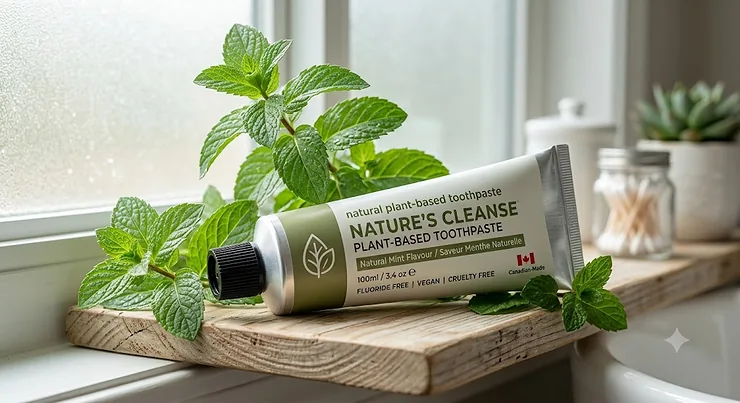
Squeeze a tube of conventional toothpaste and you’re probably not thinking about where the glycerin came from or whether a bee had anything to do with your minty foam. Most of us don’t, until we start reading labels. Plant-based toothpaste is oral care formulated primarily from botanical, mineral, and plant-derived ingredients instead of animal-sourced fats, gelatin, or insect byproducts like propolis — the idea being a cleaner ingredient list without sacrificing the actual job of cleaning your teeth. It’s a small swap with an outsized ripple effect: fewer synthetic dyes near your gums, no wondering if your “natural” toothpaste is secretly not vegan, and often a shorter, more transparent ingredient panel.
Here’s the thing nobody tells you upfront: not every product marketed as “natural” is automatically vegan, and not every vegan toothpaste is fluoride-free (or should be — dentists still have opinions on that). Sorting through the marketing noise takes real digging, which is exactly what this guide does. We pulled real products sold through amazon.ca, checked their actual ingredient decks, and cross-referenced aggregated review sentiment so you’re not left guessing. Health Canada also has specific rules about how oral care products get classified and labelled, and Health Canada’s cosmetic safety framework is worth understanding before you assume every glossy claim on a tube is regulated the same way.
Below you’ll find seven real, current plant-based toothpaste options spanning budget to premium, honest comparison tables, and practical sections on vegan certification, glycerin sourcing, and the plant-derived surfactants quietly doing the foaming work. No fabricated five-star quotes, no invented lab results — just what the specs and aggregated reviews actually say.
Quick Comparison Table: Plant-Based Toothpaste at a Glance
| Product | Fluoride? | Standout Ingredient | Price Range (CAD) | Best For |
|---|---|---|---|---|
| ATTITUDE Super Leaves Complete Care | Yes | Non-nano hydroxyapatite | C$8-C$12 | All-around family use, Made in Canada |
| Green Beaver Natural Toothpaste | No | Xylitol + coco-glucoside | C$6-C$9 | Budget-conscious, safe-to-swallow |
| Tom’s of Maine Whole Care | Yes | Zinc citrate | C$7-C$10 | Multi-benefit daily driver |
| RiseWell Mineral Toothpaste | No | Hydroxyapatite | C$14-C$18 | Sensitivity, remineralization focus |
| Davids Premium Natural Toothpaste | No | Vegetable glycerin, metal tube | C$13-C$17 | Eco-conscious, zero-plastic packaging |
| hello Fluoride-Free Antiplaque | No | Tea tree oil | C$6-C$9 | Fluoride-avoidant households |
| Red Seal Brilliant Mint Whitening | No | NATRUE-certified botanicals | C$9-C$13 | NATRUE-certified natural whitening |
Looking at the spread, price alone doesn’t predict quality here — some of the least expensive tubes, like Green Beaver Natural Toothpaste, punch well above their price point on ingredient transparency. The fluoride split roughly down the middle also matters more than shoppers expect, since fluoride and hydroxyapatite formulas work through genuinely different mechanisms rather than being interchangeable “whichever’s cheaper” choices. If packaging sustainability is a priority alongside veganism, Davids Premium Natural Toothpaste‘s metal tube stands out as the only fully plastic-free option on this list.
💬 Just one click — help others make better buying decisions too!😊
Top 7 Plant-Based Toothpaste Picks: Expert Analysis
1. ATTITUDE Super Leaves Complete Care — Made-in-Canada EWG Verified pick
ATTITUDE Super Leaves Complete Care toothpaste is manufactured in Quebec, which matters if “Canadian-made” is part of your buying criteria and not just a marketing footnote. It combines non-nano hydroxyapatite (the same mineral your enamel is largely made of) with fluoride, aiming to cover both remineralization and cavity prevention in one tube — a hybrid approach that’s becoming more common as hydroxyapatite research matures. The formula skips sodium lauryl sulfate, artificial dyes, and synthetic sweeteners, relying instead on stevia leaf extract and papaya leaf extract for flavour balance.
Who should care: families who want a single toothpaste that doesn’t force a choice between “natural” and “actually fights cavities.” Reviewers consistently report that the peppermint flavour is noticeably milder than mainstream brands, which some find pleasant and others describe as underwhelming if they’re used to a stronger burn. The brand is EWG Verified, meaning it clears the Environmental Working Group’s stricter ingredient screening — a credential that carries real weight since EWG doesn’t hand out verification for a fee alone.
Pros:
- ✅ Made in Canada with EWG Verified certification
- ✅ Combines hydroxyapatite and fluoride in one formula
- ✅ Recyclable, minimal cardboard packaging
Cons:
- ❌ Mild flavour may feel weak to mainstream-paste users
- ❌ Slightly pricier per gram than drugstore standards
At around C$8-C$12 per tube, ATTITUDE Super Leaves Complete Care sits in the mid-range and earns its price through third-party verification most competitors can’t claim.
2. Green Beaver Natural Toothpaste — best budget pick, safe if swallowed
Green Beaver Natural Toothpaste is an Ontario-founded, family-run brand built around a genuinely short ingredient list: calcium carbonate, glycerin, xylitol, coco-glucoside, and essential oils, with zero fluoride and zero SLS. The formula is explicitly designed to be safe if accidentally swallowed, which is a meaningful detail for households with younger kids who haven’t fully mastered the “spit, don’t swallow” habit yet.
Based on the ingredient comparison, what stands out is the coco-glucoside — a coconut-and-fruit-sugar-derived cleanser that foams gently instead of aggressively, which is why some reviewers describe the brushing feel as “less sudsy” than what they’re used to. That’s a feature, not a flaw, if SLS has ever left your gums feeling raw. Reviewers consistently note the flavour variety (frosty mint, zesty orange, green apple) as a genuine differentiator for picky brushers, especially kids.
Pros:
- ✅ Fluoride-free and safe to swallow accidentally
- ✅ Made in Canada using locally sourced ingredients where possible
- ✅ Multiple kid-friendly flavours beyond mint
Cons:
- ❌ No fluoride option for cavity-prone brushers
- ❌ Smaller tube size means more frequent repurchasing
Priced around C$6-C$9, Green Beaver Natural Toothpaste is arguably the best entry point for anyone testing whether plant-based toothpaste is right for their family before committing to pricier options.
3. Tom’s of Maine Whole Care — best multi-benefit daily driver
Tom’s of Maine Whole Care takes a different approach than the fluoride-free brands on this list: it keeps fluoride for cavity protection while sourcing the rest of the formula — glycerin, xylitol, hydrated silica — from naturally derived ingredients, and the brand markets it as a six-in-one formula (cavity protection, remineralization, whitening, tartar prevention, breath freshening, enamel strengthening). Zinc citrate is the ingredient doing double duty against tartar buildup and odour-causing bacteria.
Here’s what most buyers overlook about this one: Tom’s of Maine is a Certified B Corp, meaning the company undergoes third-party audits on environmental and social performance, not just its ingredient list. That’s a broader accountability layer than most toothpaste brands offer. Reviewers consistently mention that the whitening claim is modest rather than dramatic — this is a maintenance whitener, not a whitening-strip replacement, and it’s honest of the brand not to oversell it.
Pros:
- ✅ Six oral-care benefits in a single formula
- ✅ Certified B Corp with public environmental audits
- ✅ Widely available in multiple flavours
Cons:
- ❌ Contains SLS in most (not all) formulations
- ❌ Whitening effect is gradual, not dramatic
At roughly C$7-C$10, Tom’s of Maine Whole Care delivers strong everyday value for anyone who wants fluoride protection without a fully synthetic ingredient panel.
4. RiseWell Mineral Toothpaste — best for sensitivity and remineralization
RiseWell Mineral Toothpaste was one of the earlier brands to build an entire formula around hydroxyapatite instead of fluoride, positioning nano-hydroxyapatite as a biomimetic alternative — meaning it mimics your natural enamel mineral rather than working through the fluoride mechanism. Originally studied by NASA for astronaut bone and tooth density loss, hydroxyapatite has since moved into consumer oral care as remineralization research has expanded.
On paper, this means the formula is aimed squarely at people managing sensitivity, since hydroxyapatite particles are theorized to physically fill microscopic surface imperfections rather than relying on fluoride’s chemical remineralization pathway. Reviewers consistently report a noticeably smoother, “polished” feeling post-brush, and several mention reduced cold-sensitivity within a few weeks of consistent use — though individual results with any desensitizing toothpaste vary and this isn’t a guaranteed clinical outcome.
Pros:
- ✅ Hydroxyapatite formula targets sensitivity directly
- ✅ SLS-free and paraben-free
- ✅ Vegan and cruelty-free across the full line
Cons:
- ❌ Premium price relative to fluoride alternatives
- ❌ No fluoride option for those who prefer it
Expect to pay in the C$14-C$18 range, positioning RiseWell Mineral Toothpaste as a premium pick that justifies its cost through a genuinely different active-ingredient approach rather than just fancier branding.
5. Davids Premium Natural Toothpaste — best for zero-plastic packaging
Davids Premium Natural Toothpaste ships in a fully recyclable metal tube instead of the plastic-laminate tubes almost every other toothpaste uses — a detail that matters if packaging waste is part of your buying calculus, since most toothpaste tubes aren’t recyclable through standard municipal programs. The formula leans on vegetable glycerin explicitly sourced from vegetable oils rather than animal fat, calcium carbonate for gentle polishing, and sodium cocoyl glutamate as its primary cleanser instead of SLS.
What the spec sheet won’t tell you, but reviewers note, is that the metal tube takes a little practice to squeeze evenly — Davids includes a small key tool for rolling up the tube as it empties, and some buyers skip it entirely without issue while others find it essential toward the last third of the tube. Based on the ingredient sourcing details the brand publishes, this is one of the more transparently documented glycerin supply chains among the products here, which is worth something if traceability matters to you.
Pros:
- ✅ Fully recyclable metal tube, zero plastic
- ✅ Explicitly sourced non-GMO vegetable glycerin
- ✅ EWG Verified, SLS-free formula
Cons:
- ❌ Metal tube has a learning curve to use efficiently
- ❌ Among the pricier options on this list
At around C$13-C$17, Davids Premium Natural Toothpaste trades a bit of convenience for meaningfully better packaging transparency and sourcing documentation.
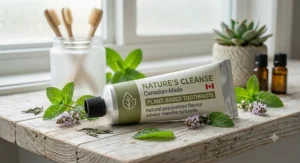
6. hello Fluoride-Free Antiplaque & Whitening — best for fluoride-avoidant households
hello Fluoride-Free Antiplaque & Whitening toothpaste builds its formula around hydrated silica, calcium carbonate, tea tree oil, and coconut oil, skipping fluoride entirely in favour of xylitol and gentle mineral abrasives for plaque control. The brand markets itself as accessible for the “whole family,” and the ingredient panel backs that up — it’s free from dyes, artificial sweeteners, and artificial flavours across the line.
Based on the spec comparison with fluoride-free peers, hello sits closer to the affordable end without sacrificing the vegan, dye-free formulation that pricier brands charge a premium for. Reviewers consistently point to the tea tree oil as a noticeable but not overpowering flavour note, and several mention it as a solid transition toothpaste for people weaning off SLS-heavy mainstream brands without jumping straight to a C$15+ tube.
Pros:
- ✅ Budget-friendly fluoride-free formula
- ✅ Tea tree oil and coconut oil for gentle antiplaque action
- ✅ Free from dyes and artificial sweeteners
Cons:
- ❌ No fluoride option within the fluoride-free line
- ❌ Whitening claims are modest, cosmetic-level only
Priced around C$6-C$9, hello Fluoride-Free Antiplaque & Whitening is a smart middle ground for shoppers who want fluoride-free without paying premium-tier prices.
7. Red Seal Brilliant Mint Whitening Toothpaste — best NATRUE-certified option
Red Seal Brilliant Mint Whitening Toothpaste carries NATRUE certification, an independent European standard for natural and organic cosmetics that audits actual ingredient origin rather than accepting brand self-declaration — a meaningfully stricter bar than an unregulated “natural” label on a box. The formula is fluoride-free, paraben-free, and free of synthetic colours, relying on natural whitening agents and mint oils for flavour and mild polishing.
What most buyers overlook about NATRUE certification specifically is that it audits the full supply chain, not just the finished product, which is a heavier lift for a brand to maintain than most self-styled “clean” labels. Reviewers consistently describe the taste as bright and less “medicinal” than some fluoride-free competitors, and several highlight the whitening result as gradual but genuinely noticeable over a few weeks of consistent brushing.
Pros:
- ✅ NATRUE-certified natural ingredient sourcing
- ✅ Vegan-friendly and cruelty-free
- ✅ Fluoride-free with mild natural whitening
Cons:
- ❌ Certification-driven pricing runs slightly higher than similar budget brands
- ❌ Limited flavour variety compared to larger brands
At approximately C$9-C$13, Red Seal Brilliant Mint Whitening Toothpaste offers one of the more rigorously verified natural claims on this list for a mid-range price.
How to Choose Plant-Based Toothpaste
Choosing the right plant-based toothpaste comes down to matching the formula to your actual oral health needs rather than chasing the greenest-looking packaging. Here’s the short version: identify your priority (cavity prevention, sensitivity, whitening, or fluoride avoidance), then filter by that first and vegan-friendliness second, since most reputable plant-based brands are vegan by default anyway.
- Decide on fluoride first. If you’re cavity-prone or your dentist recommends it, don’t rule out fluoride formulas like ATTITUDE Super Leaves Complete Care or Tom’s of Maine Whole Care just because they’re not fluoride-free — plant-based and fluoride-free aren’t the same thing.
- Check for third-party verification, not just marketing copy. EWG Verified, NATRUE, and Certified Vegan logos each mean something specific and auditable.
- Match the surfactant to your gum sensitivity. If SLS has ever irritated your mouth, look for coco-glucoside or sodium cocoyl glutamate formulas instead.
- Consider packaging if sustainability matters to you. Metal tubes like Davids’ are genuinely more recyclable than laminate plastic ones.
- Read the aggregated review themes, not just the star average. A 4.6-star product with recurring “too mild flavour” complaints tells you something a number alone won’t.
- Price per use, not per tube. A C$15 tube that lasts four months often beats a C$6 tube you replace monthly.
- Confirm it’s actually vegan if that’s non-negotiable for you. Glycerin and flavouring agents are the two most common hidden non-vegan culprits — more on that below.
Top Vegan Toothpaste Brands in Canada
When people search for top vegan toothpaste brands, they’re usually trying to shortcut the label-reading process — understandably, since ingredient decks are dense and manufacturers aren’t required to slap “vegan” on the box even when a formula qualifies. Among the brands featured here, ATTITUDE, Green Beaver, Davids, RiseWell, and hello all explicitly market full vegan lines, while Tom’s of Maine and Red Seal are vegan across most but not all formulations, so checking the specific SKU still matters.
What separates a genuinely strong vegan brand from one riding the trend is transparency about why it’s vegan — not just a checkbox claim. Brands like Davids publish exactly where their glycerin comes from; brands like ATTITUDE pursue EWG Verification, which indirectly reinforces vegan claims since animal-derived ingredients tend to trigger EWG scrutiny anyway. Canadian shoppers also benefit from Green Beaver‘s domestic manufacturing, which shortens the supply chain and, anecdotally, makes ingredient sourcing questions easier for the company to answer directly.
Vegan Certification Explained: Labels That Actually Mean Something
Not all “vegan” claims carry the same weight, and this is where a lot of well-intentioned shoppers get misled. A brand can print “vegan” on a box based on nothing more than an internal decision, with zero external verification. Third-party certification changes that. Vegan Action’s Certified Vegan Logo requires companies to submit documentation proving no animal products or byproducts are present and that the product wasn’t tested on animals — including tracing sugar-clarifying agents and sweetener processing methods that could quietly introduce animal-derived filtration aids.
NATRUE, by contrast, focuses more broadly on natural and organic sourcing standards but still excludes animal-tested and non-vegan ingredients as part of its criteria, which is why Red Seal Brilliant Mint Whitening Toothpaste can carry both natural and vegan-friendly claims simultaneously. The practical takeaway: a logo on the box is worth more than a claim in the copy, because logos come with an audit trail and a company that misuses one risks losing the certification entirely.
Glycerin Sourcing: Plant vs Animal, and Why It’s Confusing
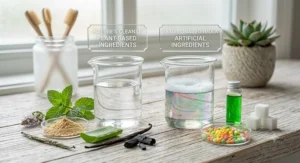
Glycerin might be the single most misunderstood ingredient in the entire plant-based toothpaste conversation. It’s a humectant — it keeps the paste moist and prevents separation — and it’s genuinely everywhere in toothpaste formulas. The confusion is that glycerin can be derived from either plant oils (coconut, palm, soy) or from animal fat rendering, and the finished ingredient is chemically identical either way, which means an ingredient label reading simply “glycerin” doesn’t actually tell you the source.
This is exactly why brands like Davids Premium Natural Toothpaste go out of their way to specify “non-GMO vegetable glycerin derived from vegetable oils” rather than leaving it ambiguous. Reputable vegan-certified brands are required to document their glycerin’s origin as part of the certification process, which is one of the clearer practical benefits of buying certified over uncertified “natural” products. If a toothpaste doesn’t specify glycerin’s source and isn’t independently vegan-certified, that’s a legitimate gap worth asking the manufacturer about directly rather than assuming.
Plant-Derived Surfactants: The Foam Behind the Formula
Surfactants are what create the foam and help lift debris off your teeth, and this is another spot where “plant-based” and “gentle” often overlap but aren’t guaranteed to. Sodium lauryl sulfate (SLS), the industry-standard foaming agent in most mainstream toothpaste, is technically plant-derived in many formulations (typically from coconut or palm oil) — yet it’s also the ingredient most frequently linked in aggregated reviews to mouth irritation and canker sore flare-ups in sensitive users.
Plant-based toothpaste brands increasingly reach for gentler alternatives: coco-glucoside (used in Green Beaver Natural Toothpaste) and sodium cocoyl glutamate (used in Davids Premium Natural Toothpaste) are both derived from coconut but produce a noticeably softer, less stripping foam. On paper this means less risk of the tight, dry feeling some people get from SLS, though foam volume itself is purely cosmetic and has no bearing on actual cleaning performance — a distinction dental researchers point out regularly but that marketing rarely bothers to clarify.
Plant-Based Toothpaste Multipacks on Amazon.ca: Worth It?
A plant-based toothpaste multipack on amazon.ca is usually the more economical route once you’ve settled on a brand, and several products here are genuinely sold that way — Tom’s of Maine offers 2- and 3-packs, ATTITUDE bundles are common across its Super Leaves line, and Davids occasionally runs multi-tube bundles through Amazon’s Subscribe & Save program.
The math tends to favour multipacks by roughly 8-15% per tube compared to single purchases, though that gap fluctuates with promotions, so it’s worth comparing the per-unit price shown on the listing rather than assuming the bundle is automatically cheaper. Multipacks make the most sense for households already committed to a brand, since natural toothpaste doesn’t carry preservatives as aggressive as mainstream formulas and buying six months of stock upfront isn’t always ideal for freshness. For newcomers still testing whether a formula suits them, buying a single tube first remains the more sensible move before committing to a multipack.
✨ Ready to Stock Up?
🔍 Compare current multipack pricing on amazon.ca before checkout — bundle deals shift often, and locking in the per-tube rate now can save real money over a year of brushing.
Price Range & Value Analysis
| Product | Price Range (CAD) | Approx. Cost-per-Use | Value Verdict |
|---|---|---|---|
| Green Beaver Natural Toothpaste | C$6-C$9 | Low | Best entry-level value |
| hello Fluoride-Free Antiplaque | C$6-C$9 | Low | Strong budget fluoride-free pick |
| Tom’s of Maine Whole Care | C$7-C$10 | Low-Mid | Best multi-benefit value |
| ATTITUDE Super Leaves Complete Care | C$8-C$12 | Mid | Strong value with EWG backing |
| Red Seal Brilliant Mint Whitening | C$9-C$13 | Mid | Justified by NATRUE audit |
| Davids Premium Natural Toothpaste | C$13-C$17 | Mid-High | Justified by packaging sustainability |
| RiseWell Mineral Toothpaste | C$14-C$18 | High | Justified by hydroxyapatite formula |
The pattern here is fairly consistent: price climbs alongside the depth of formulation science and third-party verification, not simply the “natural” label itself. Budget buyers shouldn’t feel like they’re settling — Green Beaver Natural Toothpaste and hello Fluoride-Free Antiplaque deliver genuinely clean formulas without the premium markup. Where the jump to RiseWell or Davids actually pays off is for buyers managing sensitivity or prioritizing zero-plastic packaging specifically, not as a blanket upgrade for everyone.
The 30-Day Switch Guide: Moving to Plant-Based Toothpaste
Switching toothpaste isn’t complicated, but doing it deliberately avoids the most common frustration: giving up after a week because the paste “feels weird.” In week one, expect less foam than you’re used to, especially with SLS-free formulas — this is cosmetic, not a sign the product isn’t working, and it typically stops feeling unusual by day five or six.
By week two, if you switched to a fluoride-free hydroxyapatite formula like RiseWell Mineral Toothpaste, mild sensitivity changes (either improvement or a brief adjustment period) are common as your enamel surface interacts with a different remineralizing mechanism. Weeks three and four are when whitening and tartar-control claims start becoming genuinely noticeable rather than theoretical — this is also the point to evaluate flavour fatigue, since natural mint extracts read differently over a full tube than the first few brushes suggest. A common first-30-days mistake is switching brands again too early because week one’s mild foam felt like a downgrade; give any new formula the full month before judging it.
Real-World Scenarios: Matching the Right Plant-Based Toothpaste to Your Life
If you’re a parent of two kids under eight who still occasionally swallow toothpaste, Green Beaver Natural Toothpaste is the practical choice — it’s explicitly formulated to be safe if swallowed and comes in flavours that don’t taste “medicinal” to young palates, removing the daily brushing battle.
If you’re managing cold-sensitivity and have already tried a few desensitizing pastes without much luck, RiseWell Mineral Toothpaste‘s hydroxyapatite-forward formula is worth a dedicated month-long trial, since its remineralization mechanism works differently from the potassium-nitrate approach used in most mainstream sensitivity toothpastes.
If you’re a renter or environmentally motivated buyer trying to reduce your plastic footprint room by room, Davids Premium Natural Toothpaste‘s metal tube is a genuinely rare option in this category — most “eco” toothpaste claims stop at the ingredient list and never touch the packaging itself, which makes this one of the more complete sustainability plays on the list.
Plant-Based Toothpaste vs Traditional Toothpaste
| Factor | Plant-Based Toothpaste | Traditional Toothpaste |
|---|---|---|
| Surfactant | Coco-glucoside, sodium cocoyl glutamate | Sodium lauryl sulfate (SLS) |
| Sweetener | Xylitol, stevia | Saccharin, sugar alcohols |
| Fluoride | Optional, brand-dependent | Standard in most formulas |
| Animal-derived ingredients | None (in certified-vegan lines) | Possible (glycerin, propolis) |
| Packaging trend | Often recyclable/minimal | Standard laminate plastic |
| Best For | Sensitive gums, ingredient-conscious buyers | Budget shoppers prioritizing familiarity |
The honest analysis here isn’t that plant-based automatically beats traditional — cavity prevention efficacy largely comes down to whether fluoride or hydroxyapatite is present and used consistently, not whether the surfactant is coconut- or petroleum-derived. Where plant-based formulas clearly pull ahead is gum irritation reports and ingredient transparency; where traditional formulas still hold an edge is decades of large-scale clinical fluoride data and typically lower shelf price. If you’re choosing based on gentleness and sourcing transparency, plant-based wins; if you’re choosing purely on clinical cavity-prevention track record, well-formulated fluoride toothpaste of either category performs comparably.
Common Mistakes When Buying Plant-Based Toothpaste
Shoppers new to this category tend to repeat a handful of avoidable mistakes. First, assuming “natural” automatically means “vegan” — the two labels aren’t interchangeable, and a natural-marketed toothpaste can still contain animal-derived glycerin or propolis if it isn’t specifically vegan-certified. Second, skipping fluoride entirely out of general “chemical avoidance” instinct without consulting a dentist first, even when cavity history suggests fluoride would genuinely help.
Third, judging a formula in the first three days instead of giving it the full adjustment window discussed above — foam texture changes are the number-one reason people abandon a perfectly good toothpaste too early. Fourth, ignoring the “Best For” distinctions between sensitivity-focused and whitening-focused formulas, then feeling let down when a hydroxyapatite paste doesn’t deliver dramatic whitening it was never designed to provide. Finally, buying a multipack before confirming the flavour and texture actually suit your household — a great per-unit price on six tubes of a formula you end up disliking isn’t a deal.
Safety, Regulations & Health Canada Compliance
In Canada, how a toothpaste gets classified directly shapes what claims it’s allowed to make. Fluoride-free toothpaste and cosmetic-only whitening claims fall under Health Canada’s cosmetic framework, while fluoride-containing toothpaste is regulated as a Natural Health Product with its own licensing pathway — a meaningful regulatory distinction that explains why fluoride toothpaste packaging often carries an NPN (Natural Product Number) that fluoride-free formulas don’t. Health Canada’s guidance on cosmetic advertising and labelling also covers claims like “cruelty-free,” which as of the federal cosmetic animal testing ban requires companies to retain proof if challenged, rather than being an unverifiable marketing phrase.
For plant-based and vegan shoppers specifically, this regulatory layer matters because it means claims aren’t entirely a wild west — a company that falsely claims cruelty-free status in Canada can be compelled to substantiate it or face a formal complaint process. That said, “vegan” itself isn’t a Health Canada-regulated term the way “cruelty-free” now is, which is exactly why third-party vegan certification remains the more reliable signal discussed earlier in this guide.
Frequently Asked Questions
❓ Is plant-based toothpaste as effective as regular toothpaste?
❓ Does plant-based toothpaste whiten teeth?
❓ Is all natural toothpaste vegan?
❓ Can plant-based toothpaste be used by kids?
❓ Where can I buy plant-based toothpaste multipacks in Canada?
Conclusion
Plant-based toothpaste has moved well past the “crumbly, flavourless health-store paste” reputation it had a decade ago. The seven options here — from budget-friendly Green Beaver Natural Toothpaste to premium RiseWell Mineral Toothpaste — prove that ingredient-conscious oral care doesn’t require compromising on actual performance, whether that’s cavity protection, sensitivity relief, or genuine whitening.
The real decision framework is simpler than the ingredient panels make it seem: decide your fluoride stance first, check for real third-party certification second, and match the surfactant and packaging to what actually matters in your household. Whether that lands you on ATTITUDE Super Leaves Complete Care‘s hydroxyapatite-fluoride hybrid or Davids Premium Natural Toothpaste‘s zero-plastic tube, every product on this list clears the bar of being genuinely plant-based rather than just plant-branded.
✨ Don’t Miss These Exclusive Deals!
🔍 Ready to make the switch? Click through to check current pricing and availability on any of the seven picks above. A cleaner ingredient list is one small habit change that adds up fast.
Recommended for You
- Organic Whitening Toothpaste Canada: 7 Real Picks (2026)
- Organic Toothpaste vs Natural Toothpaste: 7 Honest Picks (2026)
- Best Organic Toothpaste in Canada (2026): 7 Top Picks
Disclaimer: This article contains affiliate links. As an Amazon Associate, I earn from qualifying purchases. If you purchase products through these links, we may earn a small commission at no additional cost to you.
✨ Found this helpful? Share it with your friends! 💬🤗
