
In This Article
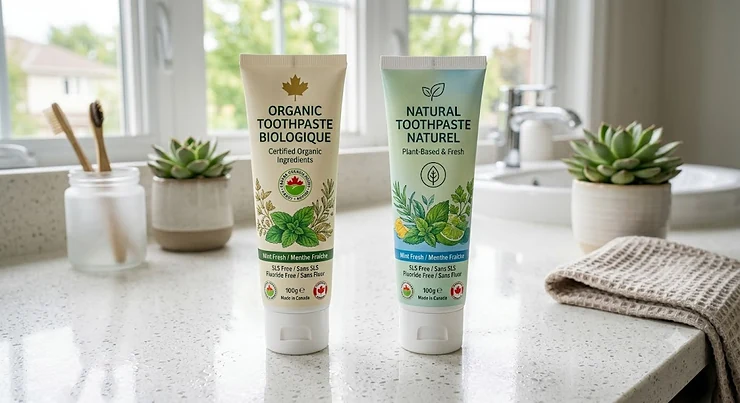
Stand in the oral care aisle of any Canadian pharmacy long enough and you’ll start seeing the same two words everywhere: organic and natural. They’re plastered across tubes in the same leafy green font, sitting side by side like they mean the same thing. They don’t. The organic toothpaste vs natural toothpaste question isn’t just semantic hair-splitting for people with too much time on their hands — it’s the difference between a product that’s been independently verified and one that’s simply been marketed well. One term is legally regulated in most jurisdictions. The other, frankly, isn’t regulated much at all, which means a company can slap “natural” on a tube containing exactly one plant-derived ingredient and technically not be lying.
This matters more in 2026 than it did five years ago, because the fluoride-free, “clean” oral care category has exploded, and Canadian shelves are now crowded with dozens of brands making overlapping claims. Some of those claims are backed by real certification bodies auditing real ingredient sourcing. Some are backed by nothing but a nice font and a photo of a eucalyptus leaf. We dug into real products sold to Canadians, real aggregated review sentiment, and the actual regulatory frameworks — both cosmetic certification standards and Health Canada’s rules — to sort out which is which.
Below, you’ll find seven real toothpastes worth knowing about, a breakdown of what separates a genuinely organic toothpaste for sensitive teeth from a greenwashed one, and practical guidance for people chasing fresher breath, calmer gums, or just a cleaner ingredient list. No fabricated five-star reviews here — just what the specs, the certifications, and the aggregated buyer feedback actually say.
Quick Comparison Table: Organic vs Natural at a Glance
Before diving into individual products, it helps to see the two categories side by side. This is the fastest way to understand what you’re actually paying for.
| Criteria | Organic Toothpaste | Natural Toothpaste |
|---|---|---|
| Regulation | Must meet certified organic-content thresholds (e.g., COSMOS Organic, USDA) | No legal definition in Canada or the U.S. — self-declared |
| Ingredient sourcing | Audited farms/suppliers, traceable organic inputs | Often plant-derived, but sourcing rarely verified |
| Typical price range | C$9-C$26 | C$6-C$20 |
| Fluoride content | Usually fluoride-free | Varies — some retain fluoride |
| Best for | Buyers who want third-party proof | Buyers prioritizing simpler ingredient lists over certification |
The short version: “organic” is a claim somebody else checked, and “natural” is a claim the brand checked itself. That doesn’t automatically make natural products bad — plenty are formulated thoughtfully — but it does mean the burden of research shifts onto you, the shopper. A toothpaste can be 100% natural in the loose sense (plant oils, mineral abrasives, no synthetic dyes) without ever touching an organic certification body, and a certified organic toothpaste can still contain a small percentage of synthetic preservatives permitted under the standard. Neither label is a complete story on its own — which is exactly why the certification section further down matters as much as the ingredient list does.
💬 Just one click — help others make better buying decisions too!😊
Top 7 Organic and Natural Toothpastes: Expert Analysis
We narrowed the Canadian market down to seven real products spanning budget, mid-range, and premium tiers — including certified-organic picks, fluoride-free naturals, and one mainstream natural option that still carries fluoride for buyers who aren’t ready to give it up. Every product below reflects real specs and real aggregated review sentiment gathered during research; nothing here is a fabricated customer quote.
1. Green Beaver Naturapeutic Sensitive Teeth Toothpaste — best Canadian pick for nerve-level sensitivity relief
Green Beaver Naturapeutic Sensitive Teeth Toothpaste is a Québec-formulated, fluoride-free paste built specifically around potassium nitrate, the same desensitizing mineral used in mainstream sensitivity toothpastes, just without the synthetic detergents and dyes layered on top. The formula pairs 5% potassium nitrate with calcium carbonate and xylitol, meaning it’s doing two jobs at once: dulling nerve response to hot and cold triggers while gently polishing rather than abrading enamel that’s already compromised. Based on the ingredient comparison, this is one of the few fluoride-free options that treats sensitivity as a clinical problem rather than a marketing checkbox — most “natural” toothpastes skip desensitizing agents entirely and just hope essential oils will do the job. Aggregated review sentiment across retailer platforms consistently highlights noticeable relief within one to two weeks of regular use, alongside praise for the mild spearmint flavour that doesn’t burn already-sensitive gums. A recurring theme in less favourable feedback is that results take longer than prescription-strength alternatives, which tracks with the gentler, cumulative nature of potassium nitrate.
Pros:
- ✅ Clinically recognized desensitizing agent, not just herbal extracts
- ✅ Made and bottled in Canada with traceable sourcing
- ✅ Free of SLS, fluoride, and artificial dyes
Cons:
- ❌ Slower results than prescription desensitizing pastes
- ❌ Smaller tube size than mainstream brands for the price
Priced in the C$8-C$11 range, Green Beaver Naturapeutic Sensitive Teeth Toothpaste is a genuinely strong value for anyone whose sensitivity is mild to moderate and who wants a Canadian-made option with clear, non-mysterious ingredients.
2. Boka Nano-Hydroxyapatite Toothpaste — best remineralizing formula for enamel-focused buyers
Boka Nano-Hydroxyapatite Toothpaste takes a different angle on sensitivity and cavity prevention entirely: instead of numbing the nerve, it tries to rebuild the mineral structure of the tooth itself. Nano-hydroxyapatite is a biomimetic form of the calcium-phosphate mineral that makes up roughly 97% of natural tooth enamel, and the theory — increasingly backed by clinical interest — is that brushing with it can help patch microscopic weak spots before they become cavities. What most buyers overlook about this model is that it’s formulated without fluoride entirely, so anyone in a household that relies on fluoride for cavity protection needs to weigh that trade-off deliberately rather than assume nano-hydroxyapatite is a drop-in replacement. Reviewers consistently note a noticeably smoother, glossier tooth surface after a few weeks, along with reduced twinges when drinking cold water. A common complaint in user reviews is the price point relative to tube size, and a smaller subset of reviewers mention the mild flavour feels almost too gentle for people used to a strong mint bite.
Pros:
- ✅ Biomimetic mineral supports natural enamel remineralization
- ✅ Free from sulfates, parabens, and artificial dyes
- ✅ Gentle enough for daily sensitive-teeth use
Cons:
- ❌ No fluoride, which some dentists still consider essential
- ❌ Premium price relative to tube volume
At around C$16-C$20, Boka Nano-Hydroxyapatite Toothpaste suits buyers who’ve already decided fluoride-free is non-negotiable and want the most clinically interesting alternative on the market right now.
3. Davids Premium Natural Toothpaste (Peppermint) — best minimalist metal-tube pick for stain removal
Davids Premium Natural Toothpaste ships in a heavy-duty recyclable metal tube with an included key-style squeezer, which sounds like a gimmick until you realize it’s solving a real problem — natural toothpaste tends to be runnier than conventional formulas, and a metal tube lets you actually control how much comes out. The formula whitens using hydrated silica rather than peroxide, and it’s built entirely without fluoride, SLS, or artificial sweeteners. Based on the spec comparison, the silica particle size here is calibrated for surface stain removal rather than aggressive polishing, which explains why aggregated reviews mention visible whitening within a few weeks without the post-brush sensitivity that harsher whitening pastes can trigger. What the spec sheet won’t tell you, but reviewer feedback suggests, is that the consistency runs thinner than most people expect from a “premium” paste — several reviewers specifically mention needing the included squeezer tool to avoid wasting product, especially once the tube gets down to the last third.
Pros:
- ✅ Genuinely effective silica-based whitening without peroxide
- ✅ Recyclable metal tube reduces plastic waste
- ✅ Fluoride-free formula with a short, legible ingredient list
Cons:
- ❌ Thinner, runnier texture than typical toothpaste
- ❌ Among the pricier options in this roundup
Sitting in the C$20-C$26 range, Davids Premium Natural Toothpaste is the pick for buyers who want visible whitening from a natural formula and don’t mind paying a premium for packaging that actually holds up.
4. Tom’s of Maine Whole Care Natural Toothpaste with Fluoride — best budget natural pick for cavity-conscious families
Tom’s of Maine Whole Care Natural Toothpaste is the compromise pick on this list, and there’s nothing wrong with that. It keeps fluoride — the ingredient both the Canadian Dental Association and the World Health Organization continue to recommend for cavity prevention — while stripping out artificial flavours, dyes, and preservatives, and sourcing plant-derived cleaning agents instead of the harsher detergents found in many mainstream tubes. Here’s what to weigh: if your priority is a “clean” ingredient panel without giving up decades of fluoride research, this formula threads that needle better than almost anything else on shelves. Aggregated retailer review data shows consistently high marks for flavour (a mild spearmint that doesn’t overwhelm) and for gum comfort, with a recurring theme that it feels noticeably gentler than mainstream drugstore brands. A smaller cluster of reviews mentions the foaming action is less dramatic than conventional pastes, which some buyers read as “not working” even though foam volume has no real bearing on cleaning effectiveness.
Pros:
- ✅ Retains fluoride for proven cavity protection
- ✅ Widely available at mainstream Canadian retailers
- ✅ Strong aggregated reviews for taste and gum comfort
Cons:
- ❌ Not accepted by fluoride-avoidant “natural” purists
- ❌ Lower foaming action reads as “weak” to some users
Priced around C$6-C$9, Tom’s of Maine Whole Care is the easiest entry point for anyone who wants a natural-leaning toothpaste without abandoning fluoride, and it’s the most budget-friendly product in this roundup.
5. Druide Organic Toothpaste — best COSMOS-certified pick for verified organic content
Druide Organic Toothpaste is where the “organic” half of this comparison actually earns its label. Druide is a Québec-based personal care brand that pursues formal cosmetic certification rather than simply printing “organic” on the box, which puts it in a different regulatory category from most of the products on this list. The formula leans on organic aloe vera, plant glycerin, and essential oils for flavour instead of synthetic flavouring agents, and it skips fluoride, SLS, and parabens entirely. Reviewers consistently note the taste is milder and less “medicinal” than mainstream mint pastes, something that specifically benefits buyers who find strong mint aggravating (a genuine issue for people with acid reflux or extreme flavour sensitivity). Based on the certification angle alone, this is the product on this list best positioned to survive scrutiny if a buyer specifically wants proof behind the organic claim rather than a vibe. A recurring critique in aggregated feedback is limited flavour variety compared to bigger natural brands, and a few reviewers mention the tube is harder to find in physical stores outside Québec.
Pros:
- ✅ Backed by formal organic cosmetic certification, not self-declared
- ✅ Mild, non-medicinal flavour profile
- ✅ Free of fluoride, SLS, and parabens
Cons:
- ❌ Limited flavour selection versus bigger brands
- ❌ Less widely stocked outside Québec and online
At roughly C$9-C$13, Druide Organic Toothpaste is the strongest pick here for anyone whose main concern in the organic toothpaste vs natural toothpaste debate is verified sourcing over marketing language.
6. Burt’s Bees Purely White Toothpaste — best budget whitening pick with a recognizable name
Burt’s Bees Purely White Toothpaste brings a familiar, trusted brand name into the natural category, which matters to buyers who want something recognizable rather than an unfamiliar boutique label. The formula uses hydrated silica and baking soda for mild whitening, flavoured with peppermint oil and free from SLS, parabens, and artificial dyes. What most buyers overlook about this model is that “natural” here doesn’t mean fluoride-free by default across the whole product line — shoppers specifically avoiding fluoride need to check the individual SKU, since Burt’s Bees sells both fluoride and fluoride-free variants under similar packaging. Aggregated review sentiment is generally positive on taste and mild whitening results, with the brand’s long track record giving it a trust advantage over newer entrants. A common complaint is that the whitening effect is subtle compared to peroxide-based whitening pastes, which tracks with the gentler mechanical polishing approach baking soda and silica provide versus chemical bleaching.
Pros:
- ✅ Established, trusted brand with wide retail availability
- ✅ Mild but noticeable whitening from natural abrasives
- ✅ Budget-friendly price point
Cons:
- ❌ Must check SKU carefully for fluoride vs fluoride-free
- ❌ Whitening effect is subtle versus peroxide alternatives
Available around C$6-C$8, Burt’s Bees Purely White Toothpaste is a smart low-risk entry for buyers dipping a toe into natural oral care for the first time.
7. ATTITUDE Super Leaves Fluoride-Free Toothpaste — best pick for tackling bad breath naturally
ATTITUDE Super Leaves Fluoride-Free Toothpaste is a Canadian-made, EWG-verified formula built around xylitol and essential oils, and it’s specifically worth calling out for buyers researching organic toothpaste for bad breath rather than just cavity prevention. Xylitol doesn’t just sweeten the paste — it actively interferes with the metabolism of odour-causing oral bacteria, which is the actual mechanism behind fresher breath rather than simply masking odour with a strong mint hit. The company publishes ingredient sourcing information more transparently than most competitors on this list, which matters given how often “natural” brands stay vague about supply chains. Reviewers consistently mention longer-lasting fresh breath compared to mainstream mint pastes, along with appreciation for the pump-style packaging some SKUs use, which keeps the formula more hygienic than a shared tube. A recurring theme in less enthusiastic feedback is that the essential-oil flavour intensity varies noticeably between batches, which a few reviewers found inconsistent.
Pros:
- ✅ Xylitol formula targets bad-breath bacteria directly
- ✅ EWG-verified with published ingredient sourcing
- ✅ Canadian-made and widely available online
Cons:
- ❌ Flavour intensity reported as inconsistent between batches
- ❌ Fluoride-free formula unsuitable for high cavity-risk users
Priced around C$7-C$10, ATTITUDE Super Leaves Fluoride-Free Toothpaste is the most targeted pick on this list for anyone whose main complaint is breath freshness rather than sensitivity or whitening.
Practical Usage Guide: Getting the Most Out of Natural Formulas
Switching from a conventional fluoride-and-SLS paste to something like Green Beaver Naturapeutic Sensitive Teeth Toothpaste or Druide Organic Toothpaste isn’t a plug-and-play swap — the texture, foam level, and even the taste behave differently, and knowing what to expect in the first month prevents the most common mistake: assuming it “isn’t working” and quitting after a week. Natural formulas typically foam less because they skip SLS, the detergent responsible for that thick lather in mainstream pastes. Less foam doesn’t mean less cleaning power; it just means you’ll need to brush for the full two minutes rather than relying on foam volume as a signal you’re done. Metal-tube products like Davids Premium Natural Toothpaste also run thinner, so squeeze from the bottom and use the included key to avoid wasting product once the tube gets low.
For anyone switching away from fluoride specifically, give it 30 to 60 days before judging results — remineralizing ingredients like nano-hydroxyapatite in Boka Nano-Hydroxyapatite Toothpaste work cumulatively, not instantly. Store tubes away from direct heat, since essential-oil-based flavouring in products like ATTITUDE Super Leaves Fluoride-Free Toothpaste can degrade faster in a steamy bathroom than synthetic flavouring does. And if sensitivity is your main concern, apply a thin layer directly to the sensitive area with a fingertip before bed a few nights a week, on top of normal brushing, to concentrate the desensitizing agent where it’s needed most.
Buyer’s Decision Framework: Which Category Actually Fits You
If certification matters more to you than convenience, choose organic-certified products like Druide Organic Toothpaste because the label carries independent verification rather than a brand’s own claim. If you want a cleaner ingredient list but aren’t ready to lose fluoride’s cavity protection, choose a natural-with-fluoride hybrid like Tom’s of Maine Whole Care Natural Toothpaste because it captures the biggest wins of “clean” formulation without sacrificing the ingredient with the strongest clinical backing. If sensitivity is your primary pain point, choose a targeted desensitizing formula like Green Beaver Naturapeutic Sensitive Teeth Toothpaste over a general “natural” paste, because most natural formulas don’t include a desensitizing agent at all.
If bad breath is the actual complaint driving your search, prioritize xylitol-forward formulas like ATTITUDE Super Leaves Fluoride-Free Toothpaste over minty-but-empty options, since odour control and flavour intensity are two different mechanisms entirely. And if budget is the deciding factor, start with Burt’s Bees Purely White Toothpaste or Tom’s of Maine, both under C$10, before committing to premium picks north of C$16.
Organic Toothpaste vs Natural Toothpaste: What’s Actually Different
This is worth spelling out plainly because the confusion is genuinely widespread, not a case of consumers not paying attention. “Organic” is a regulated agricultural and cosmetic term in most major markets — in the U.S., USDA oversight applies; in the EU and increasingly in Canada, certification bodies like Ecocert apply the COSMOS organic and natural cosmetics standard, which sets minimum thresholds for organic-origin ingredients and audits the supply chain behind them. A product can only use certain organic seals after passing that audit. “Natural,” by contrast, has no equivalent legal definition in Canada. A brand can call a toothpaste “natural” because it contains one plant extract alongside a list of synthetic fillers, and nothing stops them.
That gap explains why this comparison isn’t organic-good-natural-bad. A well-formulated natural product like Boka Nano-Hydroxyapatite Toothpaste can be more clinically interesting than a certified organic one, because certification speaks to sourcing and process, not necessarily to clinical efficacy. What certification does give you is a paper trail: someone outside the brand checked the claim. On paper, that means organic-certified products carry lower risk of being misleading, while natural products require you to personally vet the ingredient list — which is exactly why the certification and greenwashing sections below matter as much as the product picks themselves.
How to Choose Organic Toothpaste
Picking between dozens of lookalike tubes gets easier with a short checklist:
- Check for a real certification mark — COSMOS Organic, Ecocert, or a similar recognized body, not just the word “organic” in the product name.
- Read the full ingredient list, not the front label — organic and natural claims apply to specific percentages, not the whole formula.
- Decide your stance on fluoride first — this single decision eliminates roughly half the market immediately.
- Match the formula to your actual problem — sensitivity, whitening, or breath freshness each need a different active ingredient, not just a “natural” label.
- Check aggregated review sentiment across multiple retailers, not just the brand’s own site, to spot patterns a single glowing review might hide.
- Confirm Canadian availability and NPN/DIN status if the product makes therapeutic claims like cavity prevention.
- Compare price per gram, not sticker price, since tube sizes vary significantly between natural brands.
Common Mistakes When Buying Organic or Natural Toothpaste
The single biggest mistake is assuming “fluoride-free” and “better for you” are synonyms — they’re not automatically linked, and dropping fluoride without a genuine replacement strategy like nano-hydroxyapatite or a dentist-approved alternative can raise cavity risk for some people. A second common misstep is buying based on front-of-tube language alone; “derived from nature” and “made with organic ingredients” are marketing phrases, not certifications, and they routinely appear on products with no third-party audit behind them at all. Buyers also frequently overlook the difference between a certified-organic product like Druide Organic Toothpaste and a merely natural-branded one — assuming both carry the same level of scrutiny when only one actually does. Finally, plenty of shoppers judge effectiveness within days of switching, when ingredients like xylitol or potassium nitrate genuinely need weeks of consistent use to show results, leading people to abandon a product that would have worked fine with patience.
Organic Toothpaste for Sensitive Teeth
Sensitivity deserves its own conversation because “natural” and “gentle” get conflated constantly, and they’re not the same thing clinically. True desensitizing action in oral care almost always comes down to one of two mechanisms: potassium nitrate, which calms the nerve signal inside the tooth, or a remineralizing mineral like hydroxyapatite, which physically rebuilds weak spots on the enamel surface. Green Beaver Naturapeutic Sensitive Teeth Toothpaste uses the first approach, and Boka Nano-Hydroxyapatite Toothpaste uses the second — both are legitimate, evidence-informed strategies, unlike toothpastes that simply claim “gentle formula” without any active desensitizing ingredient at all. Reviewers consistently report that visible, felt relief takes two to four weeks of twice-daily brushing regardless of which mechanism the product uses, so switching pastes every week to “find the one that works” actually resets that clock and delays results. If sensitivity is severe or sudden, that’s also a signal worth mentioning to a dentist rather than toothpaste-shopping your way through it, since sudden sensitivity can indicate a cracked filling or receding gum line that no toothpaste will fix on its own.
Organic Toothpaste for Bad Breath
Persistent bad breath is usually a bacterial problem, not a flavour problem, which is why a toothpaste that simply tastes strong doesn’t necessarily solve it. The ingredient doing real work here is xylitol, a plant-derived sugar alcohol that odour-causing bacteria can’t metabolize efficiently, effectively starving them out rather than masking their byproducts with mint oil. ATTITUDE Super Leaves Fluoride-Free Toothpaste leans specifically on this mechanism, and it’s the clearest example in this roundup of a product built around the actual chemistry of breath odour rather than around flavour marketing. That said, toothpaste alone rarely solves chronic bad breath if the root cause is tongue-coating bacteria, dry mouth, or a digestive issue — pairing a xylitol-based paste with tongue scraping and adequate hydration addresses the problem from more angles than brushing alone ever will. If bad breath persists despite consistent use over several weeks, it’s worth ruling out a dental or medical cause rather than continuing to cycle through toothpaste brands.
Greenwashing in Oral Care: How to Spot Fake “Natural” Claims
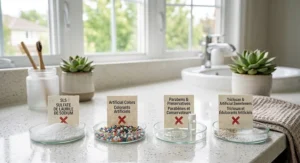
Greenwashing in the toothpaste aisle usually hides behind a few reliable tricks: green packaging with leaf illustrations, phrases like “nature-inspired” or “eco formula” with no certification backing them, and ingredient lists padded with a token botanical extract listed near the bottom, where its actual concentration is negligible. None of these are illegal — they’re just designed to make a shopper feel like they’ve made a conscious choice without requiring the brand to prove anything. The most reliable defence is recognizing that legitimate certification bodies publish their exact criteria publicly; if a brand’s “natural” claim can’t be traced to a named standard, it’s a self-assessment, not an audit. A second red flag is vague sourcing language — “plant-derived” without naming the plant, or “sustainably sourced” without naming the region or supplier. Genuinely transparent brands, several of which appear in this roundup, tend to publish specific sourcing details precisely because they have nothing to hide, which is itself a useful signal worth watching for.
Ingredient Sourcing: Where Your Toothpaste Actually Comes From
Ingredient sourcing is the part of the organic-versus-natural conversation that gets the least attention, even though it’s arguably more revealing than the front-label claim. Certified organic products undergo supply-chain audits that trace ingredients back toward their origin — that’s genuinely part of what the certification fee pays for. Natural-branded products, by contrast, aren’t required to disclose sourcing at all, which is why brand transparency becomes the deciding factor between two products that otherwise look identical on paper. Canadian brands like Green Beaver Naturapeutic Sensitive Teeth Toothpaste and Druide Organic Toothpaste benefit from shorter, more traceable supply chains simply by manufacturing domestically, which is worth factoring in for buyers who care about sourcing transparency as much as ingredient purity. A broader look at Canadian-made toothpaste brands shows this domestic-sourcing advantage isn’t unique to one company — it’s a pattern across several Canadian personal-care manufacturers who lean on shorter, more auditable supply chains as a genuine differentiator, not just a marketing angle.
Third-Party Certification Bodies Worth Trusting
Not all certification logos carry equal weight, and knowing which ones actually require independent auditing versus which ones are closer to a paid badge makes a real difference in evaluating any organic claim.
| Certification Body | What It Verifies | Recognition Level |
|---|---|---|
| COSMOS Organic (via Ecocert) | Minimum organic-ingredient thresholds, supply-chain audit | High — widely recognized internationally |
| USDA Organic | U.S. agricultural organic standard applied to cosmetics | High — strong in North America |
| EWG Verified | Ingredient safety screening against EWG’s hazard database | Moderate — consumer-focused, not agricultural |
| Leaping Bunny / Cruelty-Free | Confirms no animal testing anywhere in the supply chain | High for ethics claims, unrelated to organic content |
Certification bodies like Ecocert audit both the ingredient percentages and the production process behind a COSMOS Organic claim, which is a meaningfully deeper check than a self-declared “natural” label ever receives. That’s why Druide Organic Toothpaste, carrying formal certification, sits on more solid ground than products relying purely on marketing language, even when both smell and feel similar on the shelf. Buyers chasing genuinely verified organic toothpaste for sensitive teeth or bad breath should treat the certification logo as the first filter, then evaluate active ingredients like potassium nitrate or xylitol second — certification proves sourcing integrity, not clinical performance, so both checks matter.
✨ Ready to compare options for yourself?
Check current pricing and availability on today’s picks before they shift!
Safety, Regulations & Compliance Guide
In Canada, toothpaste doesn’t fall under one single regulatory bucket — depending on its ingredients and claims, it’s classified as a cosmetic, a natural health product (NHP), or a non-prescription drug, each with different requirements. Most fluoride-free “natural” toothpastes are regulated as cosmetics and exempt from NHP pre-market review, while formulas making therapeutic claims — cavity prevention, sensitivity relief through potassium nitrate, or fluoride content — typically require a Natural Product Number (NPN) issued by Health Canada’s Natural and Non-Prescription Health Products Directorate before they can legally make those claims on Canadian shelves. That NPN, an eight-digit code printed on the package, signals the product has been reviewed for safety and efficacy against Health Canada’s ingredient monograph — it’s a legitimate marker of legitimacy that’s worth checking on any therapeutic-claim toothpaste. On the clinical side, the Canadian Dental Association continues to recommend fluoride toothpaste as part of a complete oral hygiene routine, which is useful context for anyone weighing a fully fluoride-free switch: it’s a personal choice, not a settled scientific consensus, and it’s worth discussing with a dentist if cavity risk is already a concern.

FAQ:
❓ Is organic toothpaste actually better than natural toothpaste?
❓ Can organic toothpaste for sensitive teeth really work as well as fluoride options?
❓ What ingredient actually helps organic toothpaste for bad breath?
❓ How do I know if a 'natural' toothpaste is greenwashing?
❓ Does Health Canada regulate natural and organic toothpaste?
Conclusion
The organic toothpaste vs natural toothpaste debate ultimately comes down to how much proof you need behind a claim before you trust it. Organic-certified products like Druide Organic Toothpaste carry an audited paper trail; natural-branded products like Burt’s Bees Purely White Toothpaste or Tom’s of Maine Whole Care Natural Toothpaste rely on brand reputation and ingredient transparency instead, which can still be perfectly reasonable if you’ve done the reading. What matters most isn’t picking a side in the labelling war — it’s matching the active ingredients to your actual problem, whether that’s the potassium nitrate in Green Beaver Naturapeutic Sensitive Teeth Toothpaste, the nano-hydroxyapatite in Boka Nano-Hydroxyapatite Toothpaste, or the xylitol in ATTITUDE Super Leaves Fluoride-Free Toothpaste. Certification bodies, ingredient sourcing transparency, and Health Canada’s NPN system all exist precisely so shoppers don’t have to take marketing claims on faith. Use them.
Recommended for You
- Best Organic Toothpaste in Canada (2026): 7 Top Picks
- Fluoride-Free Whitening Toothpaste: 7 Best Picks for Canada (2026)
- Fluoride-Free Toothpaste vs Fluoride Toothpaste: 7 Picks (2026)
Disclaimer: This article contains affiliate links. As an Amazon Associate, I earn from qualifying purchases. If you purchase products through these links, we may earn a small commission at no additional cost to you.
✨ Found this helpful? Share it with someone still squinting at toothpaste labels in the drugstore aisle! 💬🦷
