
In This Article
Stand in the oral care aisle of any Canadian pharmacy and you’ll notice something odd: half the tubes now shout “natural,” “organic,” or “clean” in bold green letters, right next to a whitening claim. That’s not an accident — it’s a genuine shift in what Canadians want from their toothpaste, and organic whitening toothpaste has become one of the fastest-growing categories on Amazon.ca. But “organic” on a toothpaste label doesn’t automatically mean gentle, effective, or even truthful, and “whitening” can mean anything from a mild polish to something closer to a mild bleaching agent.
This guide cuts through the marketing. We researched seven real, currently available products — budget to premium, adult and kids’ formulas — and looked at what’s actually in the tube: which abrasives do the lifting, whether fluoride is present or intentionally left out, and what real customer reviews say once the “clean beauty” branding wears off. You’ll also find honest analysis on coconut oil whitening, silica abrasives, and how organic whitening toothpaste stacks up against the conventional stuff sitting one shelf over. Along the way we’ll lean on Canadian sources, including the Canadian Dental Association’s position on fluoride, so you’re making a decision based on evidence, not just packaging.
Quick Comparison Table
Before the deep dives, here’s the fast version — useful if you’re standing in a Shoppers Drug Mart aisle with three minutes before your bus arrives.
| Product | Best For | Fluoride | Price Range (CAD) |
|---|---|---|---|
| Tom’s of Maine Simply White | Sensitive mouths wanting a gentle daily whitener | No | Under C$10 |
| Himalaya Botanique Complete Care Whitening | All-in-one herbal formula | No | Around C$10-C$14 |
| ATTITUDE Kids Natural Toothpaste | Organic toothpaste for kids | Yes | Under C$8 |
| Burt’s Bees Toothpaste | Simple, dye-free daily brushing | Optional (fluoride & fluoride-free versions) | Around C$8-C$12 |
| Boka Nano-Hydroxyapatite Toothpaste | Enamel-focused whitening without fluoride | No | C$14-C$18 range |
| Georganics Coconut Oil Toothpaste | Coconut oil whitening, zero-waste packaging | No | C$16-C$20 range |
| Davids Nano-Hydroxyapatite Sensitive + Whitening | Premium sensitivity relief with whitening | No | C$18-C$22 range |
A quick read of this table already tells a story: the fluoride-free camp dominates organic whitening toothpaste, which means the “whitening” work is almost entirely mechanical — polishing and stain-lifting rather than chemical bleaching. ATTITUDE Kids Natural Toothpaste is the outlier with fluoride, which matters if cavity prevention is your priority for a child’s formula. Price doesn’t track neatly with performance here either; the coconut-oil-based Georganics jar costs more per gram than a supermarket tube, but you’re also paying for glass packaging and a genuinely different formulation philosophy, not just a marketing label.
💬 Just one click — help others make better buying decisions too!😊
Top 7 Organic Whitening Toothpaste Picks: Expert Analysis
We chose these seven to cover the realistic range of what a Canadian household actually needs: a budget-friendly daily driver, a dedicated kids’ tube, a couple of mid-range all-rounders, and a couple of premium picks built around newer remineralizing science. Every product below is real and currently sold through Amazon.ca or comparable Canadian retailers at the time of research.
1. Tom’s of Maine Simply White — gentlest natural stain-lifter for sensitive mouths
Tom’s of Maine Simply White leans on a simple, decades-old formula rather than anything flashy, and that simplicity is exactly the point for anyone whose gums flinch at aggressive whitening pastes. The active polishing agent is hydrated silica paired with baking soda, and the tube skips fluoride, SLS, artificial sweeteners, and synthetic dyes entirely. In practice, that means a milder abrasive profile than most drugstore whitening toothpaste — you’re not scrubbing away years of coffee staining overnight, but you’re also not risking the enamel micro-scratching that comes with harsher polishing agents. Based on the ingredient list, this is the toothpaste to reach for if your priority is “won’t irritate me” over “fastest possible results,” which makes it a smart starter pick for anyone easing into organic whitening toothpaste for the first time. Reviewers consistently mention a genuinely fresh peppermint taste and note that visible whitening shows up gradually, over two to four weeks of regular use, rather than in a single brushing session — a common and honest limitation across the entire fluoride-free whitening category. A recurring theme in aggregated feedback is that people with fluoride-treated water already in their tap don’t feel the absence of fluoride here as strongly as those relying on toothpaste as their main defense.
Pros:
- ✅ Gentle enough for sensitive gums and enamel
- ✅ No SLS, dyes, or artificial sweeteners
- ✅ Widely available at an accessible price point
Cons:
- ❌ No fluoride, so cavity protection depends on other habits
- ❌ Whitening results are gradual, not dramatic
Expect a price around C$8-C$10 for a standard tube, which makes it one of the easiest entry points into organic whitening toothpaste without committing to a premium price tag.
2. Himalaya Botanique Complete Care Whitening Toothpaste — most complete herbal formula in one tube
Himalaya Botanique Complete Care Whitening Toothpaste tries to do everything at once — whitening, gum care, and cavity-fighting botanicals — instead of specializing in just one lane. The formula uses hydrated silica as its whitening abrasive along with neem and pomegranate extracts, both traditionally used in Ayurvedic oral care for their astringent, gum-supportive properties, and it’s free of fluoride, SLS, carrageenan, and gluten. What that combination means in practice is a toothpaste built for people who want one product to replace three — a whitener, a gum-health formula, and a “natural” swap for their old drugstore brand — rather than three specialized tubes in the cabinet. Based on the formulation, this is a solid pick for anyone managing mild gum sensitivity alongside a desire for whiter teeth, since the botanical extracts are chosen specifically for soothing properties rather than pure cosmetic polish. Aggregated reviewer sentiment tends to highlight the distinctive minty-herbal taste, which some brushers love and others find takes a few uses to adjust to; a smaller but consistent thread in reviews notes the toothpaste foams less than conventional SLS-based brands, which is expected given the SLS-free formula rather than a defect.
Pros:
- ✅ Combines whitening with gum-focused botanical extracts
- ✅ SLS-free, gluten-free, and vegan formulation
- ✅ Multi-pack options make it easy to stock up
Cons:
- ❌ Herbal taste takes some adjustment for new users
- ❌ Less foam than SLS-based conventional toothpaste
At around C$10-C$14 depending on pack size, it sits comfortably in the mid-range and delivers solid value for a multi-benefit organic whitening toothpaste.
3. ATTITUDE Kids Natural Toothpaste — Canadian-made kids’ pick with real fluoride protection
ATTITUDE Kids Natural Toothpaste stands out immediately because it’s made in Canada, and because — unlike most of this list — it actually contains fluoride, which changes the calculus for parents shopping for organic toothpaste for kids. The watermelon-flavoured formula is vegan, sugar-free, and built around a milder hydrated silica abrasive appropriate for developing enamel, while still delivering the cavity-prevention benefit that dental bodies consistently recommend for children. This matters in practice because young children swallow a meaningful amount of toothpaste rather than spitting it out fully, and Health Canada’s own guidance treats fluoride exposure and dosage as something parents should actively manage rather than avoid outright — in fact, a flavoured toothpaste that contains fluoride is specifically regulated as a natural health product in Canada, which is part of why brands like this one are transparent about fluoride content rather than hiding it under “natural” branding. Based on the formulation, this is the toothpaste for parents who want the “clean ingredient list” appeal of organic-style brands without sacrificing the cavity protection most dentists still recommend for kids. Aggregated reviews from Canadian parents frequently mention that the watermelon flavour is a genuine hit with picky brushers, with the recurring complaint being that some children find the mild foam and texture different from mainstream kids’ toothpaste at first.
Pros:
- ✅ Made in Canada with transparent, vegan ingredients
- ✅ Contains fluoride for genuine cavity protection
- ✅ Kid-approved watermelon flavour reduces brushing battles
Cons:
- ❌ Milder foam may feel unfamiliar to kids used to mainstream brands
- ❌ Not fluoride-free, which some “all-natural” purists specifically avoid
Priced under C$8 in most cases, it’s one of the most affordable entries here and arguably the easiest recommendation on this entire list.
4. Burt’s Bees Toothpaste — simple, dye-free daily brushing without the fuss
Burt’s Bees Toothpaste is built on the brand’s long-standing “as few unnecessary ingredients as possible” philosophy, offering both fluoride and fluoride-free versions depending on which tube you pick up. Calendula extract and licorice root show up in place of synthetic flavouring agents, and the toothpaste skips artificial dyes and sweeteners across the line, which in practice means a noticeably plainer, more herbal taste than mainstream whitening pastes. What most buyers overlook about this brand is that its whitening variants still rely on standard hydrated silica abrasion rather than any proprietary “whitening technology,” so the honest expectation should be gentle surface polish rather than a Hollywood-white transformation. This makes it a sensible pick for someone whose main goal is swapping out synthetic ingredients in their daily routine while keeping whitening as a secondary, gradual benefit rather than the headline feature. Reviewers consistently describe the taste as “clean” or “mild” rather than minty-intense, and a recurring theme in feedback is appreciation for the recognizable, short ingredient list — though a smaller number of reviewers note the tube’s foam and texture feel noticeably different from Colgate- or Crest-style pastes during the adjustment period.
Pros:
- ✅ Short, recognizable ingredient list with no artificial dyes
- ✅ Available in both fluoride and fluoride-free versions
- ✅ NATRUE-certified formulation for natural-ingredient assurance
Cons:
- ❌ Milder taste and foam compared to mainstream brands
- ❌ Whitening effect is subtle rather than dramatic
At roughly C$8-C$12 per tube, it’s a low-risk way to test whether an organic whitening toothpaste fits your routine before spending more on premium options.
5. Boka Nano-Hydroxyapatite Toothpaste (Whitening) — biomimetic enamel-remineralizing formula
Boka Nano-Hydroxyapatite Toothpaste represents the newer wave of fluoride-free oral care, built around nano-hydroxyapatite — a lab-made version of the mineral that already makes up the bulk of natural tooth enamel — instead of fluoride as the primary active ingredient. The formula also includes coconut oil and hydrated silica for gentle polishing, and the underlying logic is that hydroxyapatite works by physically depositing mineral onto microscopic enamel defects rather than chemically hardening enamel the way fluoride does. On paper, this means the whitening and remineralizing effects come from two different mechanisms working together — silica lifting surface stains while hydroxyapatite fills in porosity that makes enamel look duller or more translucent over time. This is a strong pick for buyers who’ve specifically chosen to avoid fluoride but still want an evidence-informed alternative rather than a purely cosmetic “natural” toothpaste, and it’s worth noting that hydroxyapatite toothpaste remains an area of active dental research rather than a settled consensus replacement for fluoride. Aggregated customer sentiment is largely positive on texture and taste, with sensitive-teeth users frequently reporting reduced sensitivity within a couple of weeks; a consistent minor complaint is the higher price relative to conventional tubes of similar size.
Pros:
- ✅ Nano-hydroxyapatite targets enamel remineralization directly
- ✅ Coconut oil base adds a gentler mouthfeel
- ✅ Frequently reported sensitivity relief within weeks
Cons:
- ❌ Noticeably pricier than conventional whitening toothpaste
- ❌ Fluoride-free, so not a like-for-like cavity-prevention swap
Expect to pay in the C$14-C$18 range, positioning this as a mid-to-premium pick for buyers prioritizing enamel science over budget.
6. Georganics Coconut Oil Toothpaste, Activated Charcoal — zero-waste jar built around organic coconut oil
Georganics Coconut Oil Toothpaste is the purest expression of coconut oil whitening on this list — the formula uses organic coconut oil as its actual base rather than water, which is unusual among the seven products here and worth understanding before you buy. Instead of a squeezable gel, you get a semi-solid paste in a reusable glass jar, scooped with a small spatula, combining calcium carbonate, kaolin clay, diatomaceous earth, and activated charcoal for a mildly abrasive, non-foaming clean. What this means in practice is a genuinely different brushing texture — no foam, no gel — that some people find more satisfying once they adjust, and others find takes real getting used to. Based on the ingredient profile, the coconut oil itself functions less as a whitening agent and more as an antimicrobial carrier oil rooted in traditional oil-pulling practices, while the actual stain-lifting comes from the mineral abrasives and charcoal working alongside it; that distinction matters because “coconut oil whitening” as a marketing phrase oversells what coconut oil alone can do. Reviewers who stick with the format past the first week tend to report genuinely cleaner-feeling teeth and appreciate the plastic-free packaging, while a recurring criticism is that the jar-and-spatula format simply isn’t practical for travel or for households with young kids.
Pros:
- ✅ Zero-waste glass jar with organic coconut oil base
- ✅ Activated charcoal adds mild extra stain-lifting
- ✅ Free from fluoride, SLS, and synthetic fragrance
Cons:
- ❌ Non-foaming texture requires an adjustment period
- ❌ Jar format is less travel-friendly than a squeeze tube
At around C$16-C$20 for a 60 ml jar, it’s priced at a premium, largely reflecting the sustainable packaging and hand-blended small-batch production.
7. Davids Nano-Hydroxyapatite Sensitive + Whitening — premium sensitivity relief with genuine whitening intent
Davids Nano-Hydroxyapatite Sensitive + Whitening targets a very specific buyer: someone dealing with cold-and-hot sensitivity who still wants a whitening toothpaste rather than settling for a purely therapeutic one. The peppermint formula pairs nano-hydroxyapatite with a low-abrasion silica polish, is fluoride-free, and ships in a recyclable metal tube rather than standard plastic laminate, which is a small but genuine sustainability upgrade over most drugstore tubes. In practice, the low-abrasion approach means whitening happens more slowly than a high-RDA (relative dentin abrasivity) whitening paste, but it’s specifically engineered not to aggravate exposed dentin the way aggressive whitening formulas often do. This makes it a strong recommendation for anyone who has previously tried a whitening toothpaste and found it triggered sensitivity, since the hydroxyapatite component is doing double duty — remineralizing exposed areas while the silica handles surface stains. A common theme in aggregated reviews is genuine relief from sensitivity within the first two weeks of daily use, alongside praise for the metal tube’s sustainability; the most consistent criticism is, again, price relative to conventional whitening pastes of similar tube size.
Pros:
- ✅ Formulated specifically for sensitivity plus whitening
- ✅ Recyclable metal tube reduces plastic waste
- ✅ Frequently reported sensitivity improvement within two weeks
Cons:
- ❌ Among the priciest options in this roundup
- ❌ Slower whitening timeline than higher-abrasion formulas
Priced around C$18-C$22, it’s the most premium pick here, best justified if sensitivity — not just whitening — is genuinely part of your problem.
Practical Usage Guide: Getting the Most From Organic Whitening Toothpaste
Switching to organic whitening toothpaste isn’t just a product swap — the brushing technique that worked with your old SLS-heavy tube can actually undercut results here. Start by brushing for the full two minutes dentists recommend; because most of these formulas rely on gentler mechanical abrasion instead of chemical bleaching agents, contact time with the enamel surface matters more than it does with a harsher paste. In the first week, expect less foam than you’re used to, especially with SLS-free options like Himalaya Botanique Complete Care Whitening Toothpaste or Burt’s Bees Toothpaste — that’s the formula working as intended, not a sign you’re using too little product.
A common first-30-days mistake is judging results too early. Silica- and charcoal-based whitening works cumulatively, typically becoming visible after two to four weeks of twice-daily use, so daily consistency matters more than pressing hard while brushing. Speaking of pressure: press lighter than you think you need to, particularly with abrasive-forward options like the charcoal-based Georganics Coconut Oil Toothpaste, since over-brushing with any polishing agent — organic or not — can wear enamel over time. Store tubes and jars away from bathroom humidity when possible, since natural formulas without synthetic preservatives can be more sensitive to moisture than conventional pastes. Finally, if you’re managing sensitivity alongside whitening goals, pair your toothpaste with a soft-bristled brush; even the gentlest formula can’t offset an aggressive brushing habit.
Real-World Scenarios: Who Should Buy What
Matching the right tube to your actual life matters more than chasing the “best” product in the abstract. Here are three realistic profiles.
The budget-conscious parent with two kids under ten, one of whom still swallows toothpaste occasionally, is the clearest case for ATTITUDE Kids Natural Toothpaste — it’s made in Canada, keeps fluoride at a kid-appropriate level, and costs under C$8, which matters when you’re restocking two tubes a month. A university student living off a part-time income but managing coffee-stain guilt from three exam-season lattes a day fits best with Tom’s of Maine Simply White, a gentle, affordable daily whitener that won’t wreck a tight budget or aggravate stress-related gum sensitivity. A working professional in their late thirties dealing with both wine-and-coffee staining and noticeable cold sensitivity — someone with more disposable income and a genuine dental concern, not just a cosmetic one — is the ideal buyer for Davids Nano-Hydroxyapatite Sensitive + Whitening, where the higher price is justified by a formula solving two problems at once rather than one.
How to Choose Organic Whitening Toothpaste
Picking the right tube comes down to a handful of decision points, in order of importance:
- Decide on fluoride first. Decades of dental research support fluoride’s role in preventing tooth decay, so going fluoride-free is a deliberate trade-off, not a free upgrade — weigh it against your actual cavity risk.
- Check the abrasive, not just the marketing. Hydrated silica, calcium carbonate, and kaolin clay all show up under “natural whitening” branding but behave differently; silica tends to be gentler than clay-based abrasives.
- Match sensitivity needs honestly. If you already experience sensitivity, prioritize hydroxyapatite or low-abrasion formulas over anything marketed primarily on aggressive stain removal.
- Consider your kids separately from yourself. Organic toothpaste for kids should prioritize age-appropriate fluoride guidance and swallow-safety over adult whitening goals.
- Read ingredient lists over front-label claims. “Organic” on a toothpaste label isn’t a regulated, standardized claim in Canada the way it is for food, so the ingredient panel tells you more than the packaging does.
- Budget for the adjustment period. Non-foaming or low-foam formulas need a few uses before you can judge them fairly — don’t return a product after one brush.
- Factor in packaging if sustainability matters to you. Glass jars and metal tubes, like those from Georganics and Davids, cost more but reduce plastic waste meaningfully over a year of use.
Common Mistakes When Buying Organic Whitening Toothpaste
The single most common mistake is assuming “organic” and “whitening” both mean the same thing across every brand — they don’t, and neither term is tightly regulated on Canadian cosmetic packaging the way food organic certification is. A second frequent error is buying a fluoride-free whitening toothpaste for a child at high cavity risk simply because “natural” sounds safer, when in reality fluoride remains the most evidence-backed cavity-prevention ingredient available in a tube. Shoppers also tend to over-index on charcoal as a whitening miracle ingredient; charcoal is abrasive, and while it can lift some surface stain, it offers no meaningful advantage over calcium carbonate or silica and can be harsher on enamel if used aggressively. Another common misstep is expecting drugstore-speed results — organic whitening toothpaste rarely delivers the same visible speed as peroxide-based whitening strips, because it’s working mechanically rather than chemically. Finally, many buyers skip checking whether a “natural” toothpaste is actually SLS-free, assuming the whitening claim implies a fully clean formula when the two are unrelated ingredient decisions.
Organic Whitening Toothpaste vs Conventional Whitening Toothpaste
The core difference isn’t cleanliness or effectiveness in the abstract — it’s mechanism. Conventional whitening toothpaste, like Crest 3D White or Colgate Optic White lines, often includes hydrogen peroxide or higher-RDA silica polishes designed for faster, more dramatic surface whitening, sometimes alongside fluoride for cavity protection in the same tube. Organic whitening toothpaste generally skips the peroxide entirely and relies on gentler mechanical abrasion — silica, calcium carbonate, or activated charcoal — paired with a “free-from” ingredient philosophy that avoids SLS, artificial dyes, and synthetic sweeteners.
| Factor | Organic Whitening Toothpaste | Conventional Whitening Toothpaste |
|---|---|---|
| Whitening mechanism | Mechanical polish (silica, charcoal, clay) | Often chemical (peroxide) plus polish |
| Speed of visible results | Gradual, 2-4 weeks | Often faster, sometimes within days |
| Fluoride | Usually absent | Usually present |
| Common trade-off | Slower results, gentler on enamel | Faster results, higher sensitivity risk for some users |
Reading this table, the real decision isn’t “which is better” but “which trade-off fits you.” Every toothpaste carrying the Canadian Dental Association’s Seal of Recognition contains fluoride, which means most organic whitening toothpaste — fluoride-free by design — won’t carry that specific seal, even when it’s otherwise a well-formulated product. For a closer look at how fluoride actually works in the mouth, Health Canada’s overview of fluoride and oral health is a useful starting point. If cavity risk is a genuine concern flagged by your dentist, a fluoride-containing conventional or hybrid option like ATTITUDE Kids Natural Toothpaste deserves real consideration over a purely “clean” fluoride-free tube.
What to Expect: Real-World Performance
Specs and ingredient lists only tell half the story — here’s what actually happens once the tube is in your bathroom. In week one, expect less foam, a different mouthfeel, and possibly a stronger herbal or minty taste than you’re used to; this is universal across nearly every product on this list, from Burt’s Bees Toothpaste to Boka Nano-Hydroxyapatite Toothpaste. By week two, most users with sensitivity concerns using hydroxyapatite-based formulas like Davids Nano-Hydroxyapatite Sensitive + Whitening start noticing reduced twinges from hot or cold. Visible whitening — a shade or two lighter, not a dramatic transformation — tends to show up between weeks two and four with consistent twice-daily brushing, and it’s most noticeable on surface stains from coffee, tea, or red wine rather than deeper, intrinsic discoloration, which no toothpaste, organic or otherwise, can fully address. What the spec sheet won’t tell you, but reviewers note repeatedly, is that switching toothpaste formats — from gel to the paste-in-a-jar style used by Georganics — has a bigger day-one adjustment curve than switching brands within the same format.
Organic Toothpaste for Kids: What Actually Matters
Shopping for organic toothpaste for kids means balancing two priorities that occasionally pull in different directions: gentle, “clean” ingredients and genuine cavity prevention. Because young children tend to swallow toothpaste while brushing, fluoride exposure guidelines exist specifically to moderate that risk while still protecting developing teeth — which is exactly why ATTITUDE Kids Natural Toothpaste deliberately keeps a kid-appropriate fluoride level rather than removing it entirely for marketing appeal. For children old enough to reliably spit rather than swallow, a fluoride-free option becomes a reasonable choice, but for toddlers and younger kids, most Canadian dental professionals still recommend a fluoride-containing formula at an age-appropriate dose. Flavour matters more with kids than with adults — a watermelon or bubblegum taste that gets genuine enthusiasm at the sink is worth more in practice than a marginally “cleaner” ingredient list that a child refuses to use consistently. Parents managing multiple kids at different ages should also expect to buy two different tubes rather than one universal family toothpaste, since the right fluoride level genuinely differs by age and swallow-risk.
Coconut Oil Whitening: What the Science and Reviewers Actually Say
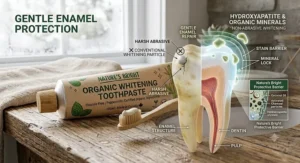
Coconut oil whitening gets marketed as something close to a magic ingredient, but the honest picture is more modest. Coconut oil is rich in lauric acid, a fatty acid with documented antimicrobial properties that can help reduce the bacteria responsible for plaque buildup and gum inflammation — which is a real, useful benefit, but it’s a gum-health and bacteria-reduction mechanism, not a bleaching one. In products like Georganics Coconut Oil Toothpaste, the coconut oil functions primarily as the paste’s base and an antimicrobial carrier, while calcium carbonate, kaolin, and diatomaceous earth are doing the actual mechanical stain-lifting. Based on the ingredient science, coconut oil alone — used in isolation through practices like oil pulling — has limited, mostly anecdotal support for dramatic whitening, and pairing it with a genuine mineral abrasive, as formulated products do, is what makes coconut oil whitening toothpaste meaningfully different from oil pulling at home. Reviewers who specifically sought out coconut oil whitening tend to report a pleasant, non-drying mouthfeel and gradual surface polish, rather than the fast, dramatic whitening peroxide-based products can deliver — a distinction worth setting realistic expectations around before buying.
Silica Abrasives Explained
Silica abrasives are doing more work in your toothpaste than most labels let on, and understanding them helps you compare products that all claim “gentle whitening” but behave differently in practice. Hydrated silica is the most common polishing agent across this entire category — it shows up in Tom’s of Maine Simply White, Himalaya Botanique Complete Care Whitening Toothpaste, ATTITUDE Kids Natural Toothpaste, and both hydroxyapatite formulas here — because it offers a reliably moderate abrasion level that polishes away surface stain without being as aggressive as clay-based alternatives. In practice, silica abrasives work through simple mechanical friction: microscopic particles physically dislodge stain molecules sitting on the enamel surface during brushing, which is why brushing technique and duration matter so much with these formulas. What most buyers overlook is that not all silica is equal — particle size and shape affect how gentle or aggressive a given formula actually feels, which is part of why two “silica-based” toothpastes can produce noticeably different results and sensitivity outcomes. Dentists generally consider hydrated silica one of the safer, lower-RDA abrasive choices available, which is a meaningful reason it dominates the organic whitening toothpaste category rather than harsher alternatives like pumice or high-concentration baking soda.
Natural Stain Removal: Realistic Expectations
Natural stain removal is genuinely achievable with the right product and consistent habits, but it has real limits worth understanding before you commit to a tube. Surface, or extrinsic, stains — from coffee, tea, red wine, and tobacco — respond reasonably well to the mechanical abrasion found in silica-, charcoal-, and clay-based organic whitening toothpaste, typically showing gradual improvement over two to four weeks. Intrinsic staining, meaning discoloration that originates inside the tooth structure itself rather than sitting on the surface, doesn’t respond meaningfully to any toothpaste, natural or conventional, and requires professional whitening or bonding to address. Based on the spec comparison across all seven products here, the fastest realistic natural stain removal on this list comes from combining a mineral abrasive with activated charcoal, as Georganics Coconut Oil Toothpaste does, though “fastest” here still means weeks, not days. A sensible approach for genuinely stubborn staining is pairing consistent use of an organic whitening toothpaste with reduced exposure to staining beverages, or supplementing with an occasional professional cleaning — no toothpaste alone fully replaces that.
Long-Term Cost & Maintenance
Thinking about organic whitening toothpaste purely by tube price misses the real cost picture. A standard 100-150 g tube used twice daily by one adult typically lasts six to eight weeks, meaning budget options like Tom’s of Maine Simply White or Burt’s Bees Toothpaste run somewhere in the C$50-C$70 range annually per person. Premium picks like Davids Nano-Hydroxyapatite Sensitive + Whitening or Georganics Coconut Oil Toothpaste can push annual cost meaningfully higher, especially the jar-format product, which — based on typical usage — often needs replacing more frequently than an equivalent tube. The real long-term value question isn’t the sticker price but what problem you’re solving: if a pricier hydroxyapatite formula genuinely reduces sensitivity and prevents you from needing a dentist-prescribed desensitizing treatment, the total cost of ownership can actually favour the premium option. Multipack purchasing is where the real savings show up — buying in bundles rather than single tubes typically knocks a meaningful percentage off the per-tube cost, which is worth factoring into your decision below.
Organic Toothpaste Multipack Deals on Amazon.ca
Buying single tubes repeatedly is the most expensive way to shop this category, and organic toothpaste multipack deals on Amazon.ca are consistently where the real savings live. Brands like Himalaya Botanique Complete Care Whitening Toothpaste and ATTITUDE Kids Natural Toothpaste are frequently sold in bundles of two to four tubes, which typically works out to a meaningfully lower per-unit price than buying one at a time, alongside the convenience of not running out mid-month. Subscribe-and-save style options, where available, layer an additional discount on top of the multipack price, which makes sense for households already committed to a specific formula rather than still comparison-shopping. A smart approach is to test a single tube first — especially for a non-foaming or unusually flavoured formula like Georganics Coconut Oil Toothpaste — before committing to a four-pack you might not finish. When multipack deals are genuinely active, check current pricing directly on the product page, since promotional bundles rotate and exact discounts vary by season.
🛒 Ready to Try One?
✨ Compare current multipack pricing before you commit to a single tube — bundles often work out cheaper per unit for formulas your household already likes. Click through to check availability and current pricing on Amazon.ca.
Safety, Regulations & Compliance in Canada
Before assuming “organic” or “natural” on a toothpaste label means it’s been independently verified, it’s worth understanding how Canada actually regulates these products. Depending on its ingredients, a toothpaste in Canada can fall under different regulatory categories — a purely cosmetic flavoured paste, a natural health product if it contains fluoride, or a drug if it contains a whitener like hydrogen peroxide — which is why two “whitening” toothpastes can be regulated completely differently depending on their formula. This patchwork is also part of why “organic” and “natural” claims on Canadian cosmetic packaging aren’t independently certified the way organic food labels are — a gap Canada’s own consumer protection reporting has flagged as a broader labelling problem, noting that a large share of environmental and “natural” marketing claims don’t hold up to scrutiny when tested. For genuine reassurance, look for the Canadian Dental Association’s Seal of Recognition on a tube — though, as noted earlier, that seal specifically applies to fluoride-containing products, so most organic whitening toothpaste won’t carry it even when otherwise well-formulated. If cavity risk, gum disease, or diagnosed sensitivity are active concerns, run your shortlist past your dentist before switching, especially for kids’ formulas.
Frequently Asked Questions
❓ Does organic whitening toothpaste actually whiten teeth?
❓ Is organic whitening toothpaste safe for kids?
❓ What's the difference between organic and natural toothpaste?
❓ Can coconut oil whitening toothpaste replace fluoride toothpaste?
❓ Why does organic whitening toothpaste foam less than regular toothpaste?
Conclusion
Organic whitening toothpaste isn’t a single category with one right answer — it’s a spectrum running from gentle, budget-friendly daily options like Tom’s of Maine Simply White to premium, enamel-science-driven picks like Davids Nano-Hydroxyapatite Sensitive + Whitening, with a genuinely solid Canadian-made kids’ option in ATTITUDE Kids Natural Toothpaste sitting right in the middle. The honest throughline across all seven products is that mechanical whitening takes weeks, not days, and that fluoride-free doesn’t automatically mean better — it means a specific, deliberate trade-off worth making with your actual cavity risk and sensitivity in mind, not just marketing language. Whichever tube you land on, the smartest move is matching the formula to your real situation — kids versus adults, sensitivity versus none, budget versus long-term value — rather than chasing whichever product has the loudest “clean” branding on the front of the tube.
✨ Ready to Upgrade Your Routine?
🔍 Take your daily brushing routine to the next level with a formula that actually matches your needs — not just the packaging. Click through to check current pricing and availability on any product above, and give your smile the honest upgrade it deserves.
Recommended for You
- Organic Toothpaste vs Natural Toothpaste: 7 Honest Picks (2026)
- Best Organic Toothpaste in Canada (2026): 7 Top Picks
- Fluoride-Free Whitening Toothpaste: 7 Best Picks for Canada (2026)
Disclaimer: This article contains affiliate links. As an Amazon Associate, I earn from qualifying purchases. If you purchase products through these links, we may earn a small commission at no additional cost to you.
✨ Found this helpful? Share it with your friends! 💬🤗
